Crypto
Bitcoin Gained 33% Since July. Buyers From Last October's Peak Are Still Down 33%.
Bitcoin's three-month rally looks strong until you check when the buyer got in. A year-over-year view shows Strategy sitting comfortably in the green while last October's buyers, and Friday's leveraged longs, are still underwater.
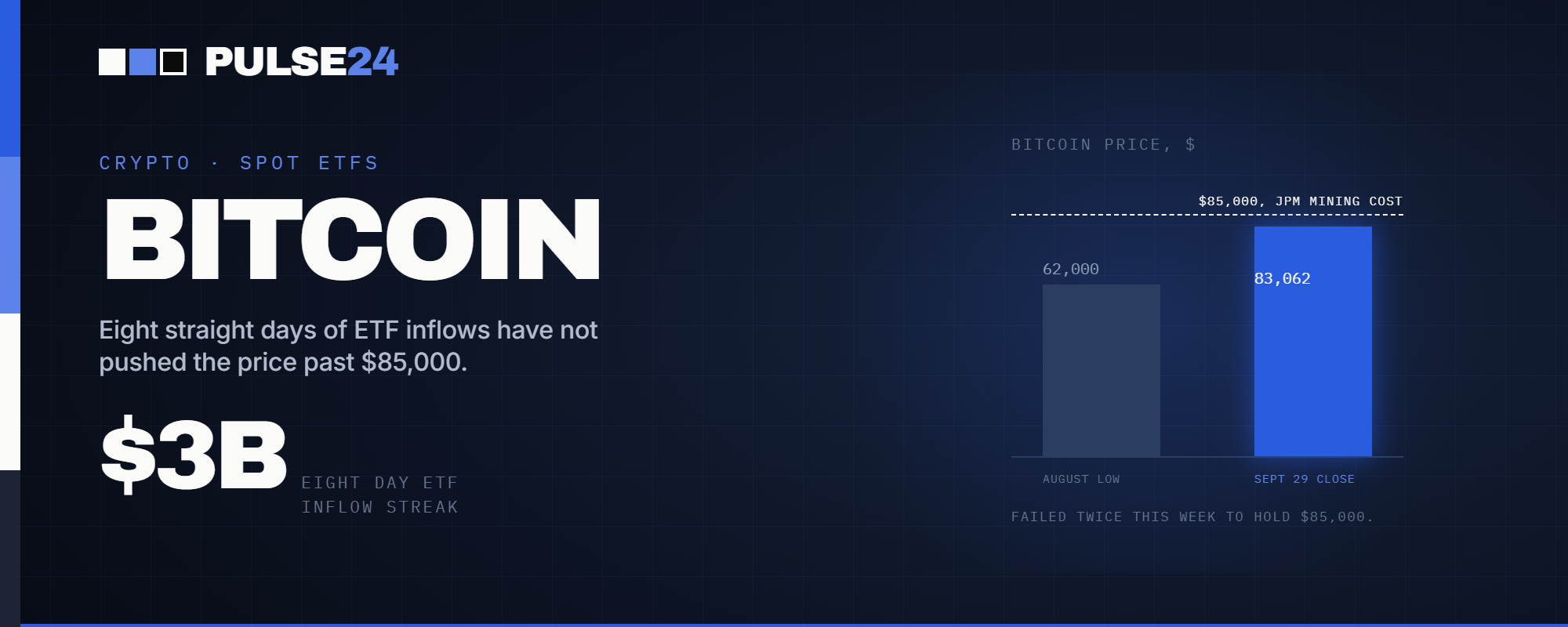
Bitcoin ETFs Have Pulled In $3 Billion Over Eight Straight Days. The Price Still Can't Clear $85,000.
Eight straight days of Bitcoin ETF inflows have added up to roughly $3 billion, but Monday's addition was just $31 million, a fraction of the $2.39 billion the funds pulled in the week before. The price still can't close above $85,000, the same level JPMorgan pegs as the average cost to mine one coin.
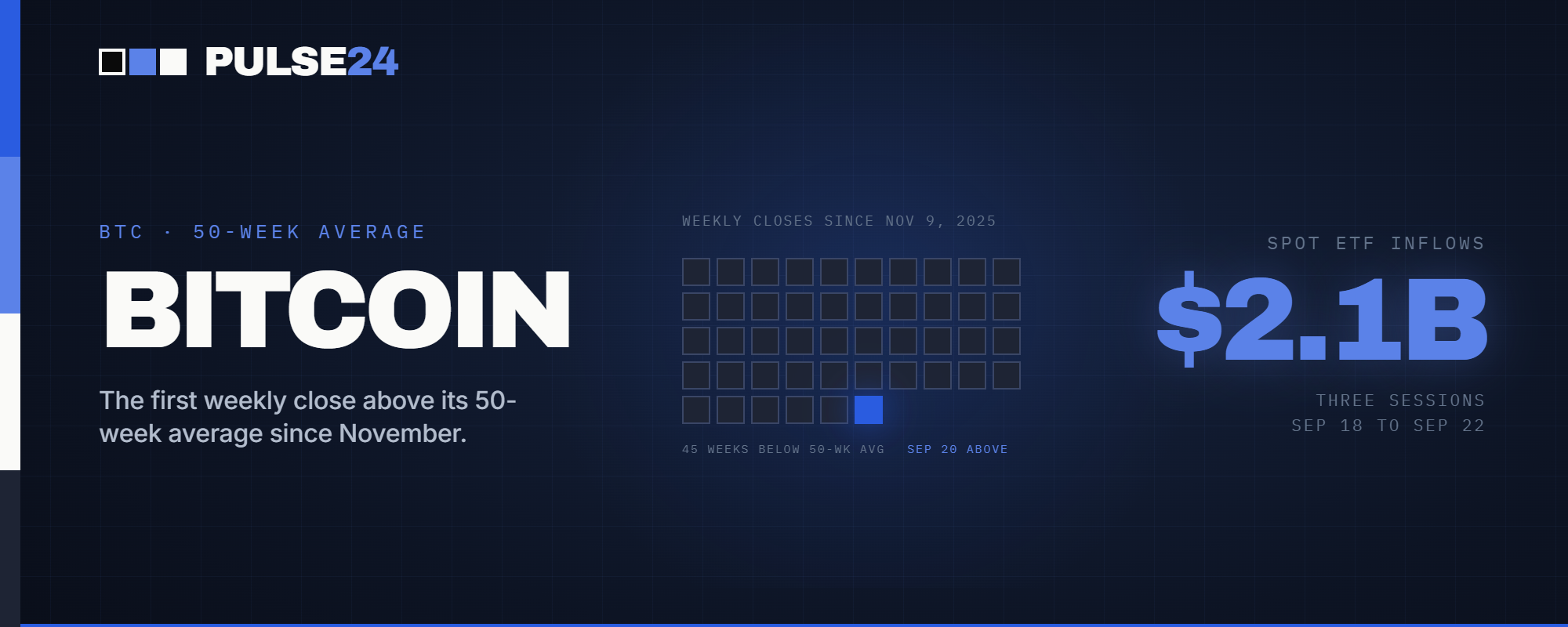
Bitcoin Spent 45 Weeks Below One Line on Its Chart. Then $2 Billion Showed Up in ETFs.
Bitcoin closed above its 50-week moving average for the first time since November, a level that's marked the end of four of its last five bear markets. Over $2 billion followed into spot ETFs within three trading sessions, a sharp reversal from the outflows the same funds saw just a week earlier.
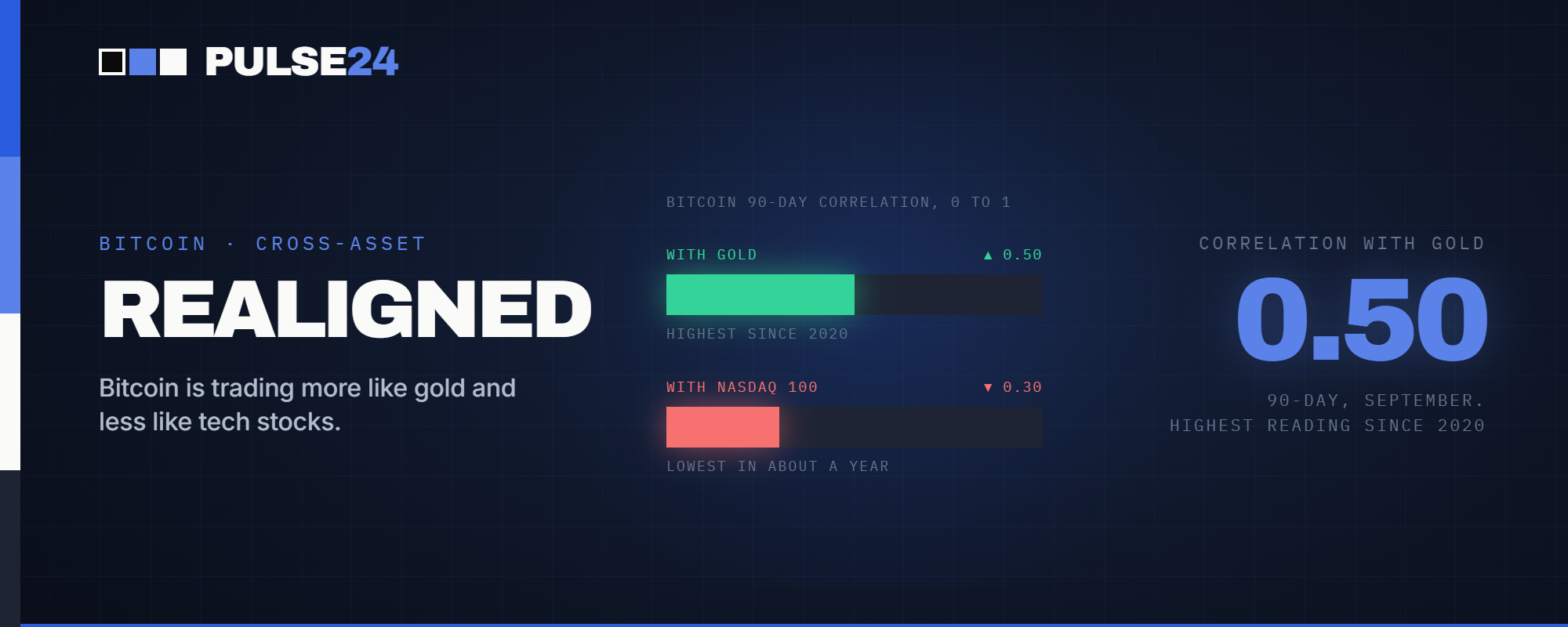
Bitcoin's Correlation With Gold Climbed to 0.50 This Month. Its Link to the Nasdaq Fell to 0.30.
Bitcoin's 90-day correlation with gold touched 0.50 this month, the highest reading since 2020, while its link to the Nasdaq 100 slid to about 0.30, its lowest reading in roughly a year. The shift arrived the same week Bitcoin touched an eight-month high near $85,000, even as the Fed raised rates rather than cut them.
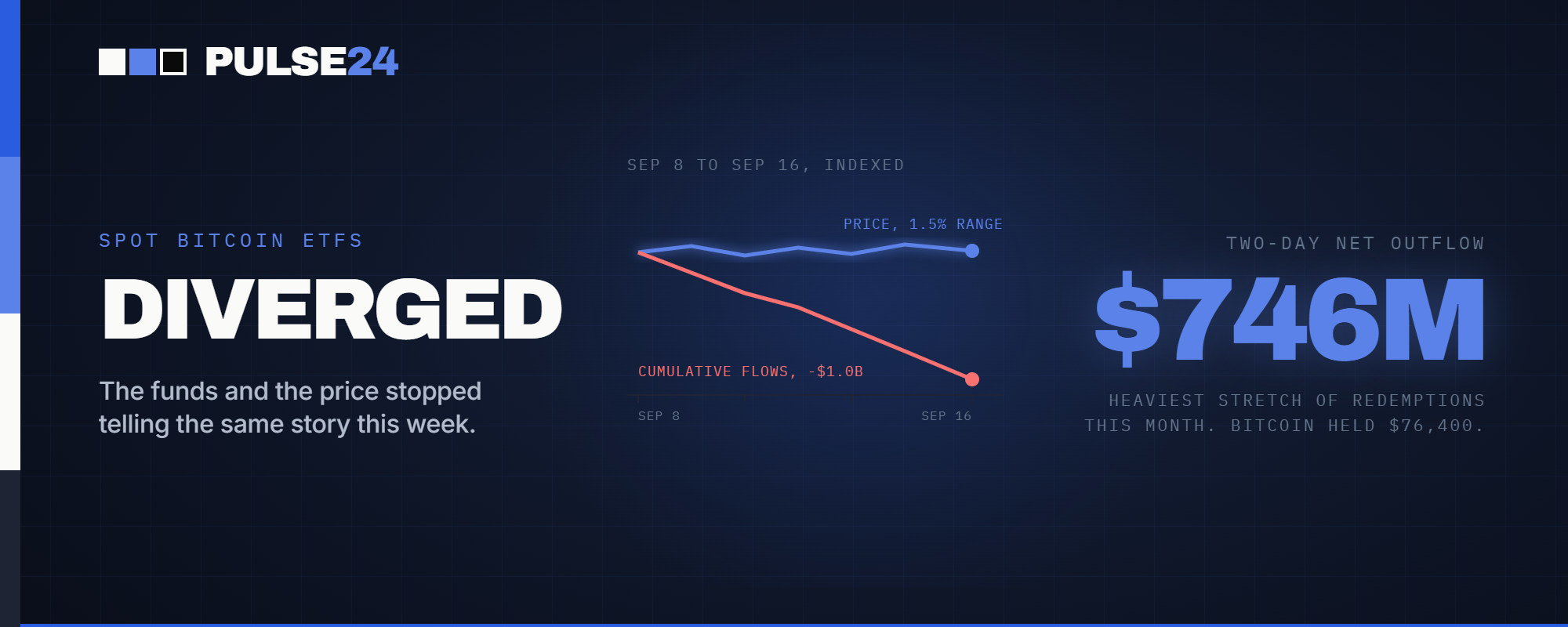
$746 Million Left Bitcoin ETFs in Two Days. Bitcoin's Price Barely Noticed.
U.S. spot Bitcoin ETFs shed $746 million in the two sessions after this week's Fed rate hike, their sharpest stretch of selling this month. Bitcoin's price moved just 1.5% over the same span, and that gap between what the funds are doing and what the price is doing is worth understanding before reading too much into either one.
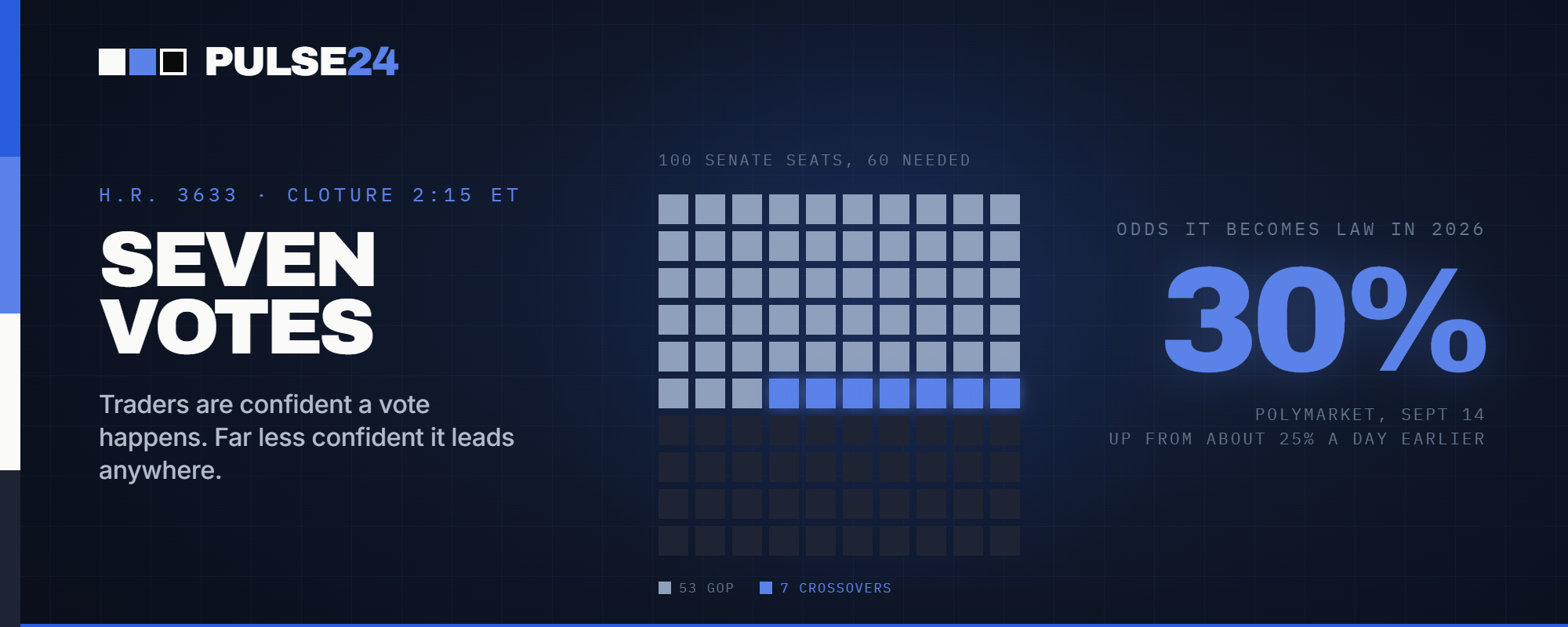
Crypto's Rulebook Bill Needs Seven Democratic Votes Tuesday. It's Been Waiting Fourteen Months for Them.
The Senate holds a cloture vote Tuesday on crypto's biggest regulatory bill in over a year, and prediction markets say a floor vote is nearly certain while actual passage odds, though rising fast this week, sit closer to three in ten. Seven Democratic or independent votes stand between the CLARITY Act and its first real test since Pulse24 tracked its August delay.
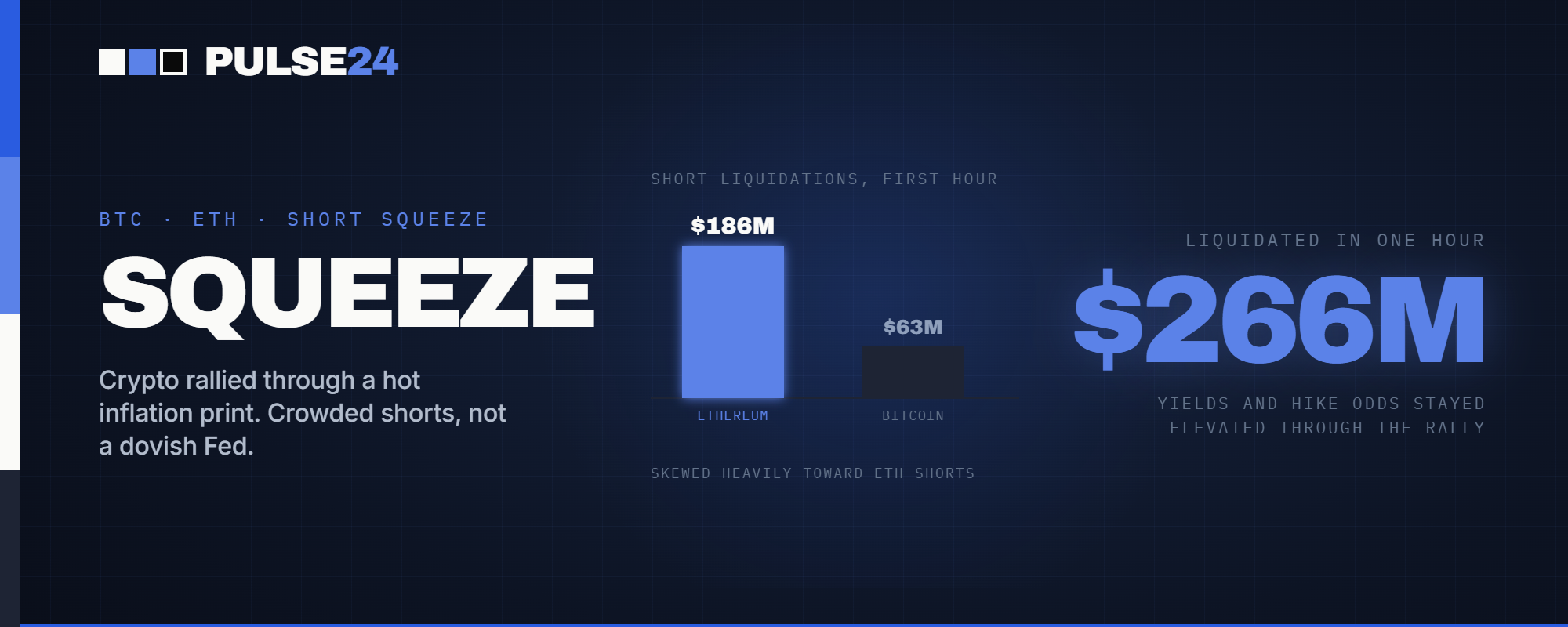
Bitcoin and Ethereum Jumped After a Hotter-Than-Expected CPI Print. A Short Squeeze Explains the Contradiction.
Bitcoin jumped past $79,000 and Ethereum surged more than 6% Friday, reversing a sharp drop that followed a hotter-than-expected core CPI print. The move looks like a short squeeze rather than a dovish shift, since Treasury yields and Fed hike odds stayed elevated right through it.
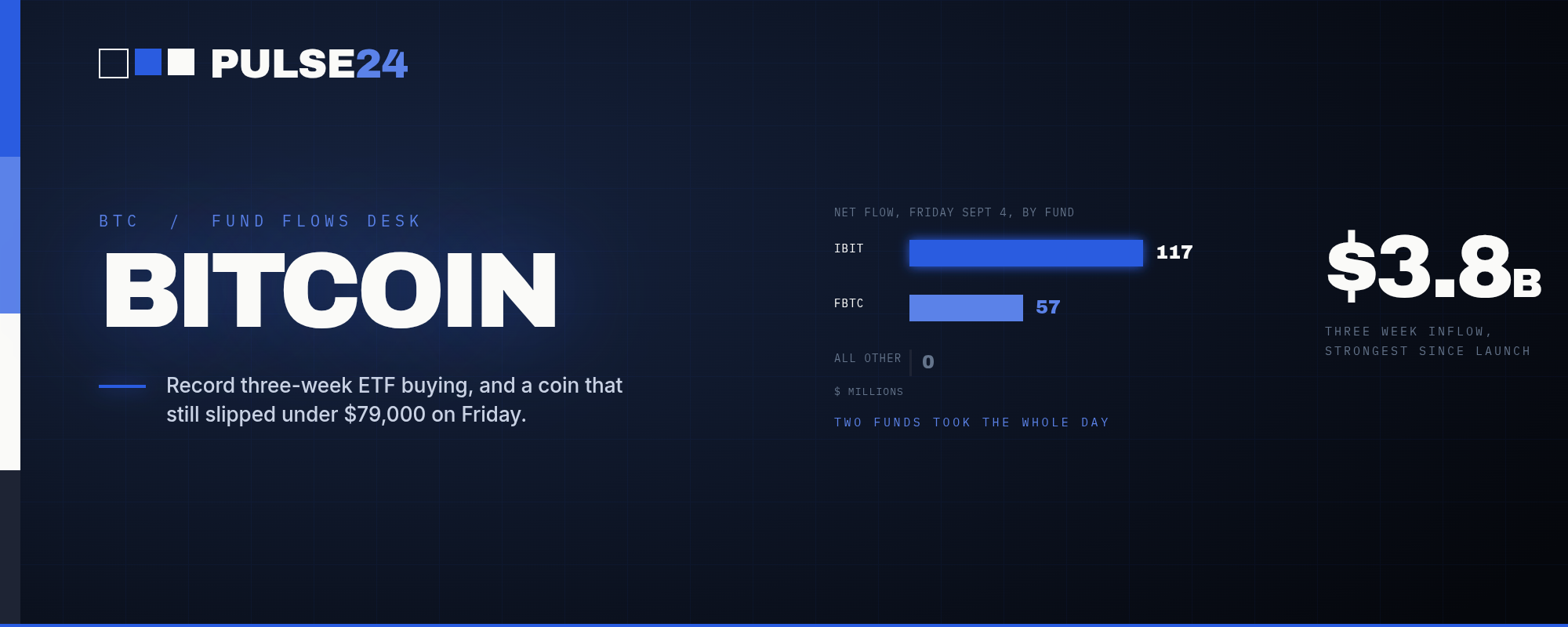
Bitcoin ETFs Pulled In $3.8 Billion Over Three Weeks, the Strongest Stretch of 2026. The Coin Itself Slid Below $80,000 the Same Friday.
Spot bitcoin ETFs pulled in $3.8 billion over the past three weeks, their best stretch since launch, even as bitcoin slipped from above $81,000 to briefly under $79,000 on Friday. A stronger than expected August jobs report, not anything crypto-specific, looks like the reason the coin and the fund flows are moving in opposite directions.
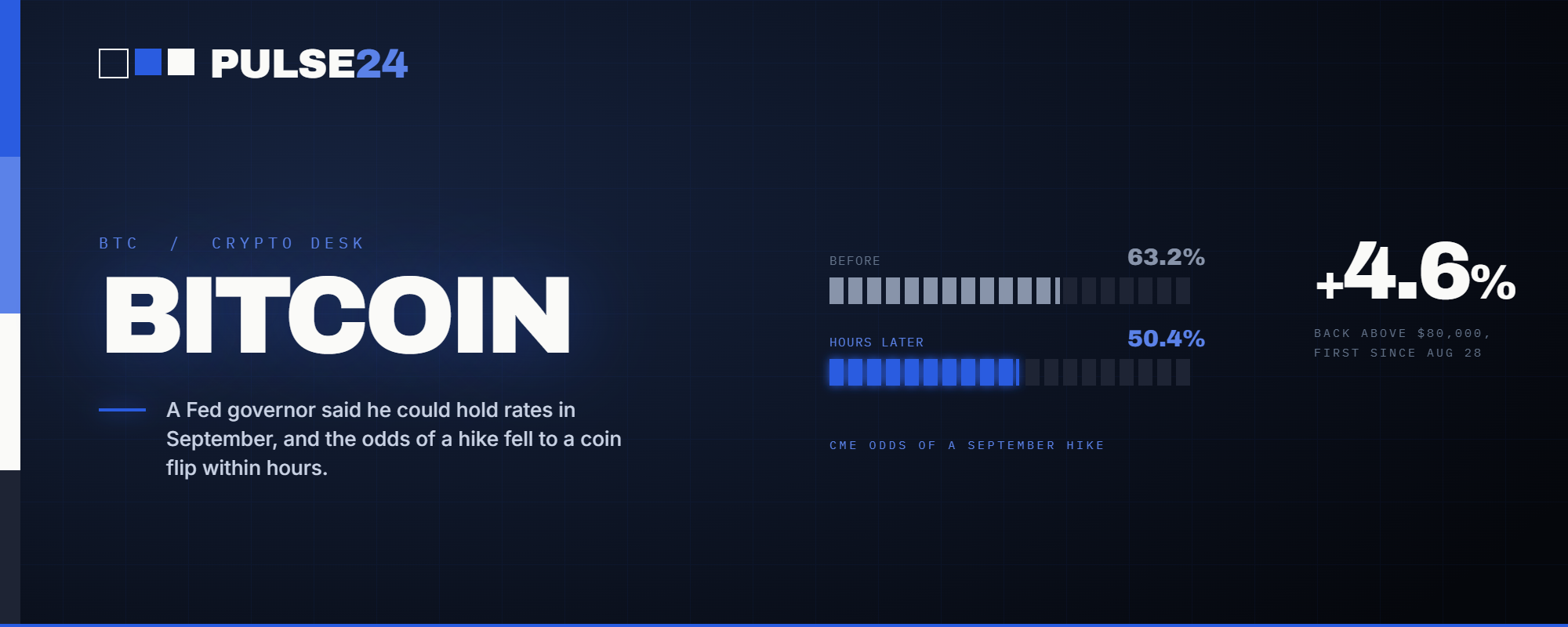
Fed Governor Waller Cut September Rate-Hike Odds to a Coin Flip. Bitcoin Reclaimed $80,000 Within Hours.
A single Fed governor's remarks on inflation moved September rate-hike odds by nearly thirteen points in a matter of hours, and bitcoin surged about 4.6% to reclaim $80,000 the same day. Treasury yields eased, stocks rallied, and bitcoin's newly tight correlation with gold shows why one comment traveled so far.
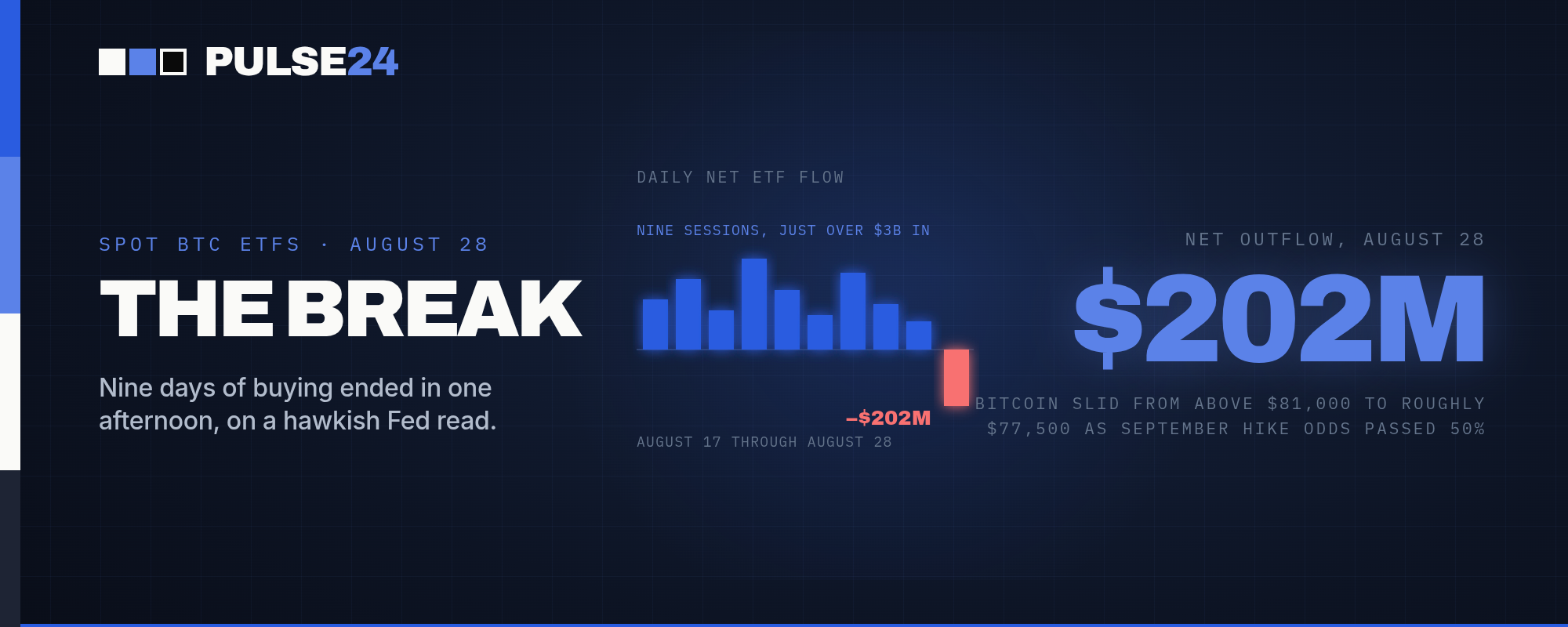
Nine Straight Days of Bitcoin ETF Inflows Ended in a Single Afternoon. $202 Million Left as Rate-Hike Odds Climbed Past 50%.
Spot bitcoin ETFs broke a nine-day, $3 billion buying streak on August 28, shedding $202 million in a single session as bitcoin slid from above $81,000 to roughly $77,500. The reversal followed Fed Chair Kevin Warsh's hawkish Jackson Hole speech, which pushed September rate-hike odds above 50% and sent traders rotating out of risk.
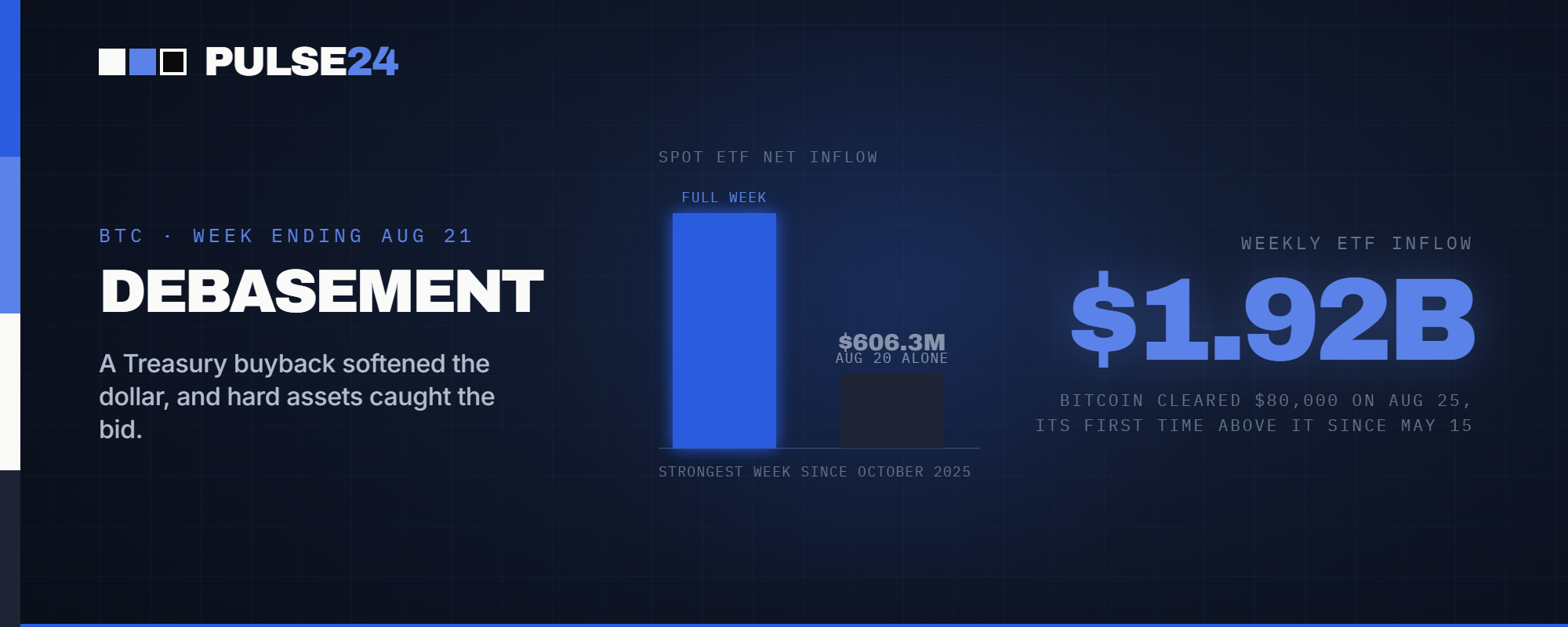
Bitcoin Cleared $80,000 for the First Time Since May on a $1.92 Billion Weekly ETF Inflow, the Strongest in Ten Months. Traders Are Calling It the 'Debasement Trade,' the Same Force Lifting Gold.
Bitcoin cleared $80,000 for the first time since May, powered by the strongest weekly ETF inflow in ten months and the same Treasury bond buyback that's been weakening the dollar. Traders are calling it the debasement trade, and gold is riding the same wave.
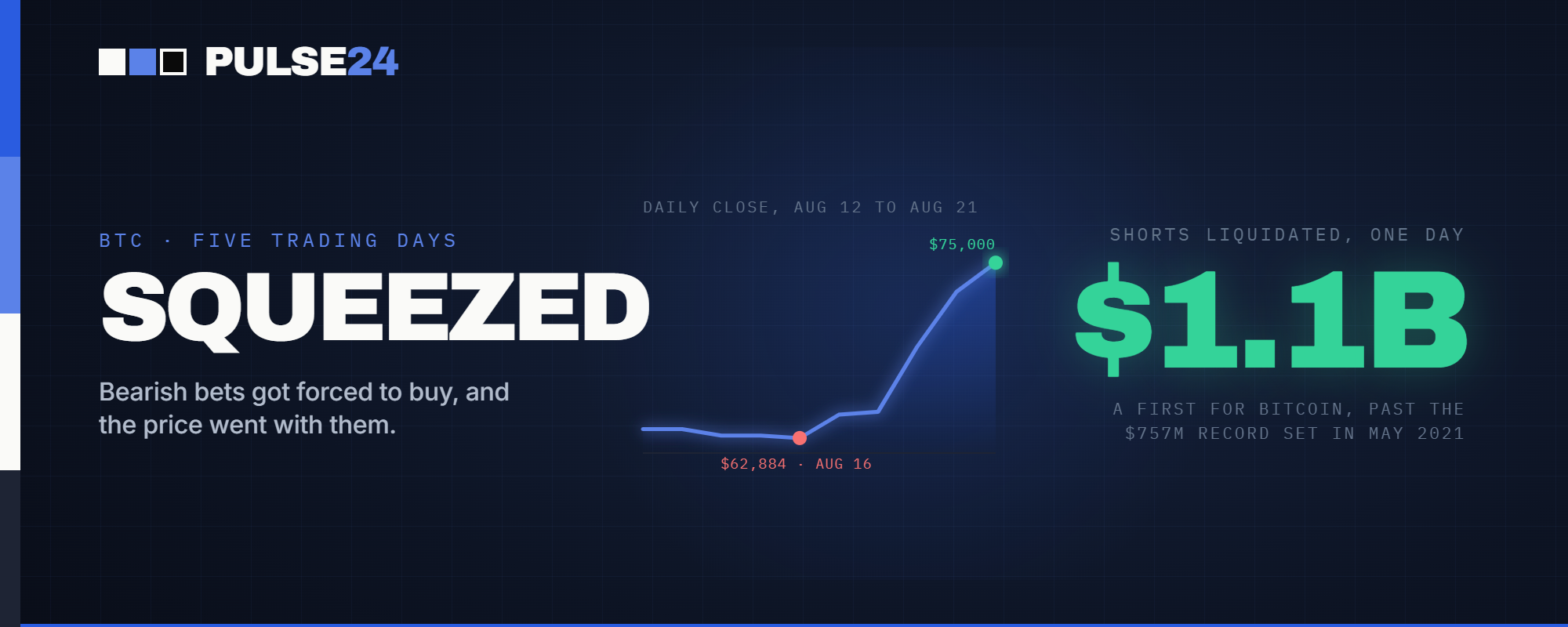
Bitcoin Just Jumped From $62,884 to $75,000 in Five Days. More Than $2.7 Billion in Short Positions Got Liquidated Along the Way.
Bitcoin surged roughly 19% in five trading days, from an August 16 low near $62,884 to about $75,000, after a one hour short squeeze on August 19 forced more than a billion dollars of bearish bets to cover. A Clarity Act push from President Trump, returning ETF inflows, and the Treasury's bigger bond buybacks lined up at nearly the same moment, though the rally's technicals are already flashing overbought.
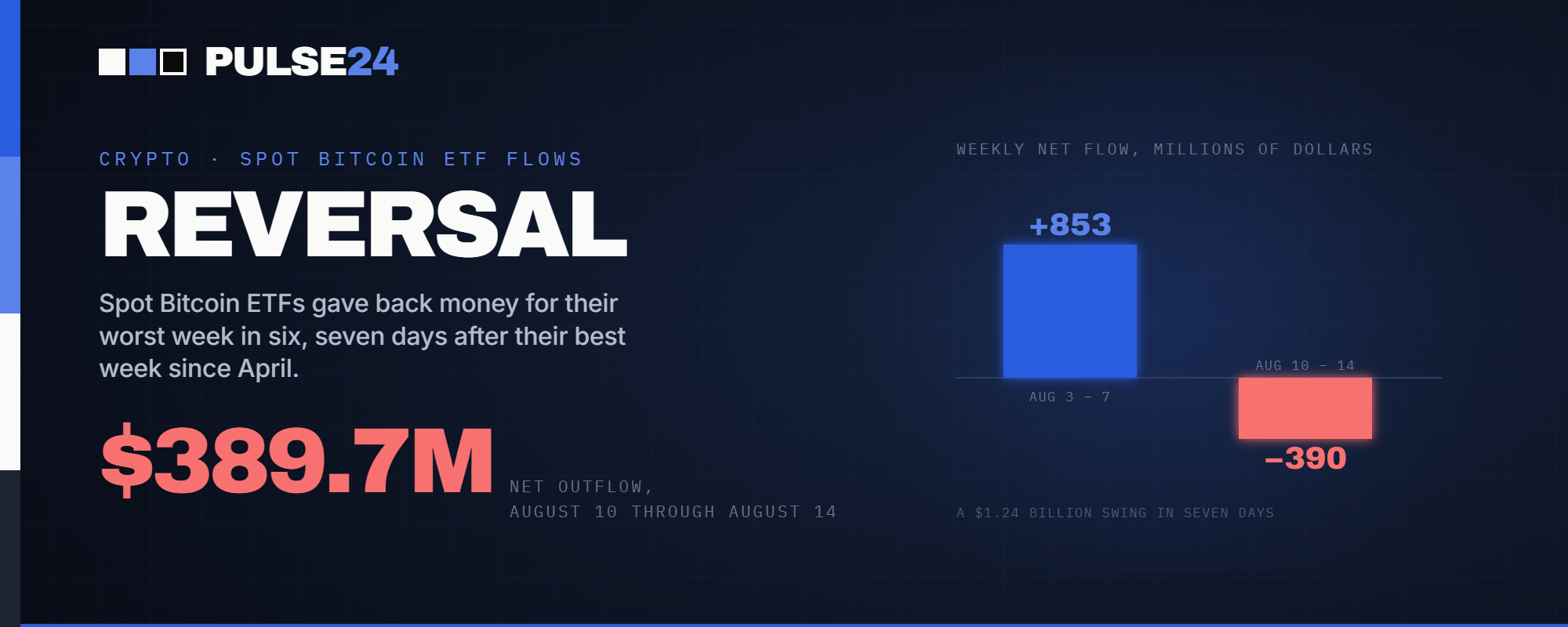
Bitcoin ETFs Just Booked Their Biggest Weekly Outflow in Six Weeks, $389.7 Million. Seven Days Earlier, the Same Funds Pulled In $853 Million, Their Best Week Since April.
Bitcoin ETFs just booked a $389.7 million outflow, their worst week in six, a sharp reversal from the $853 million they pulled in just seven days earlier. With the CLARITY Act's odds cut to roughly 10% and volatility near a two-year low, flows are increasingly taking their cue from the Fed instead of crypto-specific news.
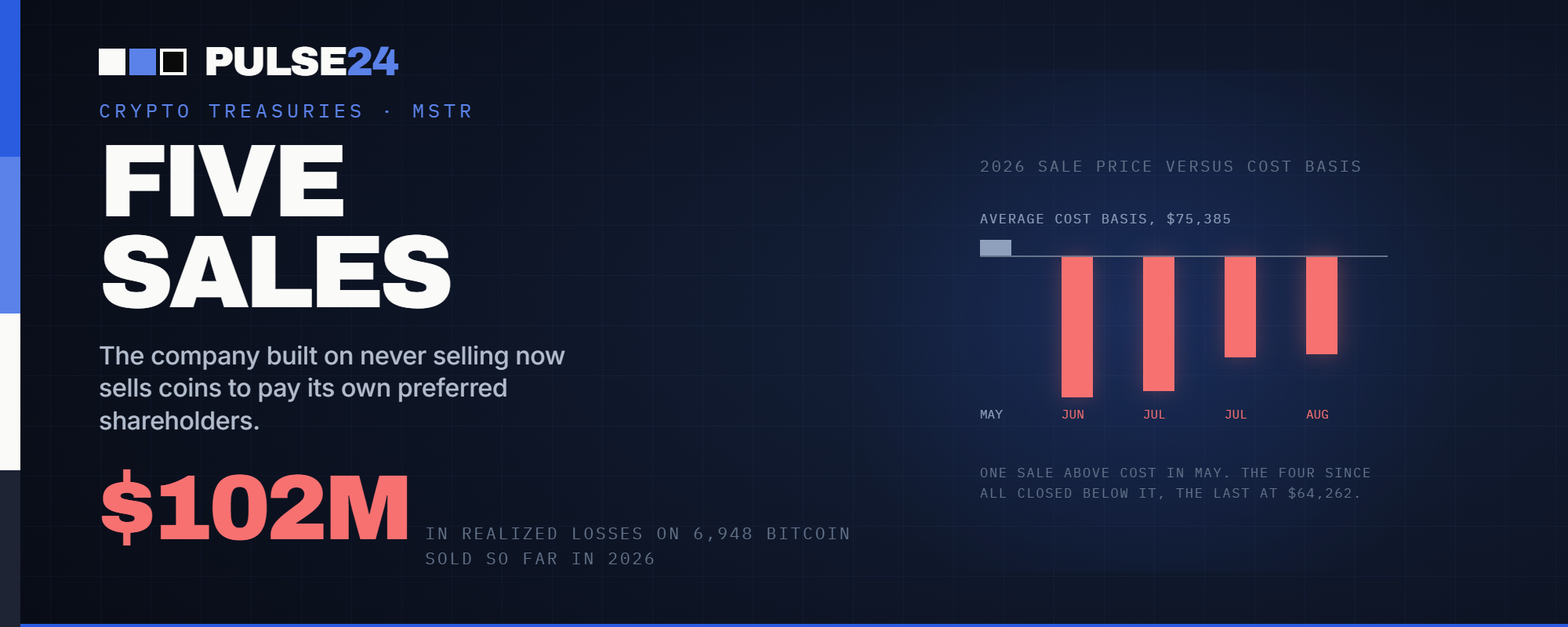
Strategy Has Sold Bitcoin Five Times in 2026, Booking $102 Million in Losses to Do It. The Company Built on Never Selling Now Sells Coins to Pay Its Own Preferred Shareholders.
Strategy has sold Bitcoin five separate times in 2026, almost every sale below its own average cost basis, just to keep paying the 12% dividend on the preferred stock it issued to buy that Bitcoin in the first place. The company that spent years telling holders to never sell is now a recurring seller of its own.
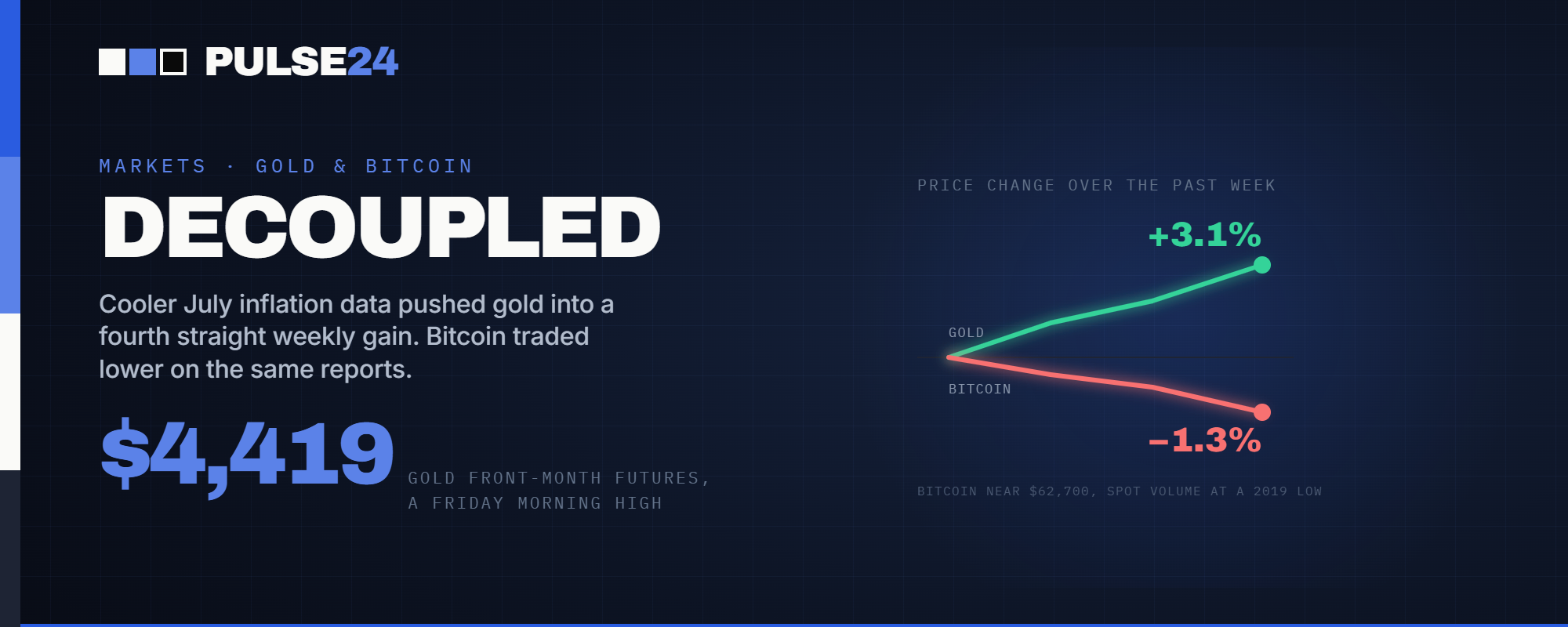
Gold Hit $4,419 an Ounce This Week on Cooling Inflation Data. Bitcoin Fell to $62,700 on the Exact Same Numbers.
Gold climbed to $4,419 an ounce this week as traders priced in higher odds the Fed holds rates steady in September. Bitcoin fell on the same inflation data, dragged down by ETF outflows and the thinnest spot trading volume since 2019.
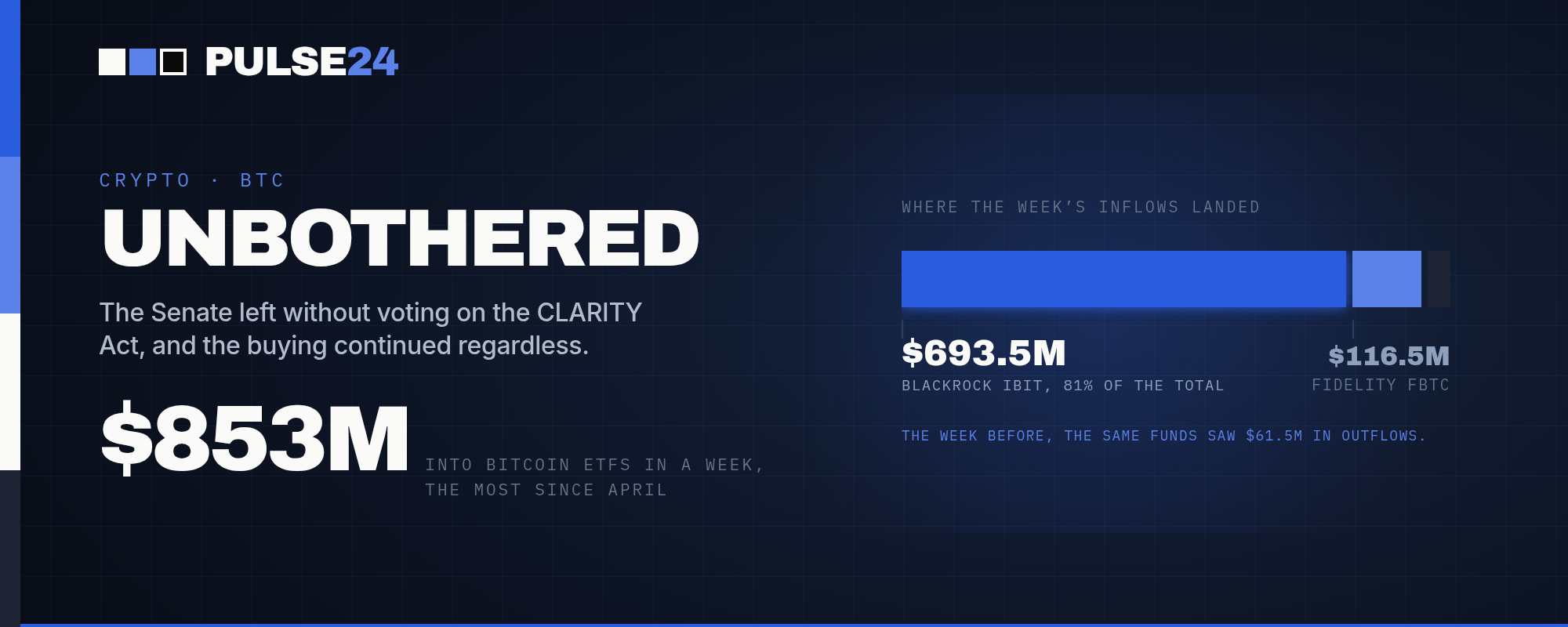
The CLARITY Act Missed Its Last Chance to Pass Before Recess. Bitcoin ETFs Pulled In $853 Million the Same Week, Their Best Since April.
The Senate ran out of time on crypto's biggest regulatory bill and pushed the vote to September. Bitcoin ETFs kept buying anyway, pulling in $853 million in a single week, the strongest stretch since April.
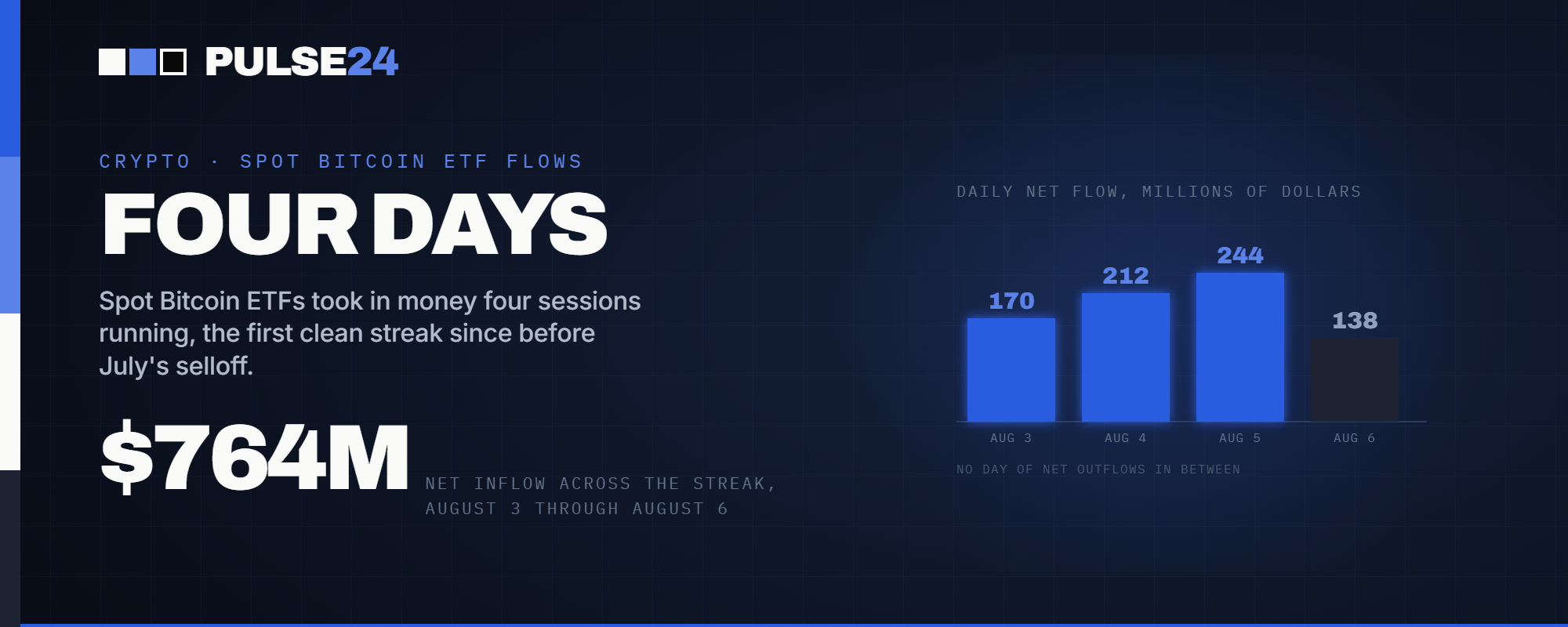
Bitcoin ETFs Just Pulled In $626 Million Over Three Days. It Follows the Worst Month for Crypto Funds This Year.
US spot Bitcoin ETFs booked four straight days of net inflows through August 6, with BlackRock's IBIT behind most of the buying. The rebound follows July's worst month for crypto fund flows this year, and the numbers underneath the headline total are more cautious than the price action suggests.
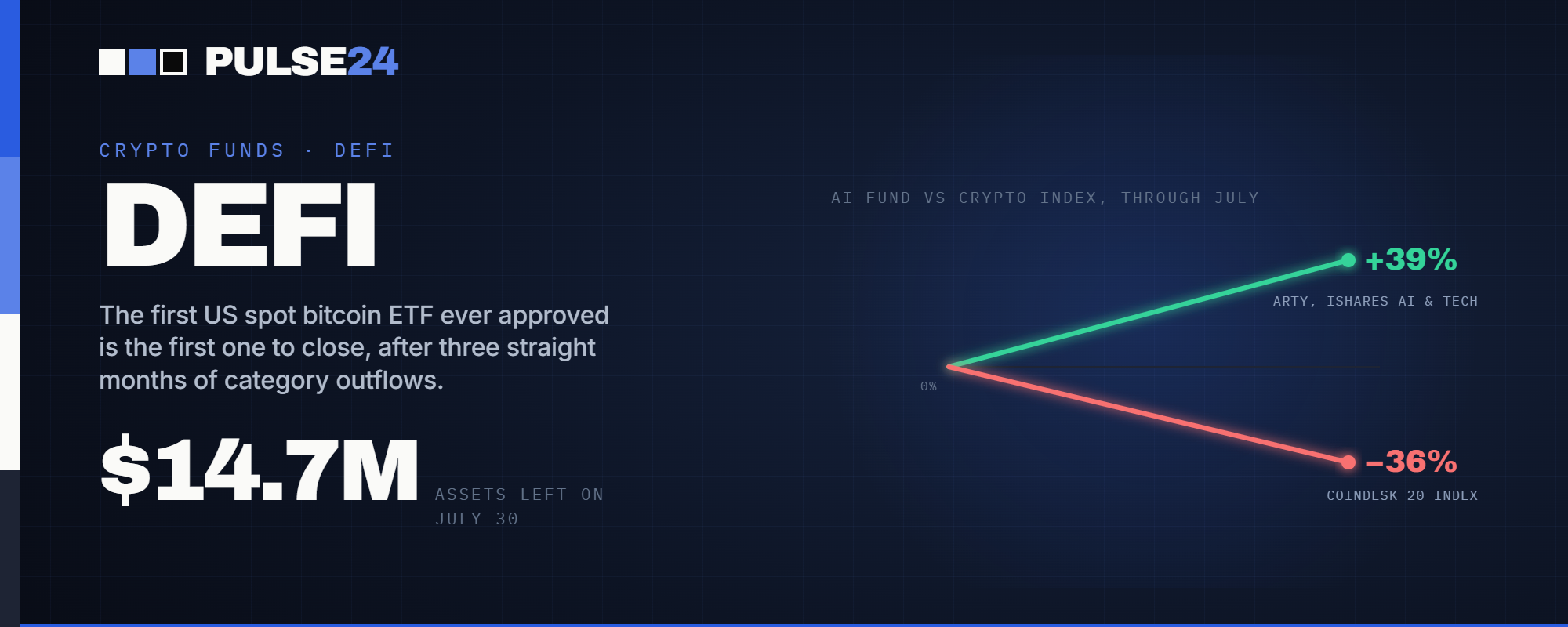
The First Spot Bitcoin ETF Just Closed. A 39% AI Trade Explains Where the Money Went.
Hashdex is shutting down DEFI, the first US spot bitcoin ETF ever launched, after its assets shrank to just $14.7 million next to BlackRock's $47 billion fund. The bigger story is a 75-point performance gap between AI equities and crypto that explains where institutional capital went instead.
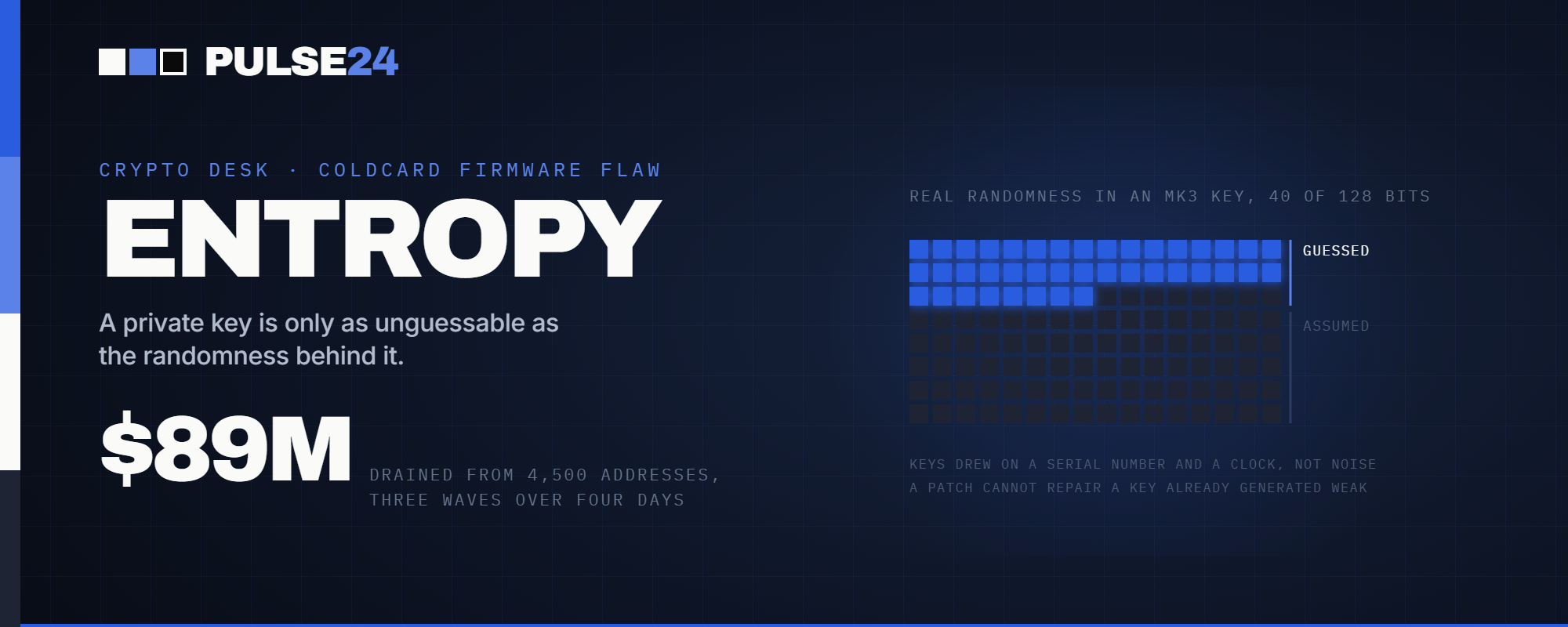
Hackers Stole $89 Million From Bitcoin Wallets This Week Using a 2021 Coding Error. It's the Third Time in a Decade a "Random" Number Wasn't Random Enough.
A five-year-old Coldcard firmware bug let hackers drain an estimated $89 million from Bitcoin wallets this week, the third time in just over a decade that a "random" number generator wasn't random enough. Here's the technical story, the history it rhymes with, and what it actually means for Bitcoin self-custody security.
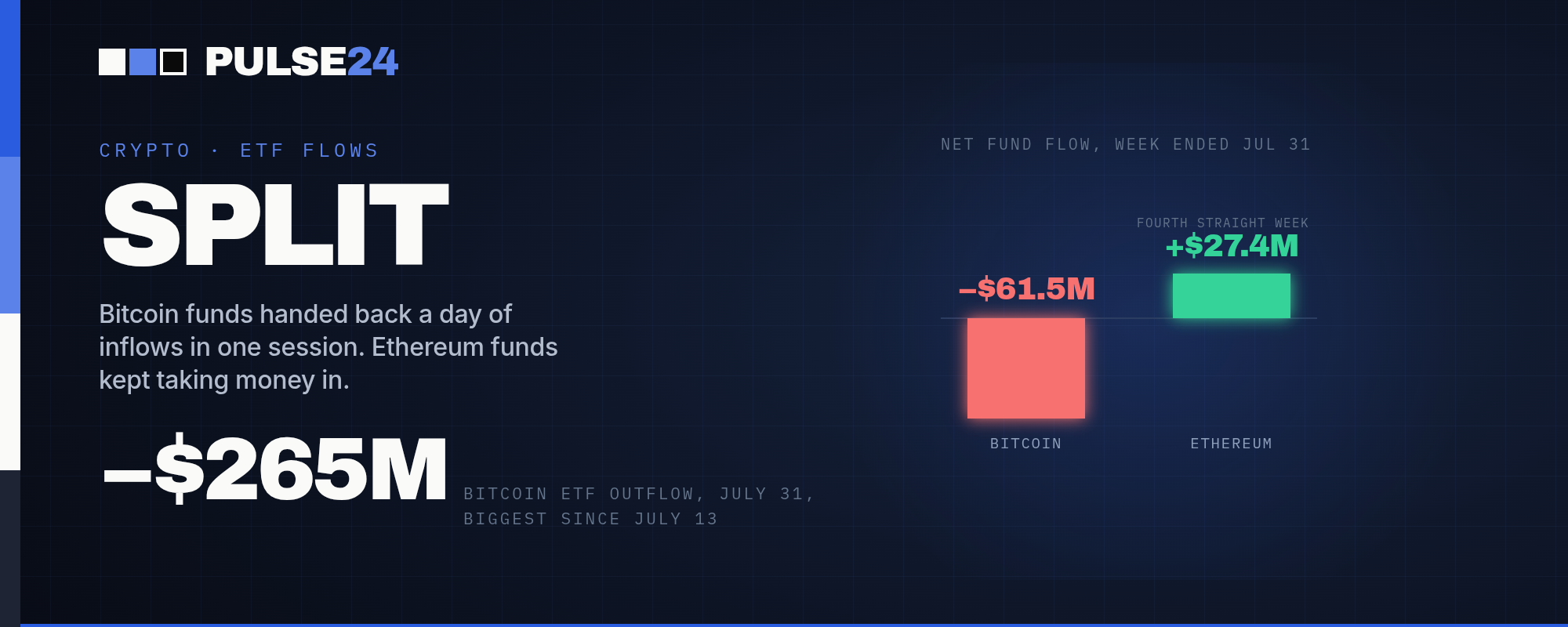
Bitcoin ETFs Shed $265 Million in a Single Session. Ethereum Funds Just Notched a Fourth Straight Week of Inflows.
Bitcoin ETFs posted their biggest one-day outflow since July 13 right as the Fed's most hawkish dissent since 2016 and a stalled Clarity Act reshaped crypto positioning. Ethereum funds kept pulling in cash anyway, extending their inflow streak to four weeks.
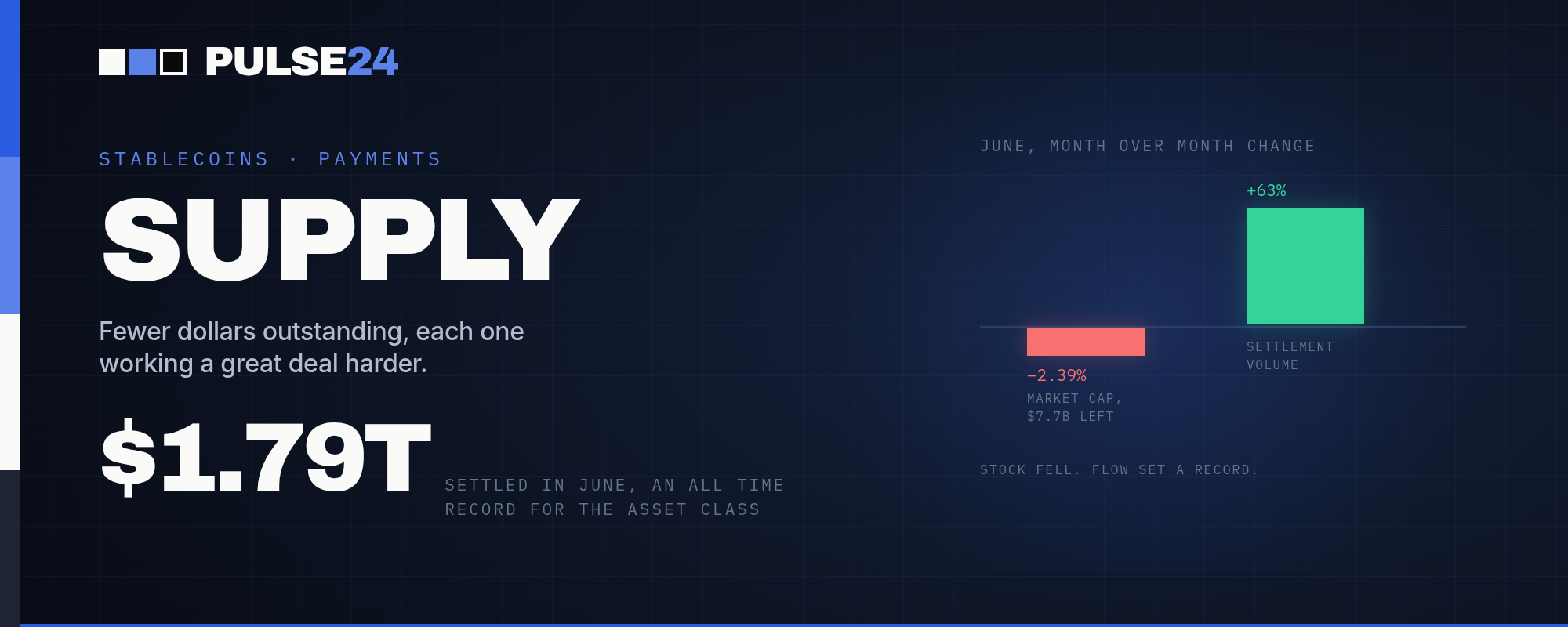
Stablecoins Just Shrank $7.7 Billion in a Month. They Also Just Set an All-Time Volume Record.
Stablecoins shrank for the first time in four years, dropping $7.7 billion in June to about $312 billion, the steepest monthly decline since Terra's 2022 collapse. But settlement volume hit an all-time record of $1.79 trillion the same month, up 63%, a signal that stablecoins are moving from parked collateral into an actual payments rail.
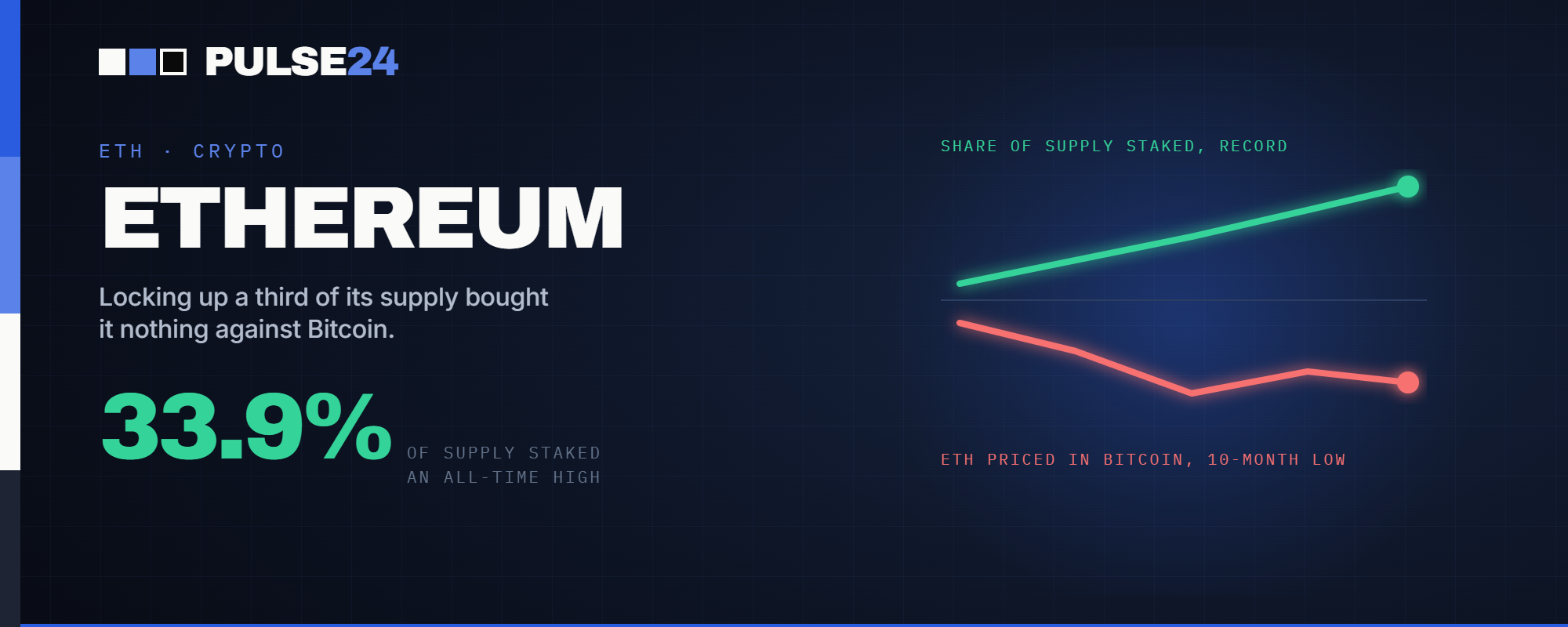
Ethereum's Utility Case Has Never Been Stronger. Its Price Still Can't Escape Bitcoin's Shadow.
Ethereum just hit a record staking rate of 32.55% of supply, yet its price keeps losing ground to Bitcoin. The utility case is real; the market just hasn't found a way to pay for it the way it pays for Bitcoin's simpler story.
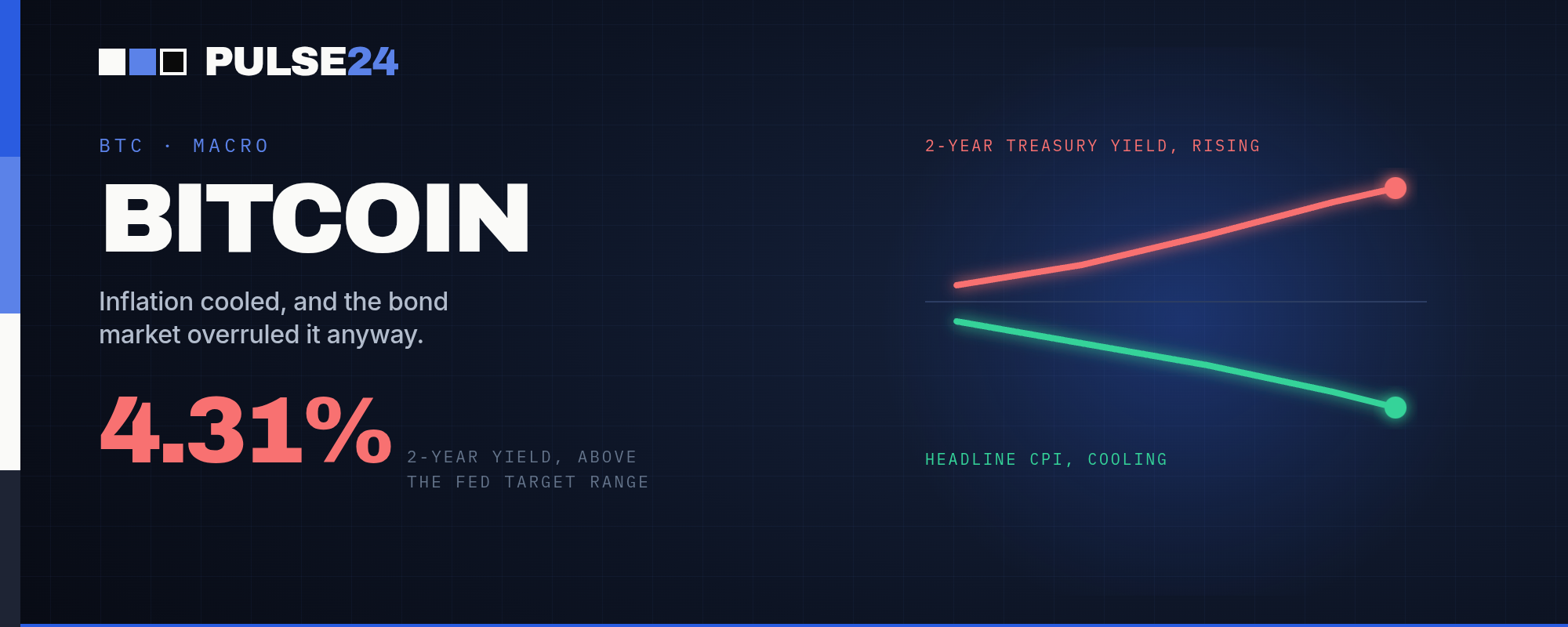
Bitcoin Broke $64,000. A 4.31% Treasury Yield Explains Why Cooling Inflation Couldn't Save It.
Bitcoin broke below $64,000 as a 2-year Treasury yield spike, fueled by oil's climb past $100, overrode a cooler-than-expected CPI report and drained crypto liquidity in the process.
Over 95% of Coinbase’s code is now written with help of AI
Coinbase has crossed a threshold: over 95% of its codebase is now AI-assisted, with exec Rob Witoff framing the shift as AI handling execution while humans retain judgment and strategy. This isn't a Coinbase story, it's the clearest live signal yet that crypto-native firms are outpacing traditional finance on AI adoption curves, collapsing engineering headcount economics while the rest of the industry debates copilot policies. The implication is structural: any valuation model for Coinbase that prices engineering costs linearly is already wrong.
Three US senators oppose CLARITY Act on ethics grounds with vote expected soon
Three US senators have moved to block the CLARITY Act on ethics grounds as Senate Majority Leader John Thune signals a vote before August 10, with Democratic support still thin enough to threaten passage. The headline frames this as a procedural setback, the real story is that crypto market structure legislation is now a political liability test, not a technical one, revealing how quickly Washington's appetite for crypto legitimacy fractures the moment it touches personal financial disclosures and conflict-of-interest rules. If the CLARITY Act stalls here, the regulatory vacuum persists and offshore venues continue absorbing the institutional volume that US markets are legislating away.
Empery Digital shares rise after selling Bitcoin treasury to fund AI data center project
Empery Digital's stock is rising after the company liquidated its Bitcoin treasury to fund an AI data center buildout, a pivot forced, in part, by shareholder pressure that targeted both the crypto strategy and executive leadership. This isn't a Bitcoin story; it's a governance story, and it signals how activist shareholders are now using the Bitcoin-vs-AI capital allocation debate as leverage to reshape boardrooms. Investors watching corporate treasury plays should note that the real risk isn't price volatility in BTC, it's the shareholder base you attract when you adopt it.
Former Tether CIO seeks to sell stake in stablecoin issuer, Bloomberg reports
Former Tether CIO Giancarlo Devasini is seeking to sell a personal stake in Tether Holdings, the world's largest stablecoin issuer by market cap, according to Bloomberg. The move signals that early insiders are eyeing liquidity events even as Tether publicly distances itself from IPO timelines, a pattern that says more about internal pressure to monetise than it does about strategic conviction. Investors watching the stablecoin space should treat this as a leading indicator of how Tether's ownership structure evolves ahead of any regulatory clarity in the US or EU.
Bitcoin analysts predict $300,000–$500,000 price in 2029. The math says no
Bitcoin analysts are projecting $300,000–$500,000 price targets by 2029, but structural data argues the era of exponential moonshots is behind us. The consensus misses the core dynamic: as Bitcoin's market cap scales, the marginal capital required to move price compounds, cycle diminishing returns aren't a sentiment story, they're a math story. Readers long on Bitcoin at multi-year horizons should stress-test their return assumptions against liquidity depth, not analyst euphoria.
SEC crypto rule changes are high on its 2026 agenda
The SEC has placed crypto broker-dealer rules, digital asset exchange frameworks, and potential safe harbor provisions at the top of its 2026 regulatory agenda. This isn't a story about crypto maturing, it's a story about the SEC reclaiming jurisdictional ground after years of enforcement-first strategy failed to produce durable legal clarity, with safe harbor language signaling a deliberate shift toward structural legitimacy over punitive control. Firms operating in digital assets now have a narrow window to position before rule codification reshinks the competitive landscape.
Bitwise says STRC selloff signals crypto cycle nearing a bottom, not Strategy’s breaking point
Bitwise is reading the STRC selloff not as a Strategy-specific breakdown but as a late-cycle leverage unwind, the kind of forced deleveraging that historically precedes institutional accumulation at scale. The consensus is treating this as a Strategy story; the real signal is a regime change in who holds bitcoin, with institutions positioned to displace leveraged retail proxies as the dominant buyer. If Bitwise is right, the selloff isn't the risk, missing the rotation is.
Ondo Finance debuts SEC-aligned tokenized stock model with BlackRock ETF, Micron shares
Ondo Finance has launched a tokenized stock model built around SEC compliance, using BlackRock ETF and Micron shares as the initial assets, with Broadridge and Oasis Pro providing the transfer agent infrastructure that anchors the structure inside existing U.S. market rules. The headline reads as a crypto story — the real story is regulatory architecture: this is the first credible institutional attempt to route tokenized equities through the SEC's third-party custodial framework rather than around it, signaling that the next phase of tokenization is a compliance race, not a technology race. Investors watching RWA tokenization need to track which protocols control the regulatory plumbing — because that is where the durable moat gets built.
Securitize gains on NYSE debut with tokenized stocks live on Solana, Avalanche
Securitize launched tokenized versions of its own shares on Solana and Avalanche simultaneously with its NYSE debut — the first newly public company to do so on day one. This isn't a crypto story; it's a capital markets infrastructure story, signaling that the wall between traditional equity issuance and on-chain settlement is cracking faster than legacy finance has priced in. Watch which custodians, transfer agents, and prime brokers move to support tokenized equity next — that's where the real structural shift lands.
IMF says tokenization could transform settlement and financial stability
The IMF has issued a formal assessment that tokenization of financial assets could restructure settlement infrastructure and reduce friction across global markets, while flagging fragmented regulatory regimes as a potential vector for systemic instability. The headline reads as institutional validation of crypto rails, the real story is that the IMF is quietly signaling that the next financial stability risk isn't a rogue exchange, it's regulatory fragmentation creating incompatible tokenized ecosystems that concentrate rather than distribute risk. If that fragmentation thesis lands, the winners are not the assets themselves but the interoperability and compliance infrastructure layers built on top of them.