Pulse24 Original
Bitcoin and Ethereum Jumped After a Hotter-Than-Expected CPI Print. A Short Squeeze Explains the Contradiction.
September 11, 2026
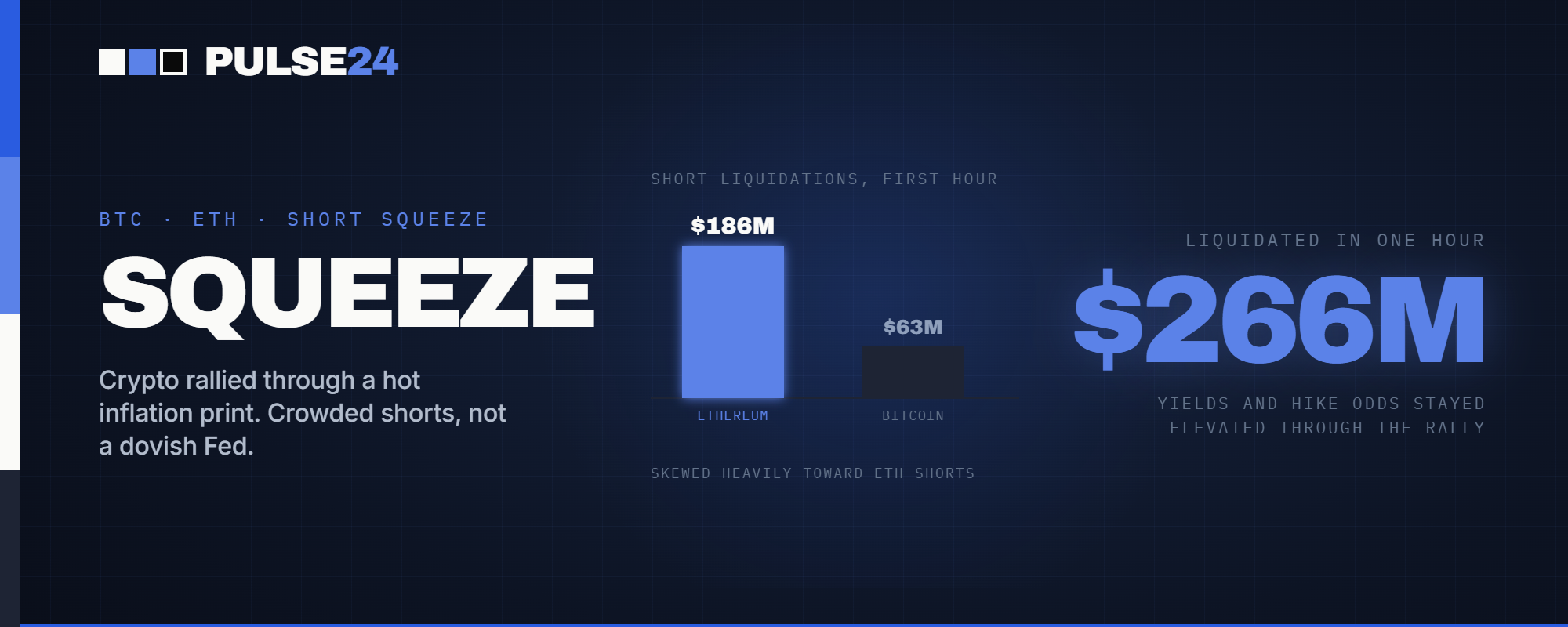
Bitcoin jumped past $79,000 and Ethereum surged more than 6% Friday, reversing a sharp drop that followed a hotter-than-expected core CPI print. The move looks like a short squeeze rather than a dovish shift, since Treasury yields and Fed hike odds stayed elevated right through it.
Bitcoin jumped past $79,000 Friday afternoon. Ethereum did better, surging more than 6% to above $2,600. Both moves happened within roughly an hour of a government report that, on its face, should have sent both lower.
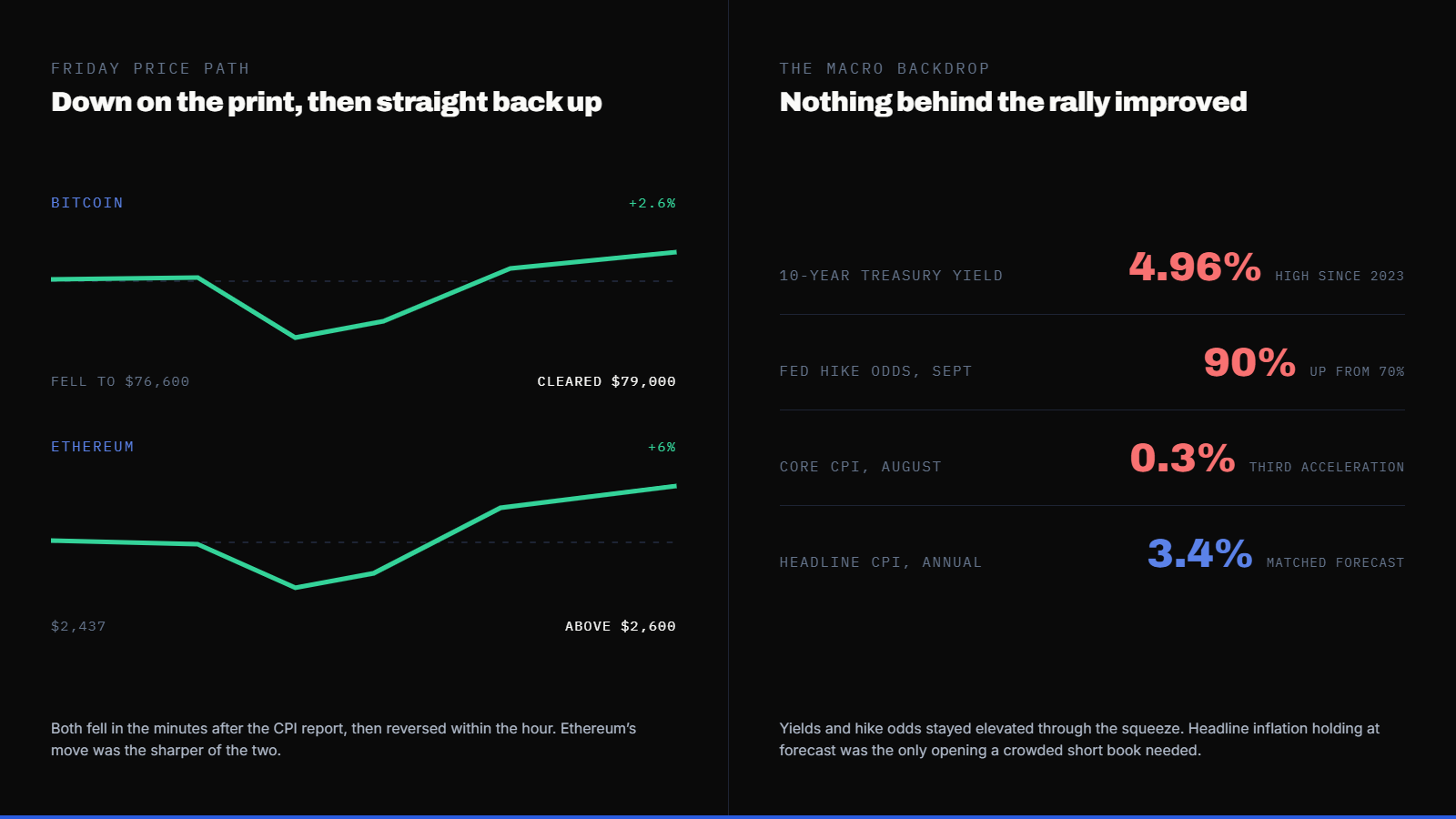
Core CPI rose 0.3% in August, a third straight month of acceleration, and Fed rate-hike odds for next week's meeting jumped from 70% to 90% within hours of the release. Higher rate odds are usually bad news for assets that pay no yield. Crypto rallied anyway.
What Actually Happened
Bitcoin fell first, the way the textbook says it should. It dropped toward $76,500 to $76,700 in the minutes after the CPI report landed, tracking the same hawkish repricing that hit silver and gold the day before. Then it reversed hard, clearing $79,000 within the hour. Ethereum's move was sharper still, from around $2,437 to above $2,600.
The reversal has the shape of a short squeeze, not a change of heart about the Fed. One derivatives tracker counted roughly $266 million in short positions liquidated within an hour of the report, and the damage skewed heavily toward Ethereum shorts, more than $186 million of it, against roughly $63 million on the Bitcoin side. Traders had positioned for a print hot enough to confirm the worst case. Core inflation obliged on the monthly number, but headline inflation held exactly at 3.4%, matching forecasts rather than beating them, and that was apparently enough daylight for a crowded short book to unwind fast.
Why the Move Doesn't Mean What It Looks Like
A rally right after a hawkish inflation surprise looks like a contradiction, until the price action is separated from the macro backdrop it happened against. Treasury yields didn't fall during the squeeze. The 10-year touched 4.96% Friday morning, its highest level since 2023, and Fed hike odds held near 90% right through the crypto reversal rather than retreating with it. A genuine dovish turn would have moved yields and hike odds too. Neither budged.
What moved instead was positioning. Bitcoin ETFs logged a second straight day of outflows Thursday even as most other crypto funds took in money, a sign that sentiment was already leaning bearish on Bitcoin specifically heading into the report. Stack that against a print that came in hot but not disastrous, and a violent short-covering rally is a more complete explanation than a story about the Fed changing course.
What Lies Ahead
The Fed's decision lands September 16, and a quarter-point hike is close to consensus rather than a surprise at this point, with CME's tool near 90% and Polymarket's contract running lower, around 79%, a gap Pulse24 has flagged before as a reminder that different trackers price this differently. For crypto, the more interesting question is whether Friday's squeeze holds. Short squeezes tend to be fragile rallies built on forced buying rather than new conviction, and if traders rebuild bearish positions into next week's decision, the move could give back just as fast as it arrived.
Bitcoin's longer path matters more than any single day. It bottomed in the low $60,000s in early August after roughly two months of sideways trading, then squeezed through $70,000 and briefly above $80,000 more than once in the following weeks, each time on a wave of forced short covering rather than a steady grind higher. Friday's move fits the same pattern: a market that keeps getting yanked higher by its own crowded pessimism rather than climbing on genuinely improving news. Bitcoin ETFs pulled in $3.8 billion over three weeks earlier this cycle, and whether that demand returns after two straight days of outflows will say more about where Bitcoin goes next than Friday's bounce does.
The Pulse24 Take
Nothing about Friday's inflation report should make anyone bullish on crypto. Core prices accelerated for a third straight month, the Fed is about as close to a hike as CME's tool gets, and the 10-year yield is sitting at levels not seen since 2023. Bitcoin and Ethereum went up anyway, and the honest explanation is the boring one: too many traders were leaning the same way into a single data point, and the print didn't give them enough reason to stay there. That's a real move with real money behind it, but it's a statement about positioning, not about the Fed changing its mind. The next test comes fast. If crypto can hold these levels into next week's decision without shorts building right back up, that would say more about genuine demand than anything that happened in the hour after Friday's CPI print.
How we read the data
Curious how we get from raw data to a take like this? Our Trader's Toolkit walks through the tools we lean on.
Explore the Toolkit