Pulse24 Original
Bitcoin ETFs Pulled In $3.8 Billion Over Three Weeks, the Strongest Stretch of 2026. The Coin Itself Slid Below $80,000 the Same Friday.
September 6, 2026
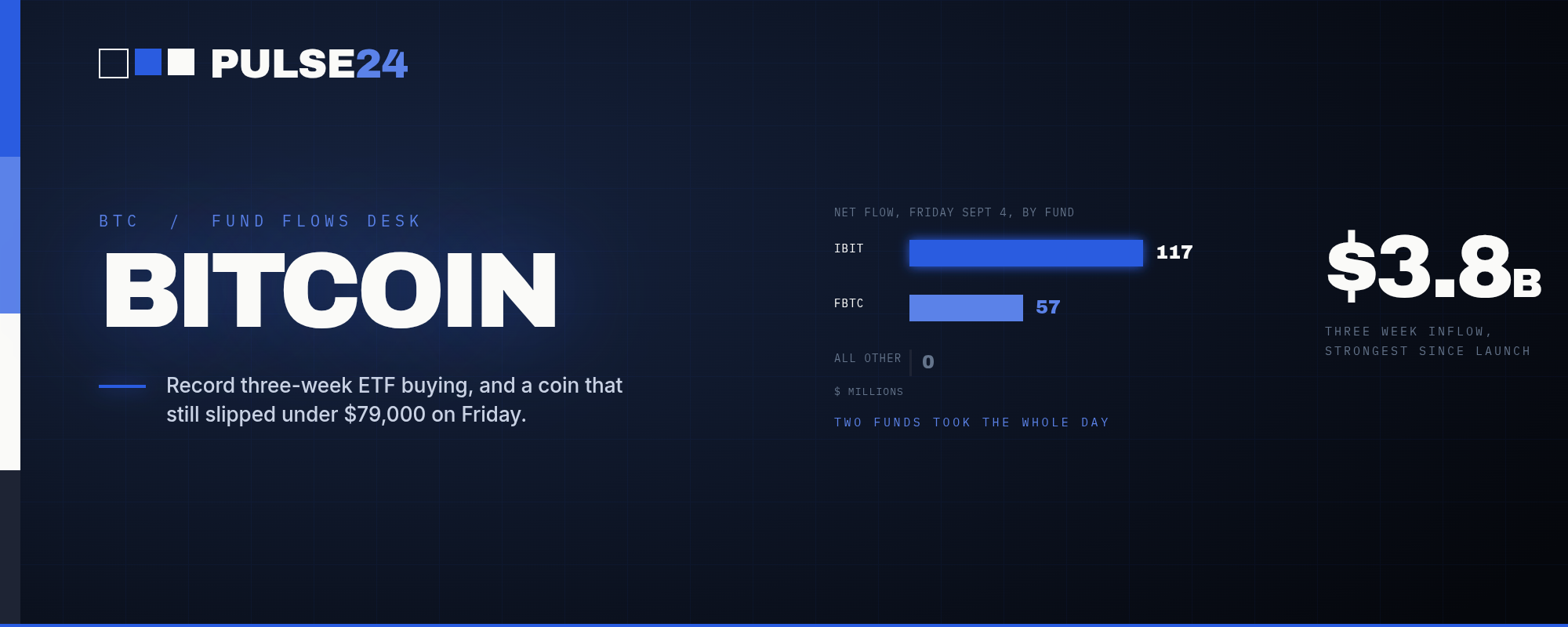
Spot bitcoin ETFs pulled in $3.8 billion over the past three weeks, their best stretch since launch, even as bitcoin slipped from above $81,000 to briefly under $79,000 on Friday. A stronger than expected August jobs report, not anything crypto-specific, looks like the reason the coin and the fund flows are moving in opposite directions.
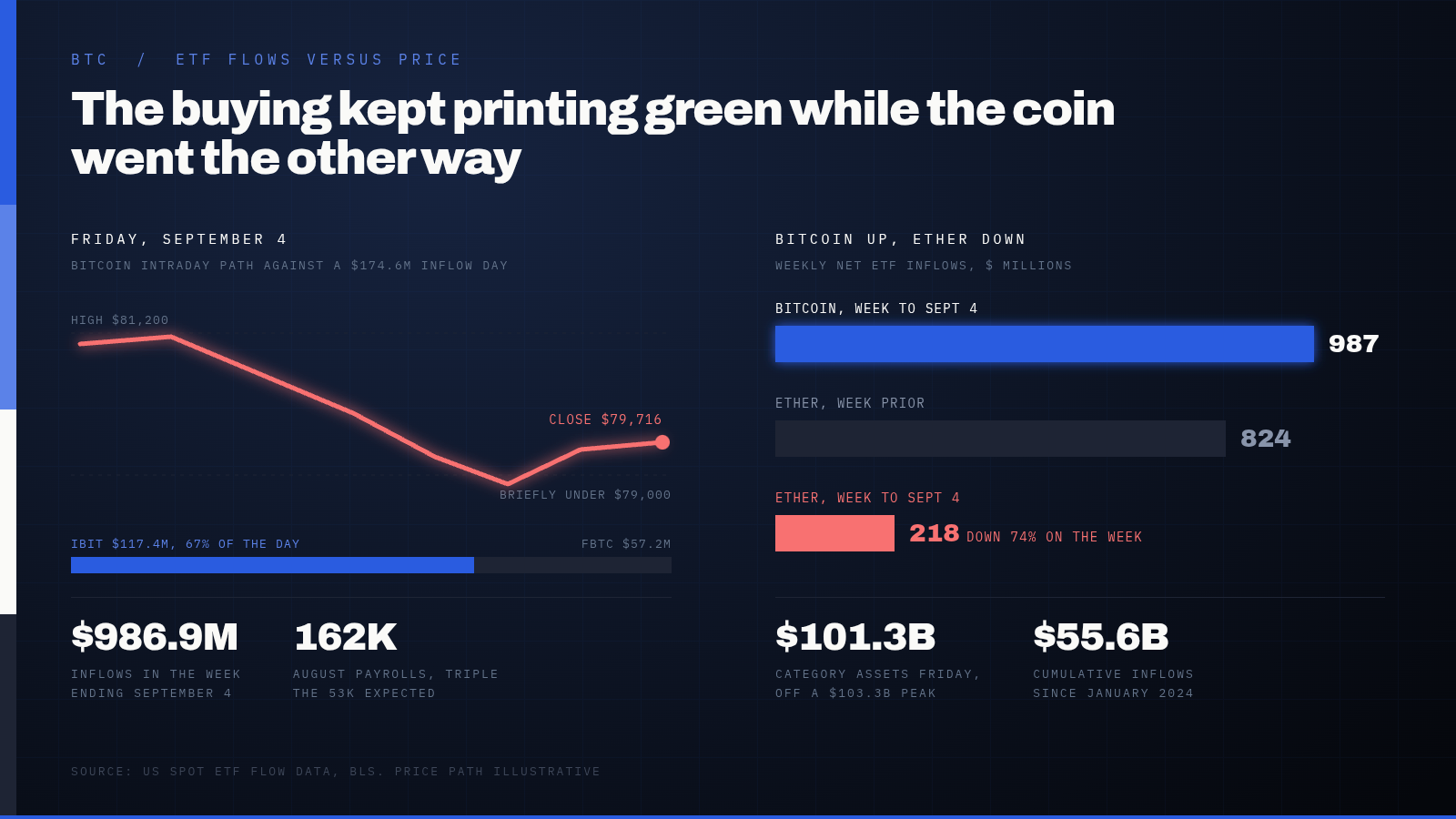
Nearly a billion dollars moved into US spot bitcoin ETFs in the five trading days ending Friday, September 4. That $986.9 million week brought the three-week inflow total to $3.8 billion, the best run the category has put together since it launched in January 2024. Bitcoin's own price told a different story. The coin fell from an intraday high near $81,200 to briefly below $79,000 on that same Friday, closing around $79,716.
What Changed
Friday's flows were lopsided. BlackRock's iShares Bitcoin Trust pulled in $117.4 million, about 67% of the day's total. Fidelity's Wise Origin Bitcoin Fund added $57.2 million on top of that. Every other US spot bitcoin ETF, more than a dozen funds combined, recorded no net flow at all. That kind of concentration usually points to a specific type of buyer. When almost all of the money funnels through the two largest, most institutionally held funds, it looks less like retail chasing a bounce and more like allocators working through a plan that doesn't care much what bitcoin did that morning.
This isn't the category's first run like this, and it isn't happening in a vacuum. A nine-day, $3 billion inflow streak broke in late August, the same day Fed Chair Kevin Warsh's first Jackson Hole speech pushed September rate-hike odds above 50%. Bitcoin dropped alongside that reversal, then climbed back above $80,000 a week later once Fed Governor Christopher Waller cut those odds back down to a coin flip. The $3.8 billion streak reported this week spans both of those swings. Whatever was driving the selling in late August clearly didn't stick.
The latest wrinkle came from the labor market rather than the Fed itself. August payrolls rose 162,000, more than double the roughly 53,000 economists had penciled in, while the unemployment rate held at 4.1%. A beat of that size complicates the case for aggressive rate cuts, and traders spent Friday repricing around it. That repricing, not anything specific to crypto, is the more plausible explanation for bitcoin's slide back toward $79,000 even as the ETF ledger kept printing green.
Why It Matters
ETF flow data is one of the cleaner windows into how institutional money actually behaves, as opposed to how headlines say it's behaving. A single day's price move can be noise. Three straight weeks of net buying worth $3.8 billion is much harder to write off that way, especially when it survived a hawkish Fed speech, a jobs report that argued against imminent rate cuts, and a price pullback all inside the same stretch.
The composition of the buying reinforces that read. IBIT and FBTC are the two funds most associated with advisory platforms, wealth managers, and model portfolios rather than day traders rotating in and out on headlines. Ether told a quieter story over the same week. Inflows into ether ETFs dropped 74% to $218.4 million, down from $824.4 million the week before, even though the category stayed net positive. That gap between a modest slowdown in ether and an accelerating streak in bitcoin suggests allocators are treating the two as separate decisions right now, not as one undifferentiated crypto trade.
What To Watch Next
The Fed's September 15-16 meeting is the next real test. Rate-hike odds have swung from above 50% after Warsh's Jackson Hole speech to a coin flip after Waller's comments, and August's payroll beat pulls the argument back toward the hawkish side again. Bitcoin has shown it can absorb a few days of that kind of whiplash without ETF flows turning negative, but a genuinely hawkish outcome at the meeting itself would be a bigger test than a single data point.
Price levels are worth tracking too. Bitcoin has held the area between $77,000 and $79,000 more than once over the past month, and a decisive break below it would matter more than another single-session dip. On the upside, reclaiming $81,000 and holding it would go a long way toward confirming that the ETF buying is starting to translate into price, rather than simply cushioning the coin against bigger losses.
The Pulse24 Take
Three weeks of inflows worth $3.8 billion while the price of the underlying asset goes nowhere is an unusual combination, but it isn't a contradiction. It's what a slow accumulation phase generally looks like from the outside. The buyers showing up through IBIT and FBTC aren't trying to time Friday's jobs report or Tuesday's Fed speech. They're building a position over weeks, and short-term price action is closer to background noise for that kind of money than it is for someone trading bitcoin on a screen.
None of that guarantees the position pays off soon. Macro conditions, Warsh's tone at the September meeting, and the path of rate expectations all still matter more to bitcoin's next big move than any single week of fund flows. What this data does show is which side of that uncertainty institutional allocators are leaning toward, and for three weeks running, they've kept leaning the same way even as the coin itself couldn't hold $80,000.
How we read the data
Curious how we get from raw data to a take like this? Our Trader's Toolkit walks through the tools we lean on.
Explore the Toolkit