Pulse24 Original
Silver Fell Nearly 6% in a Single Session. A Fed Rate-Hike Bet Near 70% Is Why.
September 11, 2026
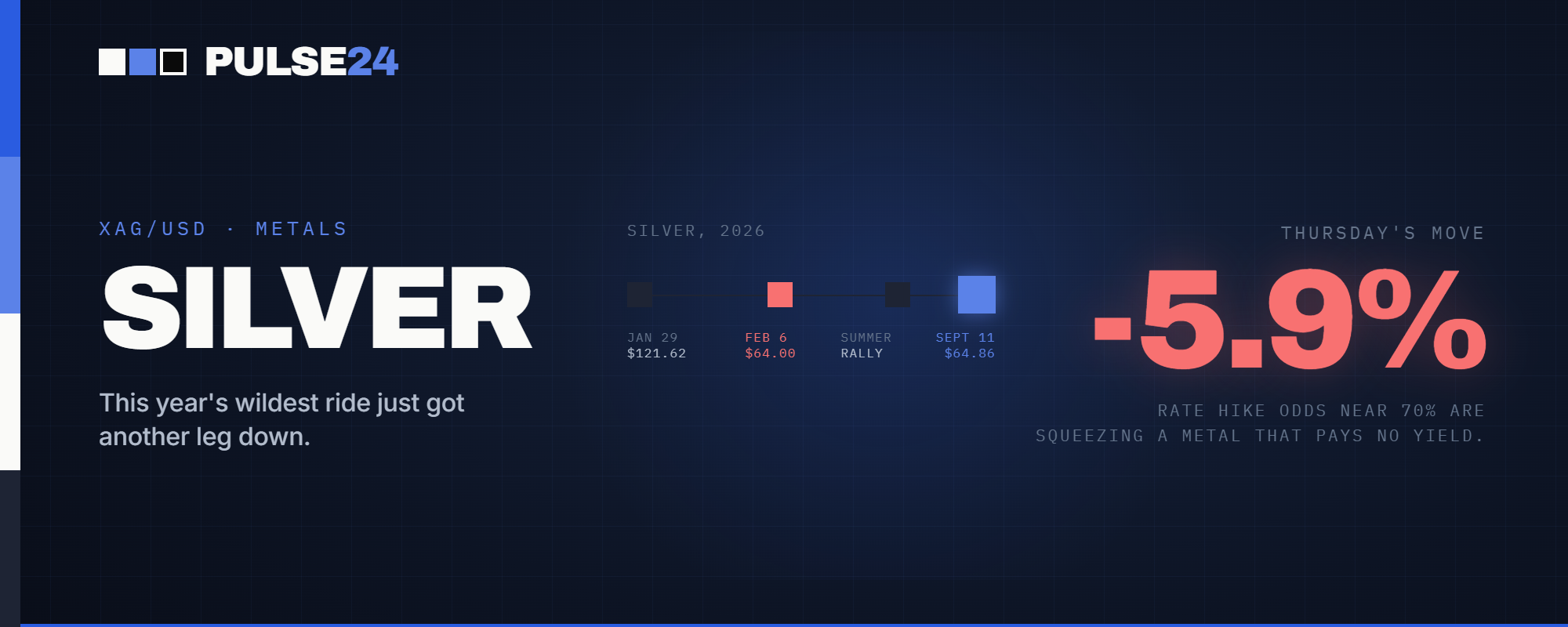
Silver dropped nearly 6% Thursday and gold slipped too, as traders pushed the odds of a September Fed rate hike toward 70%. The moves cap a wild year for both metals, from record highs in January to a crash that erased a third of silver's value in a single day.
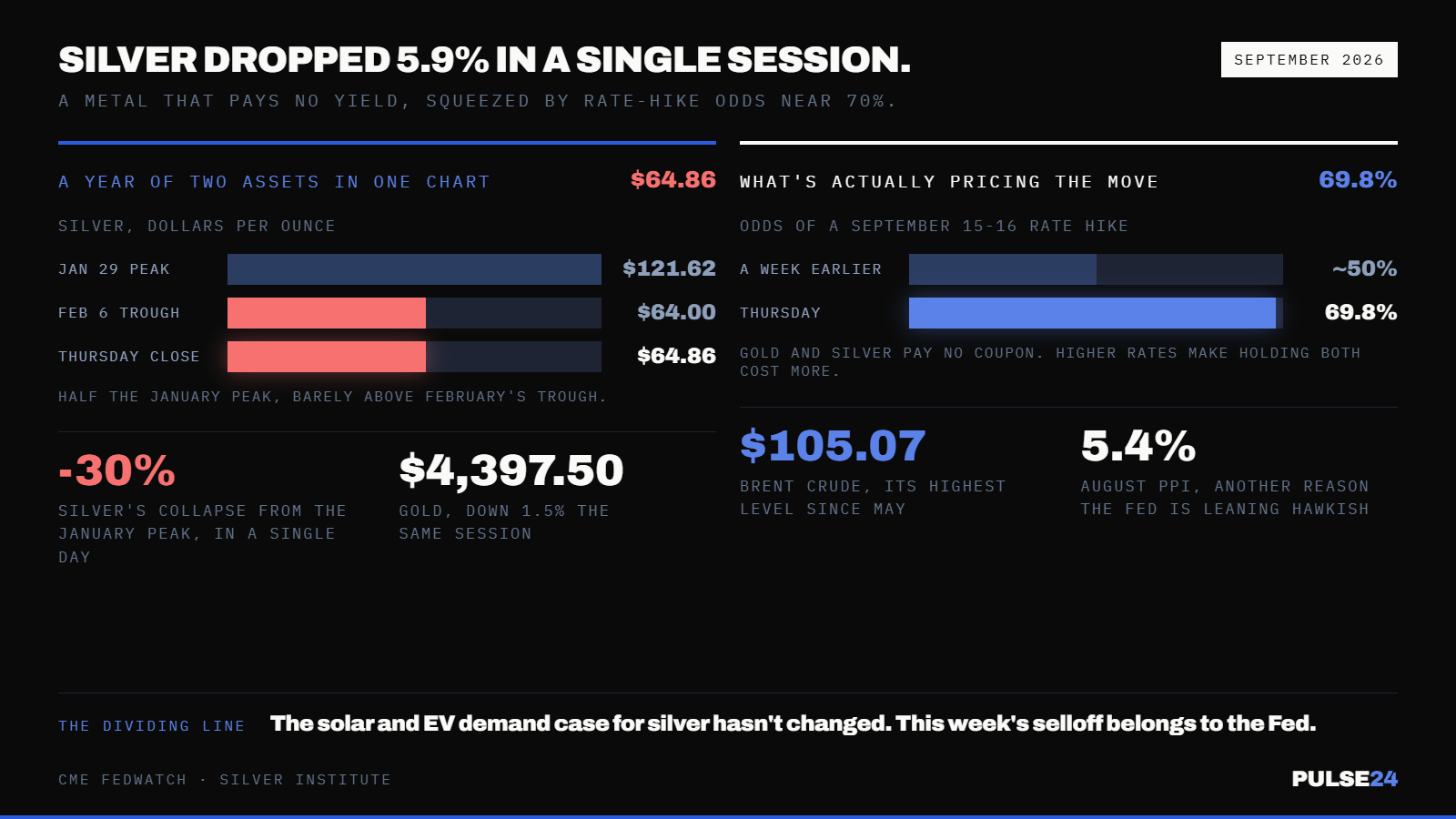
Silver dropped 5.9% Thursday, closing at $64.86 an ounce. Gold fell too, down 1.5% to $4,397.50, a milder move but the same direction. Neither metal is reacting to anything happening in a mine or a vault. Both are reacting to the Federal Reserve.
CME's FedWatch tool priced the odds of a quarter-point hike at next week's Fed meeting at 69.8% Thursday, up from close to a coin flip just a week before. That single number is doing more to move precious metals right now than anything happening in the physical market for either one.
What Changed
Two things moved in the same direction Thursday. Fed rate-hike odds for the September 15-16 meeting climbed to 69.8%, and Brent crude jumped about 4% to $105.07 a barrel, its highest level since May. Both fed the same story: an economy running hotter than the Fed would like, with energy costs doing part of the work. A Middle East conflict has kept a risk premium in oil for months now, and Thursday's jump added to it, though the bigger driver for metals was the rate call itself, not the barrel price alone.
Wholesale prices had already given the Fed a reason to worry. Producer prices rose 0.4% in August, adding to a year-over-year pace Pulse24 flagged as the hottest reading of 2026 just days earlier. Put a hawkish inflation print next to a barrel of oil pushing $105, and traders had every reason to raise their hike bets.
Why It Matters
Gold and silver don't pay a coupon. When the market prices a higher policy rate, holding either one costs more relative to Treasurys or plain cash, and the repricing shows up within hours rather than weeks. Pulse24 covered nearly the same mechanism a few weeks ago, when hike odds first crossed 60% over a weekend and gold slipped below $4,400. The odds have only climbed since.
Silver's move matters more than the daily percentage suggests, because of what it followed. The metal touched an all-time high of $121.62 an ounce on January 29, then lost more than 30% of its value within about a day, a collapse traders still describe as one of the most violent single-session reversals in the metal's history. It kept sliding after that, down to roughly $64 an ounce by February 6, a nearly 47% drawdown from the peak in just over a week. Silver spent the months since rebuilding some of that ground, including a run to a multi-month high in late summer, before this week's selloff erased most of it. Thursday's $64.86 close is barely above that February trough and just over half the January peak. Gold has its own version of this story: it set a record above $5,600 earlier this year and has given back a meaningful chunk of that since, even after central banks kept buying at a record pace.
None of this erases the demand case that took silver to $121 in the first place. Solar panels, electric vehicles, and AI-linked electronics all use the metal, and the Silver Institute has forecast a sustained supply deficit even with manufacturers using less silver per panel than they used to. That's a slower-moving story than a Fed rate call, and it hasn't gone anywhere. It just isn't what's setting the price this week.
What to Watch Next
The Fed decides on September 15-16, five days from Thursday's selloff. Fed Chair Kevin Warsh set a hawkish tone at Jackson Hole, and a 69.8% hike probability suggests the market believes he'll follow through. Matching that expectation with an actual quarter-point hike would likely be a smaller shock to gold and silver than Thursday's repricing already delivered. A surprise hold, on the other hand, could send both metals sharply higher as traders unwind hike bets in a hurry.
Oil is the other variable worth tracking. Brent near $105 keeps inflation expectations elevated, and elevated inflation expectations are exactly what's pushing the Fed toward a hike. Should the geopolitical premium in oil fade, that removes one leg of the case for higher rates, and gold and silver would likely find support. If it doesn't, this week's move could be just the first leg lower.
The Pulse24 Take
Silver's chart this year reads like two different assets stitched together: a speculative mania that peaked near $121 in January and a supply-deficit story that's been building for years and hasn't actually changed. This week's drop belongs mostly to the first version. Rate-hike odds near 70% and oil above $100 are squeezing a metal that pays no yield, and that squeeze can keep going right up until the Fed actually meets. The deficit-driven demand case for silver, the one built on solar panels and electric vehicles rather than momentum trades, is still intact underneath all of it. Traders chasing this week's move should know which version of the story they're actually betting on.
How we read the data
Curious how we get from raw data to a take like this? Our Trader's Toolkit walks through the tools we lean on.
Explore the Toolkit