Pulse24 Original
U.S. Wholesale Inflation Accelerated to 5.4% in August. The Dollar Fell for a Fourth Straight Day Anyway.
September 10, 2026
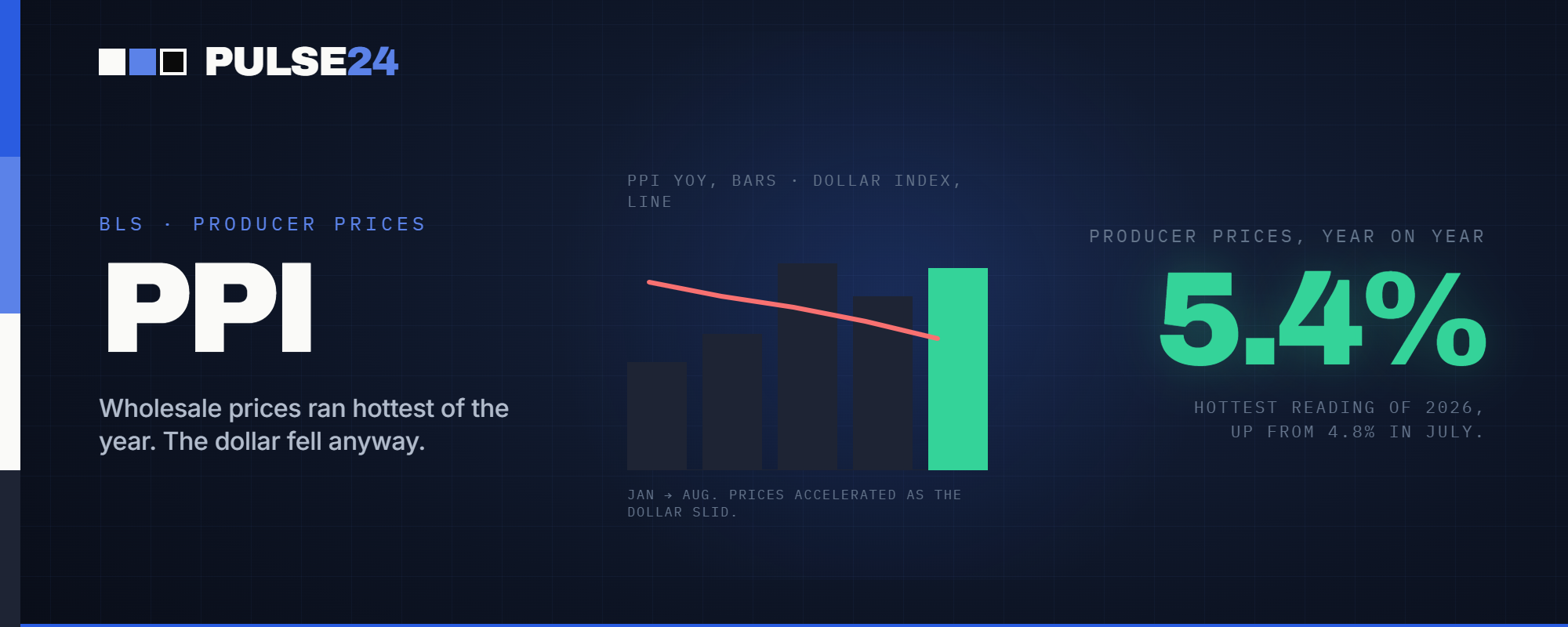
Wholesale inflation accelerated to 5.4% in August, rebounding from July's dip, and pushed Fed rate hike odds higher again ahead of next week's meeting. The dollar fell anyway, its fourth straight losing session, as a resurgent yen overpowers the usual rate math.
Producer prices in the United States rose 5.4% in the year through August. That is the fastest pace of wholesale inflation the country has logged all year, and the Bureau of Labor Statistics released the figure Thursday morning just as the bond market was already pushing the 10-year Treasury yield to 4.93%, its highest level since October 2023.
What Changed
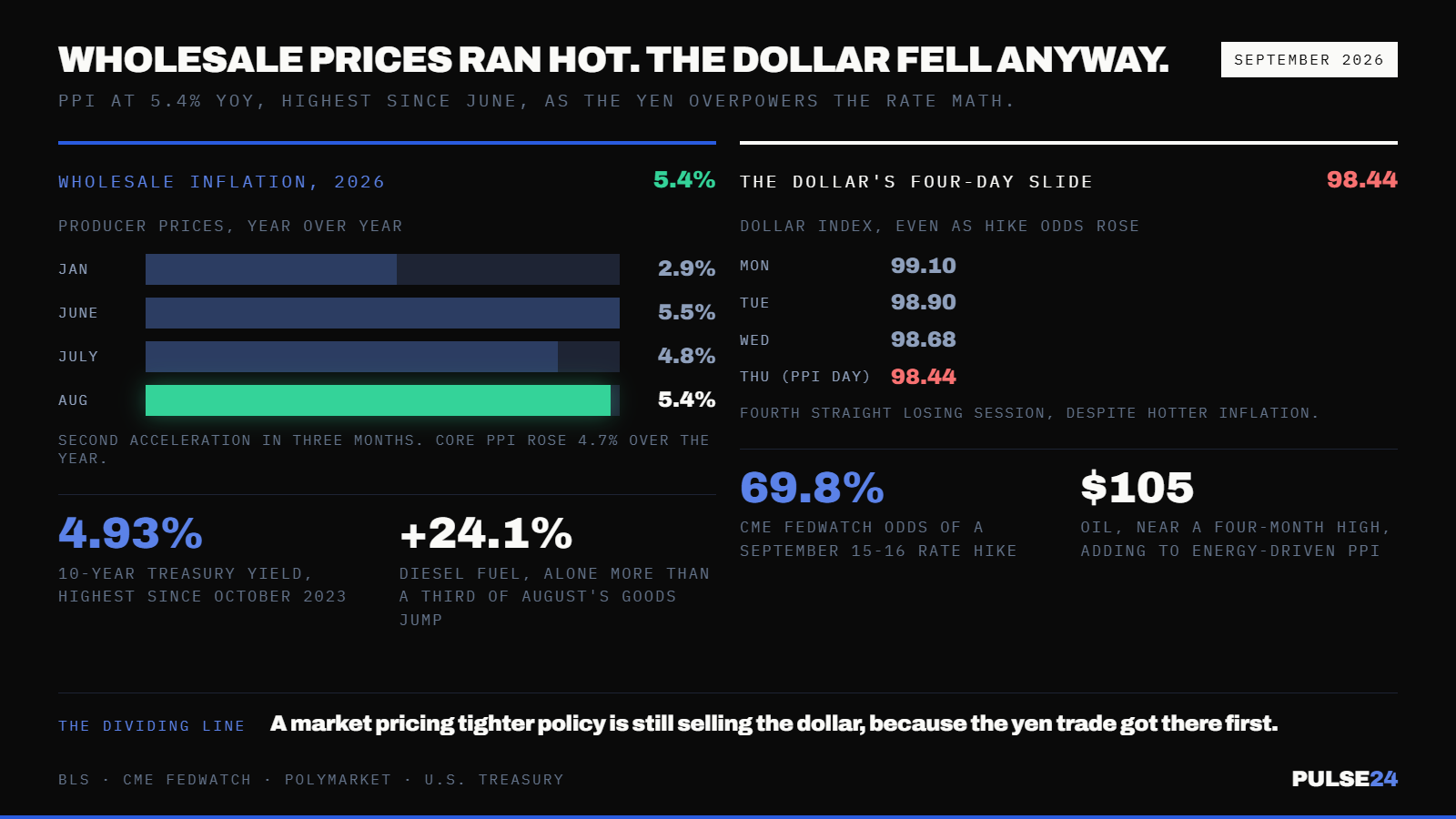
The headline number itself was not much of a surprise. Producer prices for final demand rose 0.4% for the month, matching what economists had penciled in. The jump showed up in the year-over-year comparison instead: 5.4%, up from 4.8% in July, though still just below June's 5.5% reading, the high point for the year. Wholesale inflation has moved unevenly through 2026: 2.9% in January, a climb to that June peak, a dip in July, and now a rebound.
Strip out food, energy, and trade services, and the picture cools only slightly. Core PPI rose 0.3% in August and 4.7% over the past year, the measure the Fed tends to watch more closely because it filters out the swings that come from gas pumps and grocery aisles. Energy did most of the monthly damage on its own, up 4.2%, and diesel fuel led that charge with a 24.1% jump that alone accounted for more than a third of the entire increase in goods prices. Some of that traces back to oil, which has climbed toward $105 a barrel this week on supply worries tied to tensions in the Middle East, a reminder that energy costs can leak into a report about factory gate prices even when nothing else in the economy has changed.
Why It Matters
Producer prices are not what shows up on a receipt, but they tend to feed into consumer prices with a lag, which is why Wall Street treats PPI as an early read on where CPI is headed. Friday's Consumer Price Index report is the more closely watched sibling, though after Thursday's number it arrives with higher stakes attached. A hot PPI print does not guarantee a hot CPI print, but it raises the odds, and the Fed's September 15-16 meeting is now sitting almost on top of both releases.
That timing is why rate expectations have moved as much as they have. Different trackers tell a broadly similar story without agreeing on one number: Polymarket's contract on a September hike moved from about 54% before this week's jobs data to 63% after Thursday's PPI print, while CME FedWatch readings have shown odds above 70% at points this week. The Fed funds target range currently sits at 3.50% to 3.75%. Whether the committee actually pulls the trigger next week is still an open question. Inflation running hot is only one input, and a Reuters poll of economists this week found most still expect the Fed to hold rates steady through the rest of 2026 despite the pressure.
A Dollar That Isn't Cooperating
Higher rate hike odds are supposed to be dollar positive. Higher expected yields tend to pull in foreign capital chasing the return, and on paper, Thursday's setup of hotter inflation, higher hike odds, and a Treasury yield at its highest since 2023 reads like a recipe for dollar strength. Instead, the dollar index fell for a fourth consecutive session, dropping to 98.44 and down from close to 99 earlier in the week.
The explanation sits on the other side of the Pacific. Pulse24 covered the yen's climb to a six-month high earlier this week, and that rally hasn't let up. Treasury Secretary Scott Bessent added fuel to it, telling currency traders "I am the house now" and daring them to bet against a stronger yen, an unusually blunt challenge from a sitting Treasury Secretary. When a currency strengthens that aggressively, it can outweigh what the Fed is doing on the other side of the trade, and that is largely what happened here, with one of the world's most crowded carry trades unwinding faster than the rate story can offset it.
This is also a reminder that currencies rarely move on a single input. Rate expectations matter, but so does what every other major central bank is doing, and right now Japan's policy path is pulling harder on the dollar than America's own inflation data.
What to Watch Next
Friday brings the Consumer Price Index for August, the report markets have quietly been bracing for since Thursday's PPI landed. A core CPI print above 0.3% would tighten the screws on the Fed's September 15-16 decision further, while anything softer could ease pressure back toward a hold.
Beyond that, keep an eye on the Fed's own signal path. Pulse24 covered rate hike odds jumping to 60% over the first weekend of September, and Thursday's PPI print pushed those odds higher again by most measures. Gold and Bitcoin sold off the last time hike odds jumped this fast, and both remain worth watching if the pattern repeats into next week's decision.
The Pulse24 Take
None of this locks in a hike. The Fed has spent much of 2026 threading a needle between inflation running hotter than it would like and a labor market that has shown real cracks, and Thursday's PPI print does not resolve that tension so much as add another data point to it.
What is worth sitting with is the dollar's reaction, or lack of one. A market that is pricing higher odds of tighter policy and still selling the dollar is telling you something about how crowded the yen trade had become, not necessarily about the inflation outlook on its own. Friday's CPI report will say more about where prices are actually heading. Next week's Fed decision will say more about what officials plan to do about it. Until then, the more interesting story might be the one playing out in currency markets, where the usual relationship between rate expectations and the dollar has, for now, come apart.
How we read the data
Curious how we get from raw data to a take like this? Our Trader's Toolkit walks through the tools we lean on.
Explore the Toolkit