Pulse24 Original
Weak Retail Sales Just Cut the Odds of a September Fed Rate Hike to 29%. Three Weeks Ago, Wall Street Put Them Above 75%.
August 15, 2026
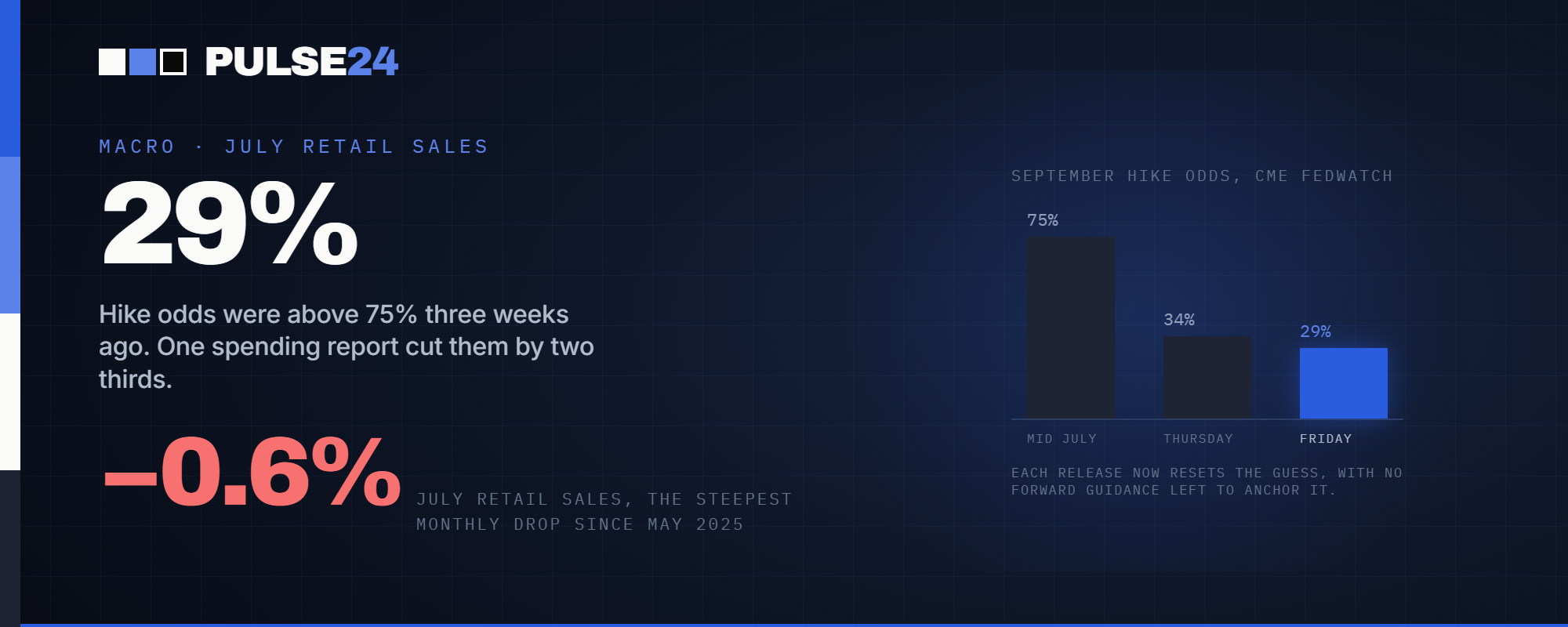
July retail sales fell 0.6%, the steepest monthly drop since May 2025, and traders responded by cutting September Fed rate hike odds to 29% from above 75% just weeks ago. Treasury yields barely moved, because oil pulled in the opposite direction.
Retail sales in the United States fell 0.6% in July, missing a forecast for a 0.1% gain and posting their steepest monthly drop since May 2025. It's the kind of number that would normally settle the debate over whether the Federal Reserve hikes rates in September. Instead, it barely moved the bond market at all.
What Changed
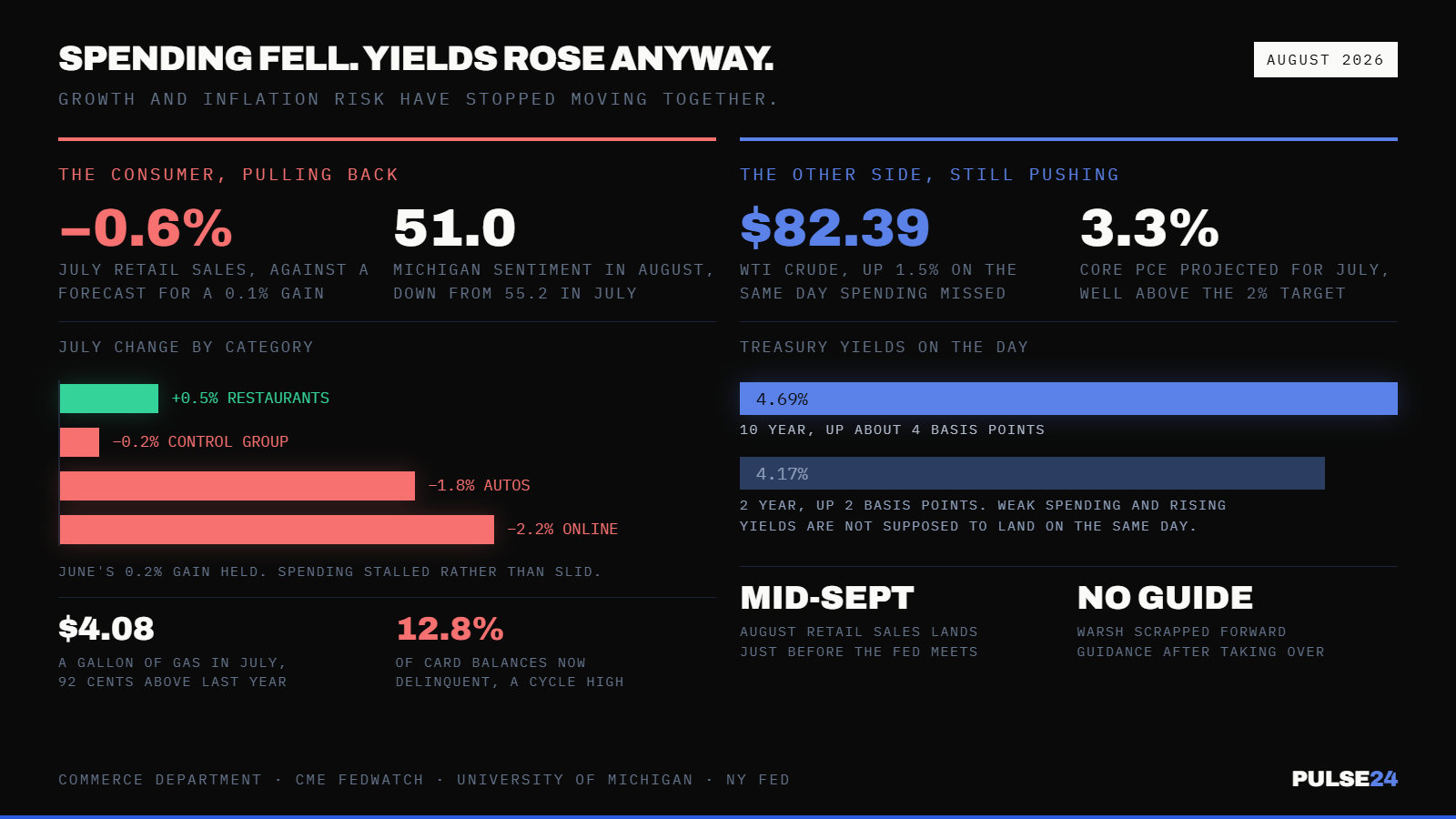
The Commerce Department's report showed broad-based weakness. Motor vehicle and parts dealers posted the biggest decline at 1.8%, online retailers fell 2.2%, and even stripping out gas stations and car dealerships, the control measure was down 0.2%. Restaurant spending was the rare bright spot, up 0.5% on the month. June's initial 0.2% gain wasn't revised away, which matters here. This isn't one soft month following another. Spending simply stalled.
Two forces appear to be doing the pulling. Retailers say tax refund season gave spending an artificial lift earlier in the year, and that boost has faded now that the extra cash has worked its way through household budgets. At the same time, gasoline climbed to $4.08 a gallon in July, up from $3.85 a month earlier and 92 cents higher than a year ago, which eats into the same wallet without showing up as more retail volume.
Traders reacted the way you'd expect, just not all the way through the bond market. CME's FedWatch tool had priced better than a 75% chance of a quarter-point September hike as recently as mid-July. This week's in-line CPI report helped knock that down to 34%, and Friday's retail sales miss pulled it further, to 29%. Yields told a more complicated story. The 10-year Treasury actually rose about 4 basis points to 4.69%, and the 2-year ticked up 2 basis points to 4.17%, because oil strength offset the soft consumer data. West Texas Intermediate gained 1.5% to $82.39 a barrel, keeping alive the same supply-side pressure that's kept Brent stubbornly close to $89 even after OPEC+ finished unwinding three years of production cuts.
Why It Matters
A soft retail sales report and a rising bond yield aren't supposed to happen on the same day. Weak spending usually argues for lower rates, and lower rate odds usually pull yields down with them. What's happening instead is that two separate stories are colliding: consumers pulling back at the same time energy costs push the other way. Cooling demand and sticky costs together are the closest thing to a stagflation scare this cycle has produced, even if neither piece is severe enough on its own to earn that label yet.
It also lands in a Fed environment that amplifies every data point. Chair Kevin Warsh scrapped the Fed's forward guidance after taking over in May, and the whiplash in rate expectations shows the result. Hike odds were above 75% in mid-July, got cut nearly in half after a weak July jobs report, climbed back toward a coin flip when the 10-year yield pushed back above 4.7% on oil-driven inflation worries, then fell again this week on in-line CPI and now Friday's retail sales miss. Each release is left to do more work than it normally would, and that shows up as volatility in rate expectations rather than in the yields that are supposed to track them.
Consumer weakness doesn't exist in isolation either. Credit card delinquencies just hit 12.8% of balances, the highest since the Great Recession, though researchers there pointed more to how long banks hold bad debt on their books than to a fresh wave of defaults. Set next to July's spending pullback, the picture is a consumer that looks cautious rather than collapsing, but cautious enough to matter for a Fed trying to read the room.
What to Watch Next
August retail sales, due in mid-September, lands just before the Fed's meeting and will carry outsized weight. A second straight monthly decline would make the case for a pause difficult to argue against. Reverse it with a rebound, especially one driven by back-to-school spending that retailers like Target have been discounting to protect, and a hike is back on the table.
Oil is the other variable worth tracking. If WTI keeps grinding higher on supply tightness, gold's own run toward $4,400 an ounce suggests some investors are already positioning for inflation to stay stickier than the growth data implies. A Fed choosing between a cooling consumer and a reheating energy market doesn't have a clean answer, and September looks likely to be decided by whichever pressure shows up last.
The Pulse24 Take
The easy read on a 0.6% retail sales drop is that the Fed's work is getting done for it. Look closer, though, and growth and inflation risk have stopped moving together the way they did for most of this cycle. Consumers are pulling back, and energy costs are still finding ways to climb anyway. Under a Fed that isn't pre-committing to a path, each new release resets the market's guess rather than confirming it. Traders pricing a 29% chance of a hike are, in effect, betting that growth wins the argument before energy does. Whether that bet holds up probably comes down to whichever number lands closer to the September meeting: the next jobs report, or the next barrel of crude.
How we read the data
Curious how we get from raw data to a take like this? Our Trader's Toolkit walks through the tools we lean on.
Explore the Toolkit