Pulse24 Original
Intel Fell 29% in a Single Day, a Record. Wall Street Still Thinks the Fed Hikes in December.
October 30, 2026
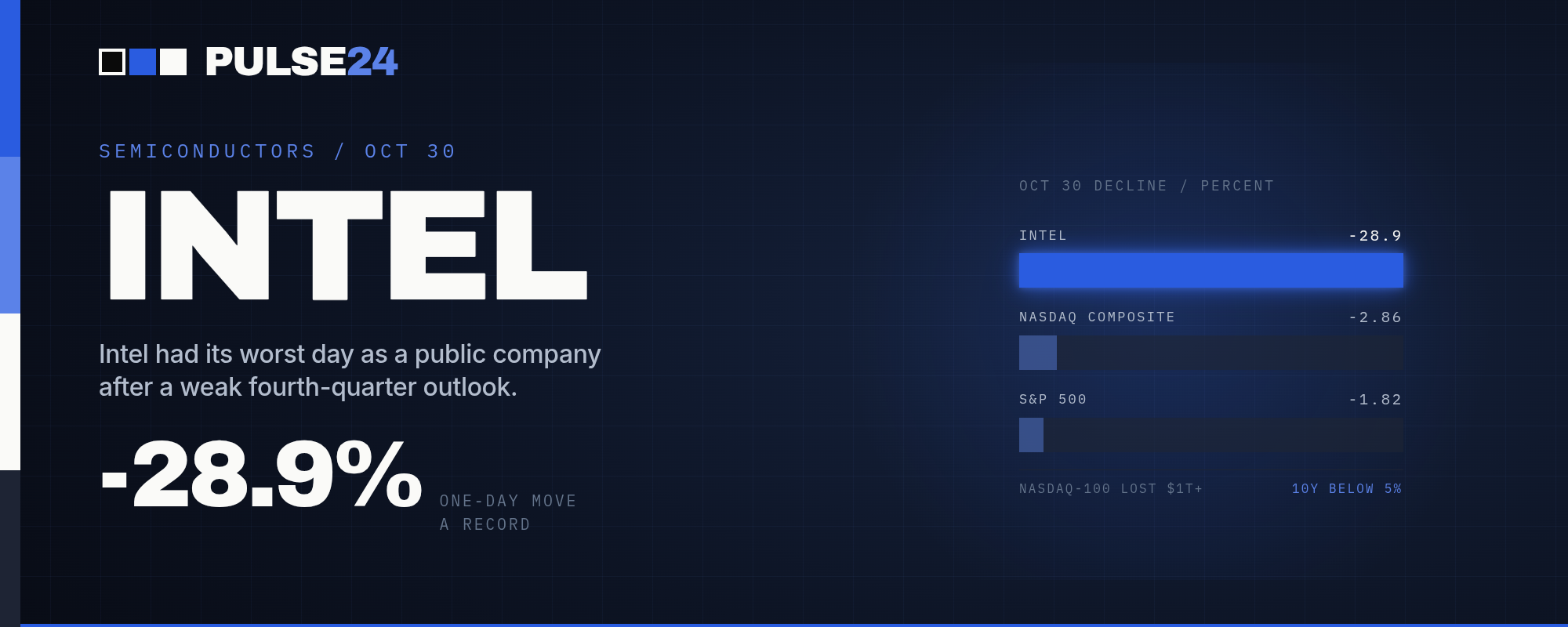
Intel had its worst trading day ever on Friday, and the chip sector sold off alongside it. The more interesting move was in the bond market, where Treasury yields fell below 5% even as Wall Street still leans toward a Fed hike, not a cut, in December.
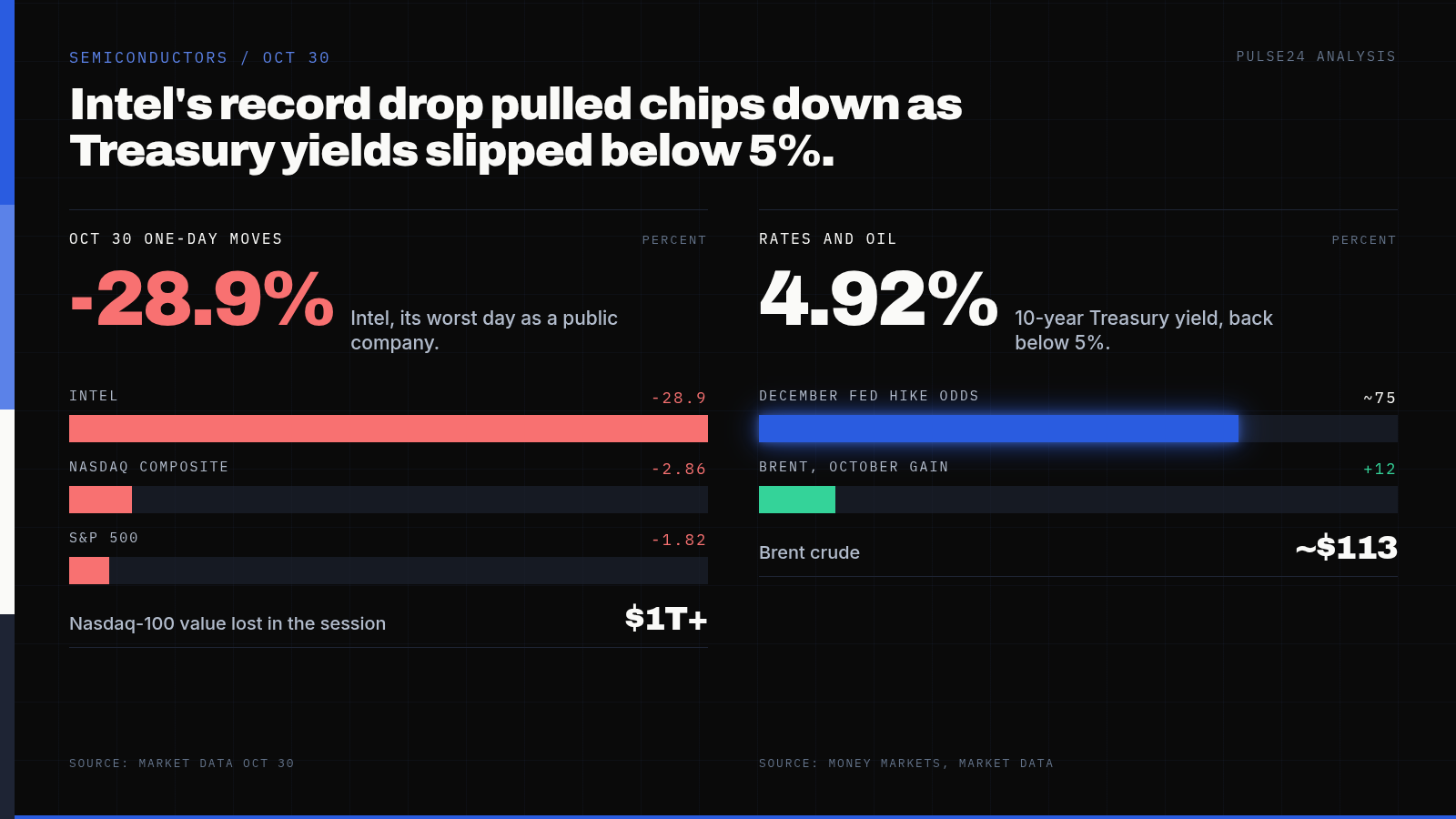
Intel's stock fell 28.9% on Friday. That is the single worst trading day the chipmaker has had as a public company, worse than anything from the dot-com crash, the financial crisis, or its own multi-year struggle to keep pace with Nvidia and AMD. The company's fourth-quarter revenue outlook came in short of what analysts wanted, and management pointed to something specific: PC buyers pulling back as memory chip prices climb.
What Changed
Intel did not fall alone. The Nasdaq Composite fell about 3% to its lowest level in nearly three months, with the Nasdaq-100 losing more than $1 trillion in value in the session. The S&P 500 dropped roughly 2%, and the Dow, with less exposure to the stocks driving the selloff, fell about 1%. Nvidia slid around 5%. AMD dropped about 10%. The Philadelphia Semiconductor Index, a broad gauge of chip stocks, fell more than 7%, its steepest one-day decline since June 5. Dell fell about 11% and HP tumbled roughly 9%, both dragged down by the same PC demand warning Intel had just issued.
Friday's move did not come out of nowhere. Amazon's own quarter showed free cash flow swinging deeply negative even as cloud revenue grew at its fastest pace since 2021, and investors have spent the week digesting what that kind of spending means for returns. Alphabet had already posted its steepest one-day drop in more than two decades the previous session, a reaction tied to the same question now hanging over Microsoft and the rest of the AI-spending cohort: whether the payoff on all this capital expenditure is showing up fast enough to justify it.
Why It Matters
Start with a different number than Intel's stock price. The 10-year Treasury yield slipped below 5% on Friday, trading near 4.92% and down about 7 basis points on the day, as money rotated out of risk assets and into government debt. A bond rally that size usually means the market is pricing in a weaker economy and, eventually, rate cuts. This one does not fit that pattern. Two Fed governors pushed for an immediate hike at this week's meeting, and Wall Street has come out nearly unanimous in expecting a hike by December, not a cut. This bond-market move looks tactical: equity volatility spiked and bid-ask spreads widened, and investors parked cash in duration for safety rather than betting the Fed reverses course.
The dollar barely moved, holding near 101.9 on the index and still up about 0.4% for October. The yen gained instead, trading near 157 per dollar after the Bank of Japan held its policy rate at 1.25% but described its stance as entering a more hawkish phase. That is a different kind of safety trade than the one the dollar usually wins. When equity fear shows up mainly in Treasuries and the yen rather than the dollar, it is worth asking whether this particular scare is concentrated enough in US tech that overseas buyers see little reason to also reach for dollars.
Oil adds another layer. Brent crude is trading near $113 a barrel, up roughly 12% this month, while WTI sits close to $104. A Fed already leaning toward a hike rather than a cut now has rising energy costs to weigh alongside a stock market questioning whether hundreds of billions of dollars in AI capital spending will pay off. Slower-feeling growth optics in one corner of the market and firmer inflation pressure in another is about as close to a stagflation setup as markets have flashed this year.
What to Watch Next
JPMorgan's trading desk framed the move simply: renewed doubts about whether AI infrastructure spending will convert into cash flow fast enough are driving a rotation away from the stocks that had been pricing in a quick payoff. Chevron and Exxon Mobil both touched record highs the same day, lifted by wider refining margins, a reminder that this was money moving from one part of the market to another, not a broad flight from stocks altogether.
A few things are worth tracking from here. Whether the Treasury rally holds once this week's earnings dust settles, or whether yields climb back toward 5% as the hike narrative reasserts itself, will say a lot about how much of Friday was fear versus genuine repricing. So will what happens to the companies financing AI buildouts with debt rather than cash: CoreWeave and Nebius already fell sharply this week without missing on earnings, and more leveraged names are the ones that would feel a capex pullback first. December's Fed meeting carries more weight than it did a week ago, too. A hike delivered into a market still digesting a growth scare would be an awkward combination to explain.
The Pulse24 Take
It is tempting to read a trillion-dollar one-day loss in tech and a sub-5% Treasury yield as the start of something bigger. Maybe it is. A bond rally driven by a few days of volatility is not the same signal as one driven by a genuine growth scare, though, and so far the difference matters. Economists surveyed this week still lean toward a Fed hike, not a cut, which suggests the market isn't pricing in a weaker economy so much as a shorter list of places willing to absorb AI-related risk for now. What Friday really demonstrates is scale: AI capital spending has grown large enough that one disappointing guidance call from a chipmaker can move the entire rates and currency complex in an afternoon. Whether that marks a healthy repricing of an overbuilt sector or the first crack in something larger will take more than one trading session to answer. Watch what happens to yields once the week's noise clears, not what happened on the day it was loudest.
How we read the data
Curious how we get from raw data to a take like this? Our Trader's Toolkit walks through the tools we lean on.
Explore the Toolkit