Pulse24 Original
Gold's Year-Over-Year Gain Has Collapsed to 13.67%. In January, It Topped 95%.
September 25, 2026
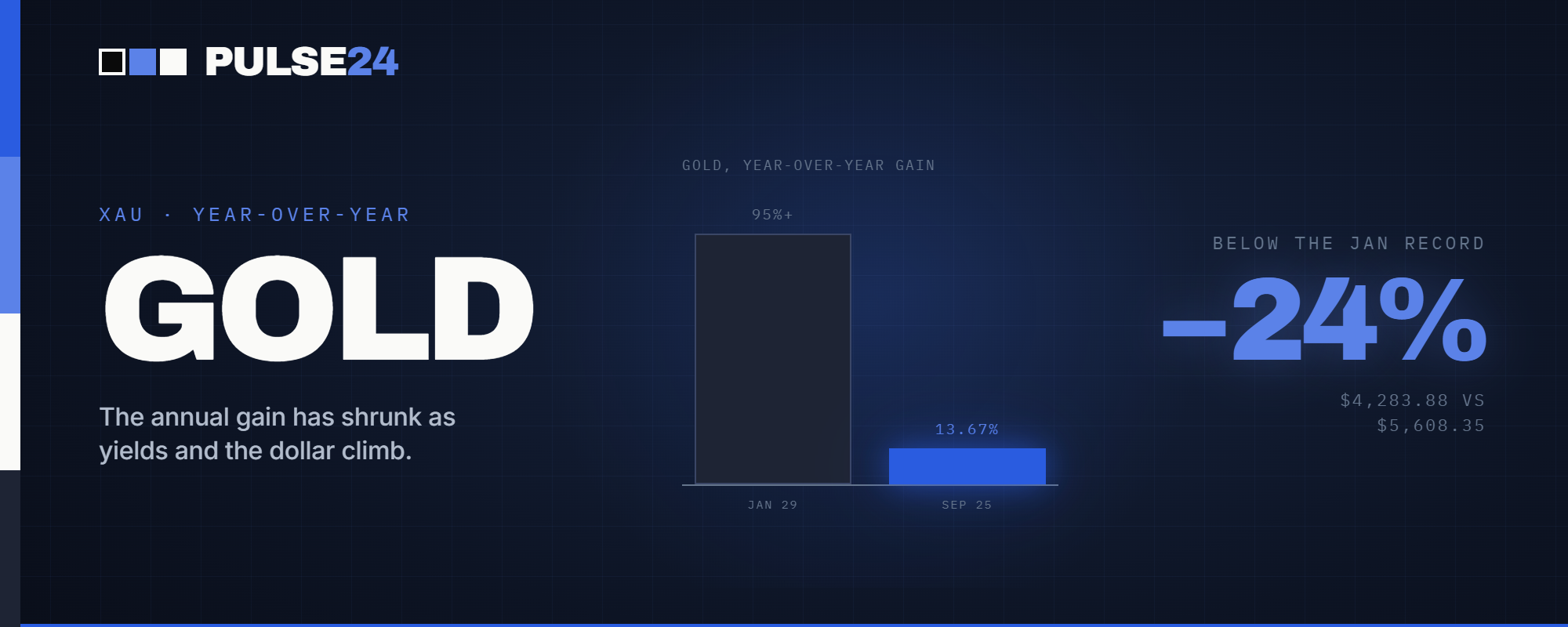
Gold is still up from a year ago, just barely. The metal's annual gain has shrunk from over 95% in January to about 13.7% now, as 19-year-high Treasury yields and a resurgent dollar do what fear alone couldn't stop.
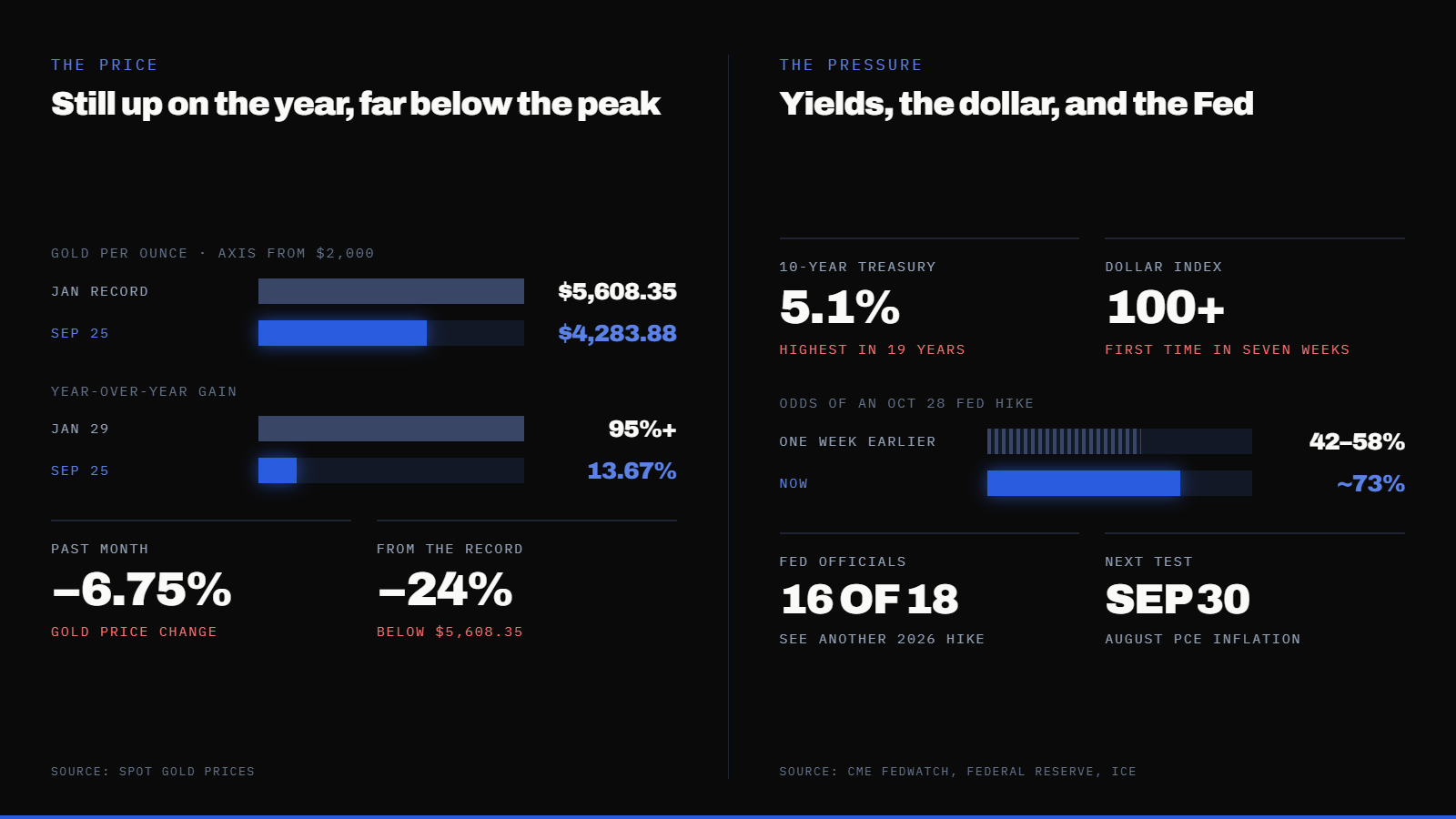
Gold changed hands at $4,283.88 an ounce on Thursday, a modest 0.22% gain on the day that masks a much bigger shift underneath. A year ago, that same comparison would have shown gold's price more than doubling. Now the metal's trailing 12-month gain has shrunk to about 13.7%, the smallest annual advance it has posted at any point in this rally.
What Changed
The immediate pressure is coming from the bond market. The 10-year Treasury yield broke through 5% this week for the first time in 19 years, extending a move that started with a poorly received $70 billion five-year auction and hasn't let up since. Higher yields raise the opportunity cost of holding a metal that pays no interest, and this time gold isn't shrugging that off the way it did earlier in 2026, when real yields climbed to 2.68% and gold set a new high anyway.
The dollar has moved in the same direction. The dollar index climbed back above 100 for the first time in seven weeks, making gold more expensive for buyers holding other currencies at the same time domestic demand is cooling. Behind both moves sits the Fed. Speaking in London on September 24, New York Fed President John Williams called it "a reasonable way of thinking about it" to expect another hike before year-end. That comment landed on top of a dot plot in which sixteen of eighteen Fed officials already want at least one more increase this year, and it pushed the market's own odds of an October 28 hike to roughly 73%, up sharply from the 42% to 58% range those odds sat in just a week earlier.
Why It Matters
None of this means the gold trade is over. Prices are still up double digits from a year ago, and central banks have kept buying through every wobble in 2026. What's changed is the shape of the move. Gold's climb from under $2,700 to above $5,600 in January was driven largely by a falling dollar, aggressive central bank accumulation, and a market betting the Fed was finished raising rates. Every one of those conditions has partly reversed since. The dollar is climbing again. Real yields are punishing, not just elevated. Fed officials are actively talking up more hikes rather than signaling they're done.
Gold now sits about 24% below the January record of $5,608.35, a wider gap than it has held for most of the summer. Part of the pressure is coming from a market pricing safe havens differently than it did earlier this year. Brent crude has held above $104 a barrel, with stalled US Iran talks adding a modest geopolitical premium, and for now gold and oil have been moving in opposite directions rather than both catching a bid, a break from the pattern that held for much of 2026.
What to Watch Next
The next major test comes September 30, when the Commerce Department releases August's PCE inflation data, the Fed's preferred gauge. A hot print would likely push October hike odds higher still and add more pressure to gold. A soft one could give the metal room to stabilize. After that, the Fed's October 28 meeting is the real event. If policymakers hike the way Williams suggested is reasonable, the question is whether gold treats it as old news already priced in, or whether the slide extends further.
The Pulse24 Take
A 13.7% year-over-year gain would count as a strong year for gold in almost any other environment. It only looks weak next to a 95% reading eight months earlier, and that contrast is the real story here. Gold spent early 2026 compounding on fear, a weak dollar, and a Fed that looked finished raising rates. It's now navigating a dollar that's strengthening again and a Fed that isn't finished after all, and the metal's slower pace of gains looks less like an ending than a recalibration to a tougher rate backdrop. Whether that turns into a deeper pullback or just a pause probably comes down to what the Fed actually does on October 28, not what one regional Fed president says a month ahead of it.
How we read the data
Curious how we get from raw data to a take like this? Our Trader's Toolkit walks through the tools we lean on.
Explore the Toolkit