Pulse24 Original
Real Yields Climbed to 2.68% This Week. Gold Hit a New High Anyway.
September 18, 2026
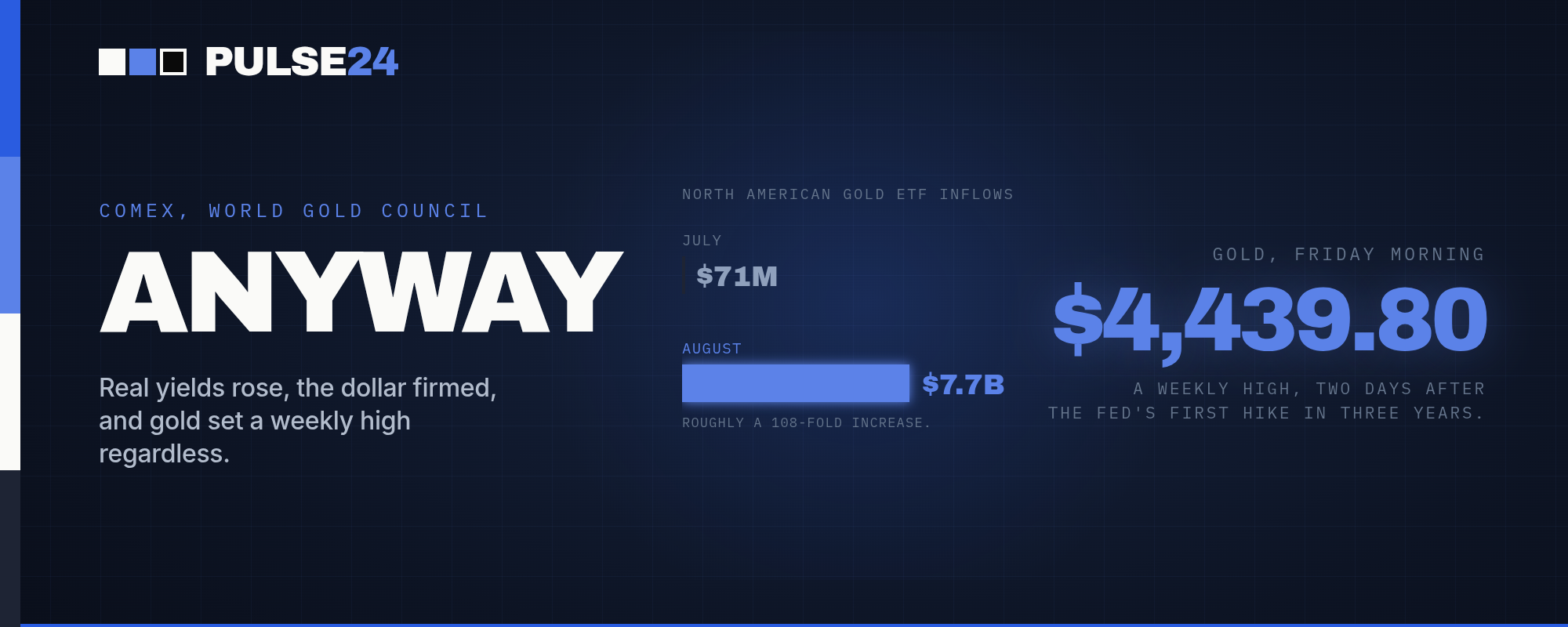
Gold climbed to a fresh weekly high two days after the Fed raised rates, a move that should have hurt the metal instead of lifting it. Record central bank buying and a 108-fold jump in ETF inflows explain the disconnect.
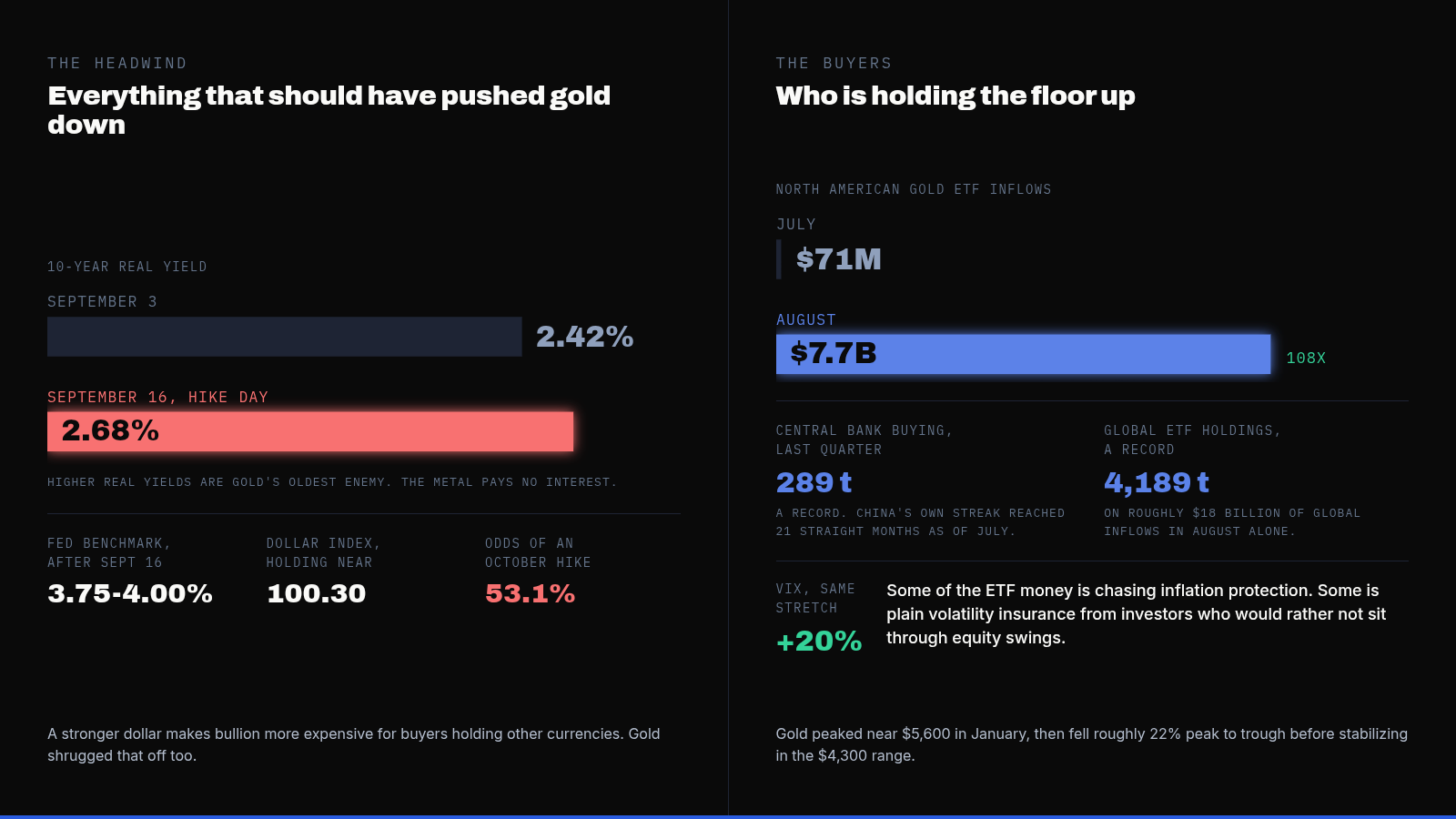
Gold touched $4,439.80 an ounce Friday morning, a fresh weekly high that arrived two days after the Federal Reserve raised interest rates for the first time in three years. That timing runs against the textbook. Higher rates typically mean higher real yields, and real yields are gold's oldest enemy, since the metal pays no interest and every basis point that Treasuries yield above inflation makes holding bullion a little less rewarding by comparison. Real yields climbed from 2.42% on September 3 to 2.68% on the day of the hike. Gold went up anyway.
What Changed
This week's jump follows a rough stretch. Gold peaked near $5,600 an ounce in January, then fell roughly 22% peak to trough over the following months, including its worst quarterly decline in a decade during the second quarter. By mid-September it had stabilized in the $4,300 range. Friday's break above $4,400, and the intraday push toward $4,440, is the first real test of whether that floor can hold now that the Fed's first hike in three years has actually landed rather than just being signaled.
The dollar told a similar story. The dollar index climbed above 100 for the first time in seven weeks right after Fed Chair Kevin Warsh delivered that hike, and it's still holding near 100.30. A stronger dollar usually weighs on gold too, since it makes bullion more expensive for buyers holding other currencies. Gold shrugged that off as well.
Why It Matters
Two forces are propping gold up against a rate and currency headwind that would normally flatten it. The first is central banks. They bought a record 289 tonnes of gold last quarter and kept buying even as the price fell afterward, with China's own streak of net purchases reaching 21 consecutive months as of July. That kind of demand doesn't care what the Fed funds rate does this week. It's driven by reserve diversification away from the dollar, a shift central bankers talk about in years, not quarters.
The second force moved a lot faster. North American gold ETFs took in $7.7 billion in August, up from just $71 million in July, a jump of more than 100 times in a single month. Combined global ETF holdings reached a record 4,189 metric tons on roughly $18 billion of inflows that month. Some of that money is chasing inflation protection. Some of it is plain volatility insurance: the VIX climbed more than 20% over the same stretch, and investors who don't want to sit through equity swings have been parking cash in bullion instead.
Oil played a supporting role too. Brent crude spiked above $108 a barrel in mid-September after attacks disrupted a major Saudi export pipeline, then eased back toward $103 as Saudi Arabia worked to restore capacity. That pullback took some of the edge off near-term inflation worries, even with the Fed turning more hawkish.
What to Watch Next
The open question is whether August's ETF surge reflects a lasting shift in how large investors treat gold, or a shorter-term rush that unwinds if real yields keep climbing. Futures markets currently put the odds of another Fed hike in October at 53.1%, up from 44% just a day earlier, which leaves room for real yields to rise further before that meeting. Consumer inflation expectations have been climbing even as sentiment about the economy has soured, which is exactly the kind of environment where gold tends to find buyers regardless of what nominal rates do. Watch the ETF flow data first. A reversal there would suggest August's rush was tactical. A repeat of it would suggest something more structural is underway.
The Pulse24 Take
Markets like a clean story: rates up, gold down. This week didn't cooperate. Real yields rose, the dollar firmed, and gold still notched a weekly high, which says more about who's buying than about what the Fed is doing. Central banks don't trade on a six-week rate cycle, and once ETF flows start running in the tens of billions in a single month, the metal stops behaving like a pure inflation hedge and starts behaving like a reserve asset that a lot of large, patient buyers want more of almost regardless of price. None of this makes gold immune to higher real yields forever. It does mean the floor under this rally is being built by buyers who aren't especially sensitive to next month's Fed decision, and until that changes, rate hikes alone may not be enough to send gold back toward its September lows.
How we read the data
Curious how we get from raw data to a take like this? Our Trader's Toolkit walks through the tools we lean on.
Explore the Toolkit