Pulse24 Original
Consumers Feel Worse About the Economy Now Than They Did at the Start of Every Recession on Record. Their Inflation Expectations Are Rising Anyway.
September 12, 2026
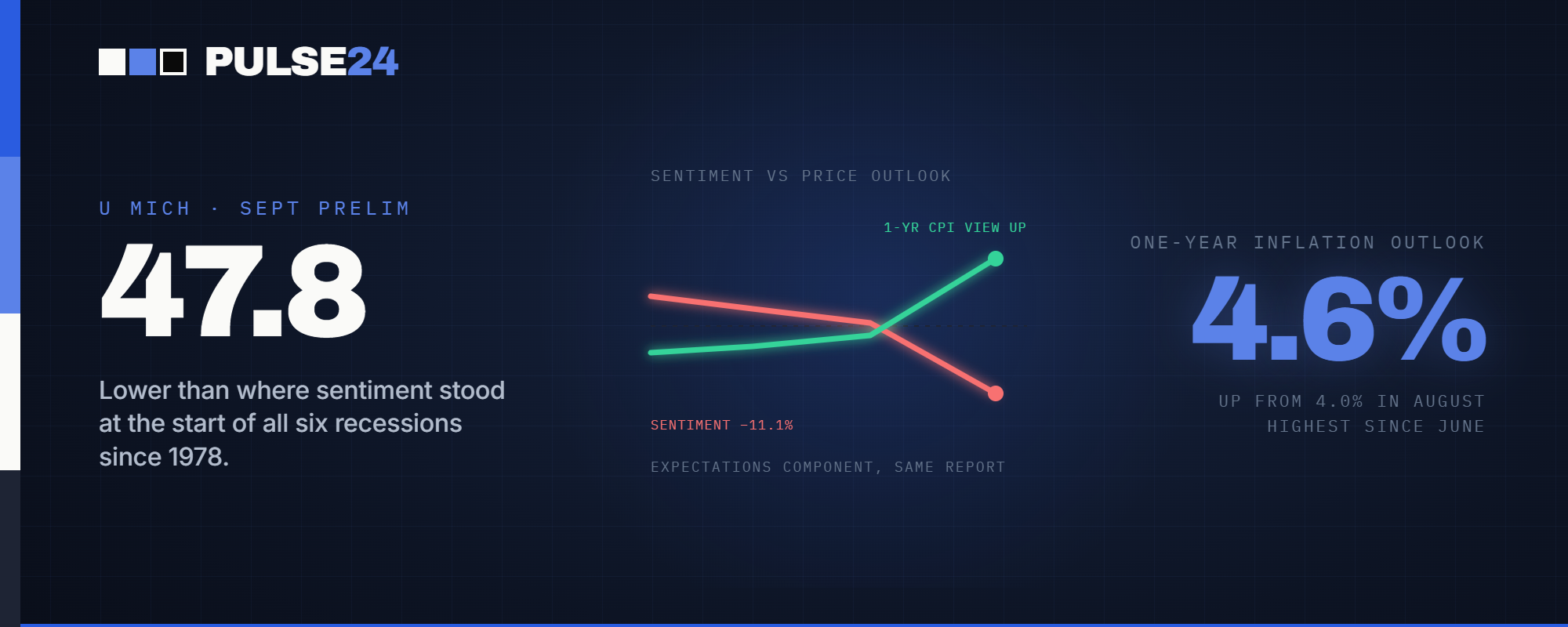
US consumer sentiment fell to 47.8 in September, a level weaker than where the index stood at the start of every recession it has tracked since 1978. Inflation expectations rose in the same report, four days before the Federal Reserve's next decision.
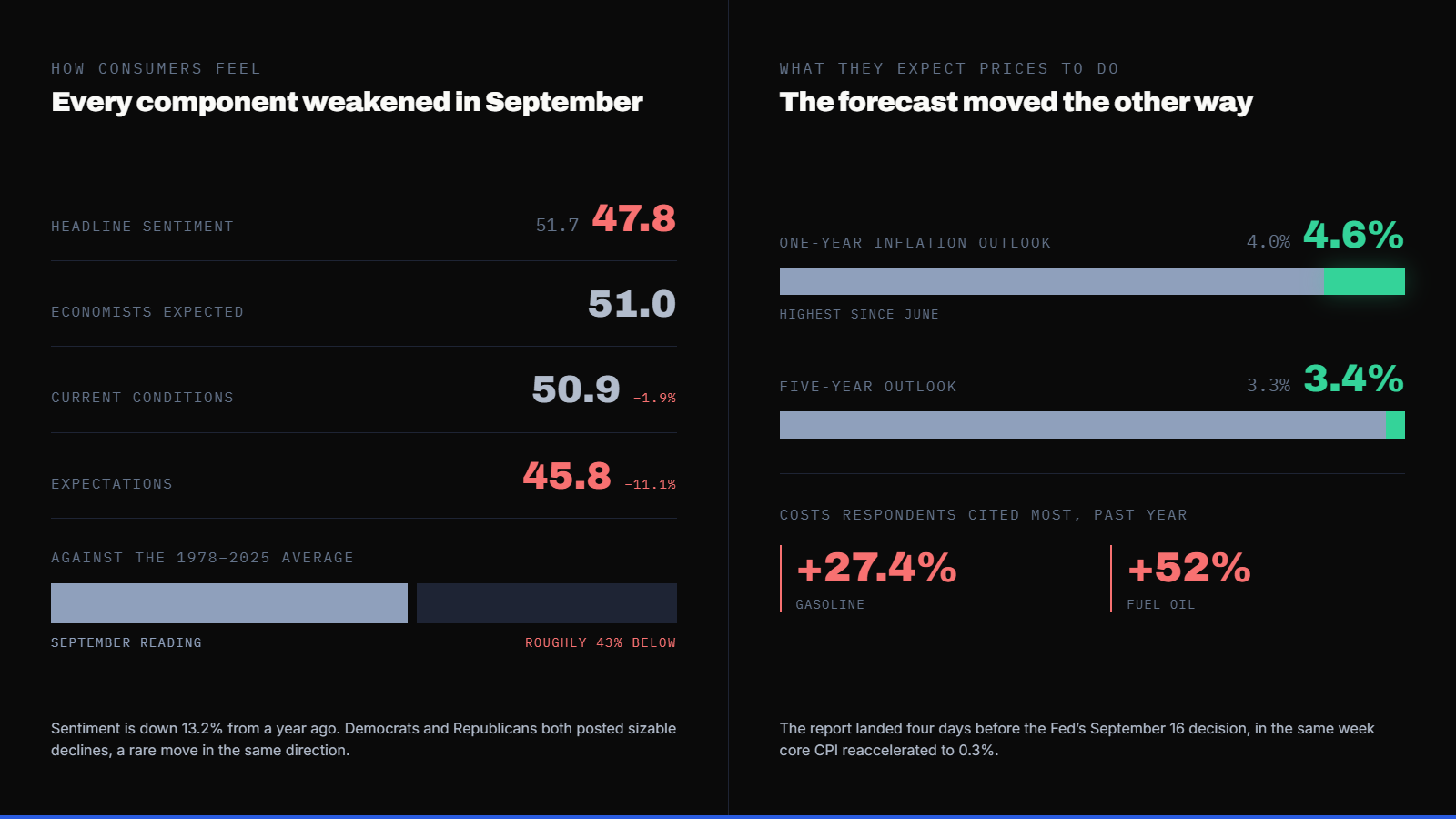
Joanne Hsu had blunt numbers to share on Friday. The University of Michigan's preliminary September consumer sentiment index fell to 47.8, down from 51.7 in August and well below the 51.0 economists had penciled in. That reading now sits lower than where the survey stood at the start of each of the last six US recessions dating back to 1978, according to the university's own historical comparison.
What Changed
Two components make up the headline number, and both weakened. The current conditions index slipped to 50.9 from 51.9, a modest 1.9% decline that reflects how households view their finances today. The expectations index did the real damage, dropping 11.1% to 45.8 as consumers turned more pessimistic about where the economy is headed over the next year. Democrats and Republicans both posted sizable declines this month, a rare instance of the survey moving in the same direction across party lines instead of splitting along the usual political fault lines.
Inflation expectations moved the opposite direction, which is what made Friday's report notable rather than merely weak. Respondents now expect prices to rise 4.6% over the next year, up from 4.0% in August and matching the highest reading since June. Five-year inflation expectations ticked up too, from 3.3% to 3.4%. Gasoline prices climbed 27.4% over the past year and fuel oil costs jumped 52%, expenses that show up directly in how households answer these questions.
Why It Matters
A weakening consumer paired with rising inflation expectations is not a combination the Fed sees often, and it's an especially awkward one to receive four days before a policy decision. Soft sentiment on its own would normally argue for caution, maybe even a pause. Rising inflation expectations argue the opposite, since a central bank worried about expectations becoming unanchored has less room to wait. Pulse24 covered Friday's CPI report, which showed core prices accelerating for a third straight month and pushed hike odds for the September 16 meeting from roughly 70% to near 90% within hours. Friday's sentiment data landed on top of that, adding a second, independent source pointing toward the same inflation concern.
There's a distinction worth drawing between soft data and hard data here, and it matters for how much weight to put on Friday's report. Sentiment surveys ask people how they feel. August payrolls data, which Pulse24 covered earlier this month, showed hiring actually beating forecasts by a wide margin even as one sector cut jobs. Consumers have described the economy in increasingly grim terms for much of 2026 while spending and hiring have, on the whole, held up better than sentiment readings would suggest. That gap between what people say and what they do is real, and it's a reason economists treat this survey as a leading indicator worth watching rather than a verdict on where the economy actually stands.
What to Watch Next
The Fed's decision lands Wednesday, and Friday's report gives officials one more data point arguing for a hike over a hold. The ISM's manufacturing survey already put this tension in writing: prices paid stuck at an elevated level for two straight months while new orders softened, a mix the Fed has to reconcile by the same September 16 deadline. Add a consumer who is both pessimistic and expecting higher prices, and the case for waiting gets harder to make.
Whether October's sentiment reading confirms or reverses this month's drop will matter more than any single print. Expectations indexes can swing sharply from one survey to the next, and a rebound tied to falling gas prices would look very different from a continued slide. Markets should also watch whether Wednesday's Fed statement references consumer sentiment directly, something officials have done before when survey data and inflation expectations moved together this clearly.
The Pulse24 Take
The interesting part of Friday's report isn't that sentiment fell. It has been falling, with interruptions, for most of 2026, and a single month rarely changes that trend by much. What's interesting is the inflation expectations component moving up at the same time consumers describe feeling worse off, because that combination narrows the Fed's options in a way neither data point alone would.
A Fed that cuts rates into rising inflation expectations risks looking like it's ignoring the more forward-looking part of its mandate, while one that hikes into weakening sentiment risks looking indifferent to a consumer who already says they're struggling. Wednesday's decision was probably a hike regardless, given how far the odds had already moved by Friday afternoon. What Friday's sentiment data adds is pressure on the press conference that follows: officials will need to explain how tightening policy squares with a confidence gauge sitting below where it stood heading into six separate recessions, without sounding like they're dismissing the survey or admitting the economy is weaker than the hard data shows.
How we read the data
Curious how we get from raw data to a take like this? Our Trader's Toolkit walks through the tools we lean on.
Explore the Toolkit