Pulse24 Original
October Rate-Hike Odds Jumped From 42% to 58% in a Week. Three Words From Kevin Warsh Explain Why.
September 20, 2026
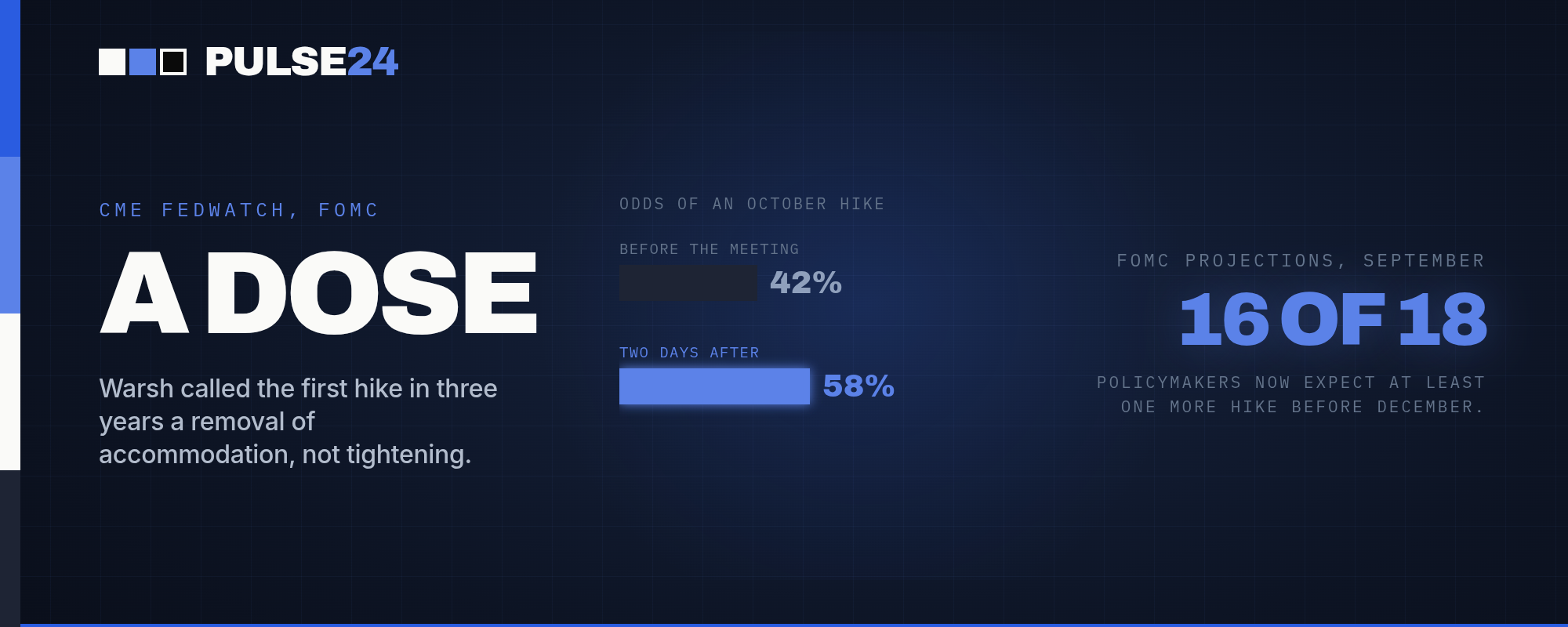
Kevin Warsh called the Fed's first rate hike in three years a removal of "a dose of accommodation" rather than tightening, and Wall Street heard an opening for more. Odds of an October follow-up hike jumped from about 42% to near 58% within days, and Goldman Sachs reversed its call that the Fed was already done for the year.
Kevin Warsh used the same three words several times during Wednesday's press conference, and by Friday they had moved markets more than the actual rate increase did. The Federal Reserve raised its benchmark rate a quarter point to 3.75%-4.00%, its first increase in more than three years, with a unanimous vote on September 16. Warsh could have simply called that tightening. Instead he told reporters the Fed had removed "a dose of accommodation," phrasing specific enough that Krishna Guha of Evercore ISI said it was "not a mistake" but "a phrase he repeated several times" and a deliberate choice.
Traders heard the framing as a signal, not a formality. The Dow fell 631 points that afternoon, its steepest drop of the week, closing near 51,462. The S&P 500 slid to about 7,552, its lowest close since July. The Nasdaq barely moved, down roughly three points, which told its own story: the selling concentrated in rate-sensitive corners of the market rather than spreading everywhere at once.
What Changed
Before the meeting, CME FedWatch data put the odds of an October follow-up hike at roughly 42%. Within two days of Warsh's press conference, that number had climbed to near 58%, a coin flip turned into a lean toward another increase. Goldman Sachs, which had told clients the Fed was likely done raising rates this year, reversed that call and penciled in an October hike. Bank of America went further, forecasting increases at both the October and December meetings, a path that would put the fed funds rate at 4.25%-4.50% by year end.
The Fed's own projections support the shift. Of the eighteen policymakers who submitted forecasts, sixteen now expect at least one more quarter-point increase before December: twelve see one additional hike, four see two. The median projection for where rates land at the end of 2026 rose to 4.1%, up from 3.8% in June. The median for 2027 rose by the same amount, from 3.6% to 4.1%, and the committee erased the rate cut it had previously penciled in for next year.
Why It Matters
Bond markets moved just as fast as stocks. The 2-year Treasury yield, which tracks Fed policy expectations more closely than almost any other maturity, climbed to its highest level since 2024. The 10-year touched 5% during the session before pulling back slightly. The yield curve flattened as short-term rates rose faster than long-term ones, a pattern that typically shows up when the market expects tighter policy to persist rather than reverse quickly.
Housing absorbed the sharpest hit. With the 10-year near 5%, mortgage rates pushed back above 7% for the first time in months, and homebuilder stocks fell across the board in the days that followed. A housing market that was already stalled by high borrowing costs now has one less reason to expect relief before 2027.
What to Watch Next
The next test comes fast. The Fed's next meeting is scheduled for October 27-28, and futures markets currently sit close to a coin flip on whether it produces another quarter-point move. At least one more inflation report and a fresh jobs report will land before then, and either could swing the odds meaningfully. A hot CPI print has moved Fed odds by twenty points in a single session before; a soft one could pull October's probability back toward the low 40s where it started.
Watch the dollar and Japan too. The dollar index broke above 100 the day after the September hike, its first time above that level in seven weeks, and a more hawkish path into October would tend to support further dollar strength. The Bank of Japan followed two days later with its own hike to a 31-year high, a reminder that developed-market central banks are no longer moving in isolation. If the Fed keeps raising rates into October, other central banks watching their own currencies against the dollar may feel more pressure to respond in kind.
The Pulse24 Take
Something narrower than a hawkish surprise happened here. The dot plot's math was already public before Warsh opened his mouth: sixteen of eighteen officials wanted at least one more hike this year. What actually moved was investor confidence that the Fed would follow through on its own plan, the way committees sometimes walk back guidance once economic data turns uncertain. Warsh's phrasing removed that doubt. That is arguably a bigger deal for asset prices over the next six weeks than the 25 basis points already delivered.
For investors, the practical takeaway is to stop treating "one and done" as the base case. Rate-sensitive corners of the market, including housing, regional banks, and companies carrying floating-rate debt, deserve a fresh look at how much further tightening they can absorb before the October meeting settles the question one way or another. Markets have a habit of underpricing central bankers who go out of their way to sound serious.
How we read the data
Curious how we get from raw data to a take like this? Our Trader's Toolkit walks through the tools we lean on.
Explore the Toolkit