Pulse24 Original
October Fed Hike Odds Collapsed From 50% to 8% in Two Weeks. The Dollar Index Is Still Giving Back Its 18-Month High.
October 26, 2026
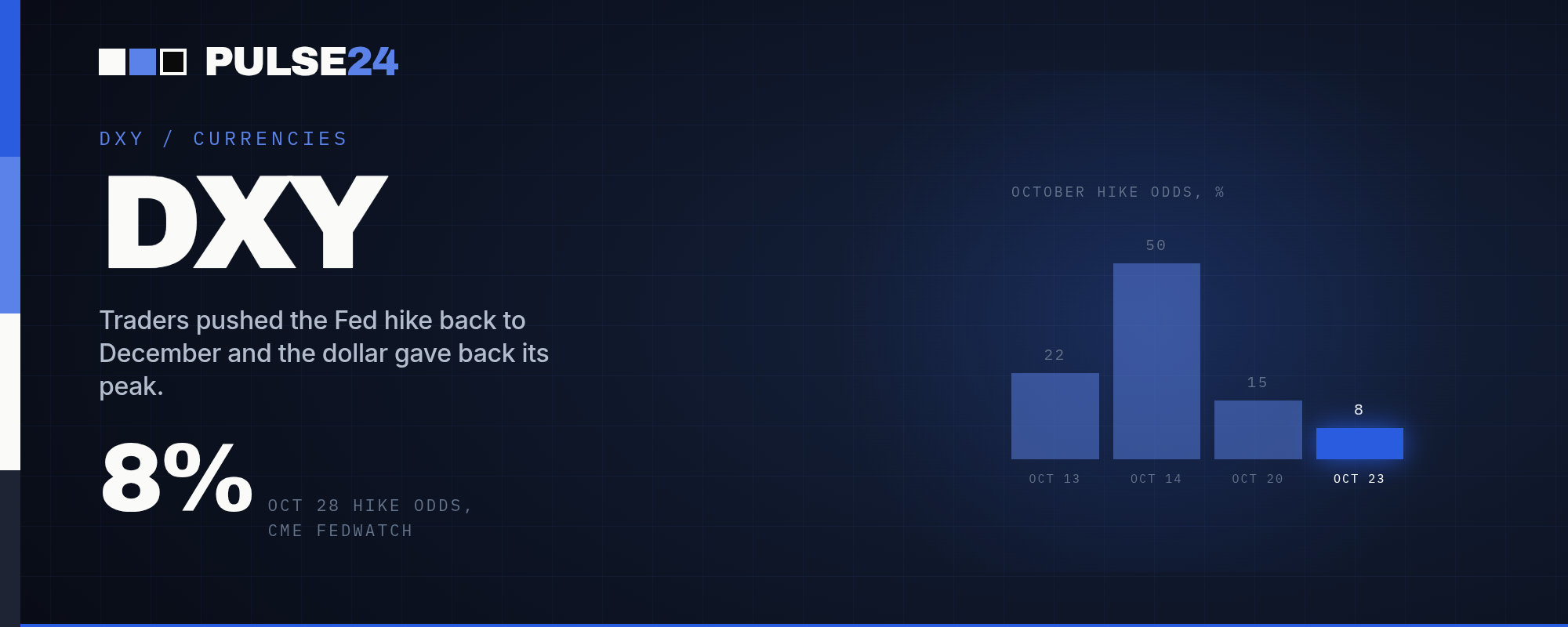
The dollar index has slipped about 1.2% from an 18-month high as traders all but ruled out an October Fed rate hike, even though December odds remain locked near 84%. Gold and the 10-year yield are telling two different versions of that same story this week.
101.48. That's roughly where the US Dollar Index sat early Monday in Asia trading, down from the 102.70 high it touched less than two weeks earlier. A loss of 1.2% is not, on its own, a dramatic number. What is dramatic is how fast traders have changed their mind about why the dollar was that strong in the first place.
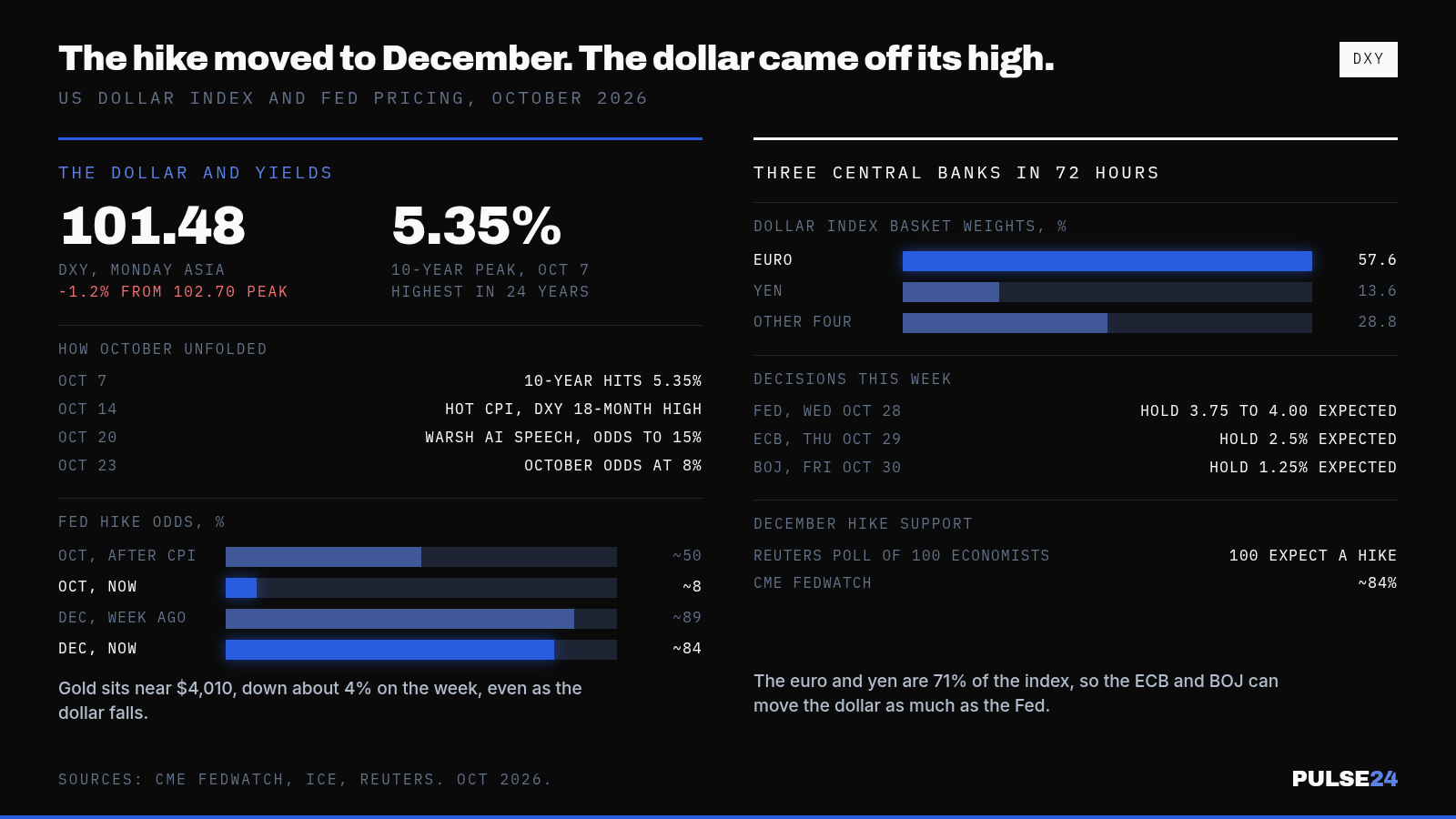
Bond yields got there first. The 10-year Treasury yield touched 5.35% on October 7, its highest level in 24 years, as traders priced in a hawkish Fed path. A week later, September's CPI report, released October 14, landed hot enough that CME FedWatch pricing for an October 28 hike jumped to roughly 50% from about 22% the day before, and the dollar index followed the same path, reaching its own 18-month high of 102.70.
That peak didn't last. Fed Chair Kevin Warsh's October 20 remarks tying inflation pressure to AI-related investment cut those odds to 15%, and by October 23 CME FedWatch had them down to just 8%. The dollar gave back its gains in step, sliding roughly 1.2% from the peak over the same stretch.
What Changed
What's unusual is what didn't move. December hike odds sit near 84%, barely below the roughly 89% priced in a week earlier and consistent with a Reuters poll in which every one of 100 surveyed economists expected a hike by December. Traders haven't abandoned the idea that the Fed hikes before year-end. They've just pushed the timing back by six weeks.
The Treasury market tells a similar story. The 10-year yield has eased from its October 7 peak, though nowhere near as sharply as the single-day, 19-basis-point drop it logged in a separate scare two weeks ago. This move looks more like a gradual unwind of a timing bet than a wholesale change of view on where rates are headed.
The calendar makes this week unusually crowded for currency markets specifically. The euro makes up 57.6% of the dollar index, and the European Central Bank meets Thursday, October 29, widely expected to hold its deposit rate at 2.5%. The yen is 13.6% of the basket, and the Bank of Japan follows a day later, on October 30, expected to stay at 1.25% even as its hiking cycle already moves at the fastest pace since 1990. Three major central banks deciding rates inside 72 hours is rare, and it's part of why the dollar's next move depends on more than Wednesday's Fed statement alone.
Why It Matters
Gold is where the usual playbook breaks down. A softer dollar is supposed to make gold more attractive to anyone holding other currencies, the textbook reason gold and the dollar index tend to move in opposite directions. Instead, gold is trading near $4,010 an ounce, still down about 4% on the week, the same week the dollar fell. That continues a pattern that showed up when gold fell to a three-month low the same week oil jumped above $116 a barrel: gold's price right now looks more tied to real yields and prediction-market odds on a December hike than to the dollar's day-to-day swings.
That divergence matters beyond gold. A market pricing a Fed hike as delayed, rather than cancelled, is still a market expecting tighter policy, just on a longer clock. Should Wednesday's Fed statement or Chair Warsh's press conference suggest the committee is less committed to a December move than the 84% odds assume, the dollar has room to snap back toward its 18-month high fairly quickly. A message that instead confirms December is close to settled would likely show the more interesting reaction in the euro and yen, given the ECB and BOJ decisions landing within 48 hours of the Fed's own.
What to Watch Next
Wednesday afternoon brings the Fed's decision and Chair Warsh's press conference, with markets broadly expecting a hold. The more useful thing to track is the language the committee uses about December, and how quickly CME FedWatch odds move once that language gets parsed. Thursday's ECB decision and Friday's Bank of Japan meeting round out the week; either one surprising relative to expectations would move the euro or yen enough to shift the dollar index on its own, independent of anything the Fed says.
The Pulse24 Take
The dollar's drop from an 18-month high looks, at first glance, like markets backing away from a hawkish Fed. December odds suggest a narrower read. Traders haven't gotten less convinced the Fed hikes again before year-end. They've gotten more convinced it doesn't happen this week. That's a mechanical kind of repricing, tied to timing rather than direction, and it's the kind of move that can reverse quickly if Wednesday's language leans even slightly more hawkish than the market currently expects. Watch the December probability on Thursday morning more closely than Wednesday's decision itself. That number will say more about where the dollar goes next than the headline does.
How we read the data
Curious how we get from raw data to a take like this? Our Trader's Toolkit walks through the tools we lean on.
Explore the Toolkit