Pulse24 Original
Oil Jumped Above $116 a Barrel Today. Gold, the Asset That's Supposed to Rise With It, Fell to a Three-Month Low.
October 23, 2026
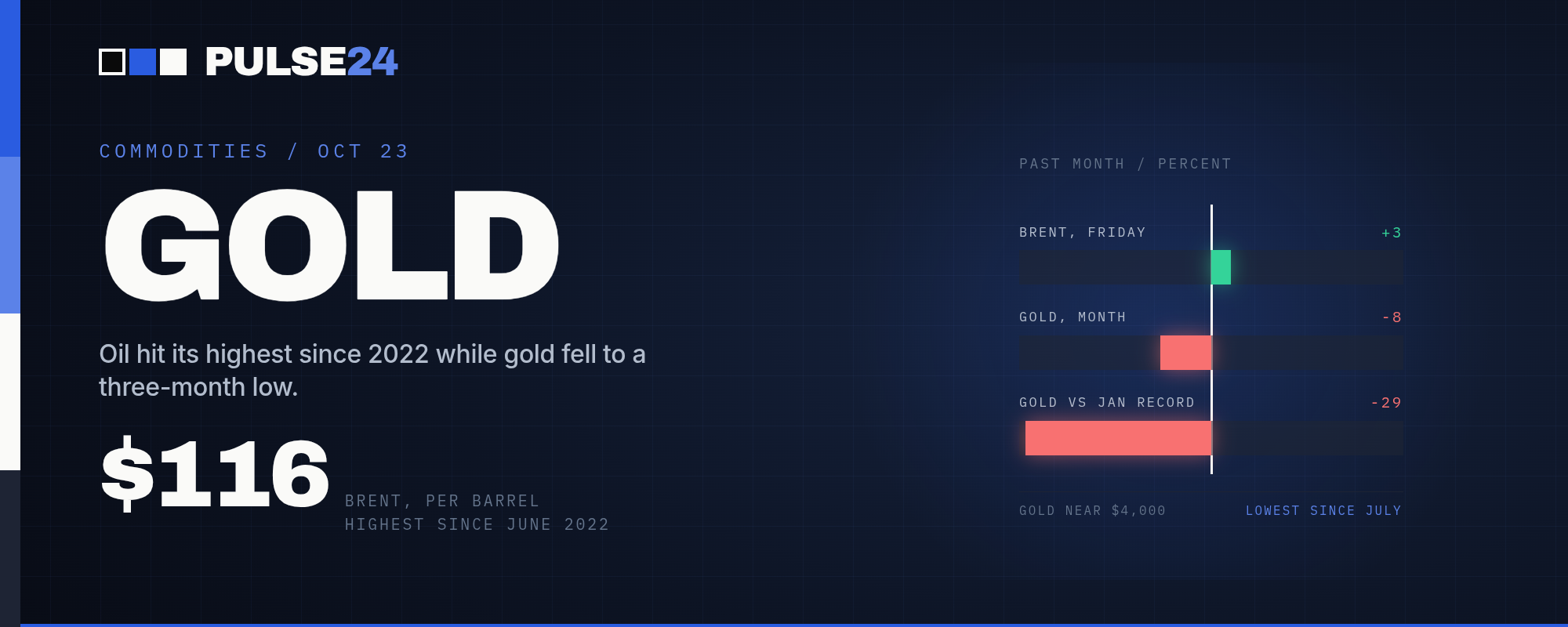
Oil jumped to its highest level since 2022 this morning as new attacks on Saudi energy infrastructure rattled supply fears, and stocks are still wobbling on AI spending doubts. Gold, the asset built to catch both kinds of fear, fell to its lowest price since mid-July instead.
Brent crude traded above $116 a barrel on Friday morning, a level it hasn't touched since June 2022. Gold, the asset investors usually reach for when oil spikes and stocks wobble, did the opposite. Spot prices slid toward $4,000 an ounce, their lowest point since mid-July.
Oil and gold have moved together often enough this year that traders treat the pairing as a kind of weather report for risk. When the two diverge this sharply, something underneath the surface has shifted: the interest-rate outlook is doing more work right now than headline risk is.
What Changed
Two attacks on Saudi energy infrastructure this week, including a strike near an airport in the kingdom's east and an intercepted drone aimed at an Aramco processing site tied to the Shaybah oil field, pushed traders to price in a tighter supply picture. Brent rose roughly 3% on Friday to levels last seen before 2022, extending a rally that's taken the benchmark close to its highest point in four years.
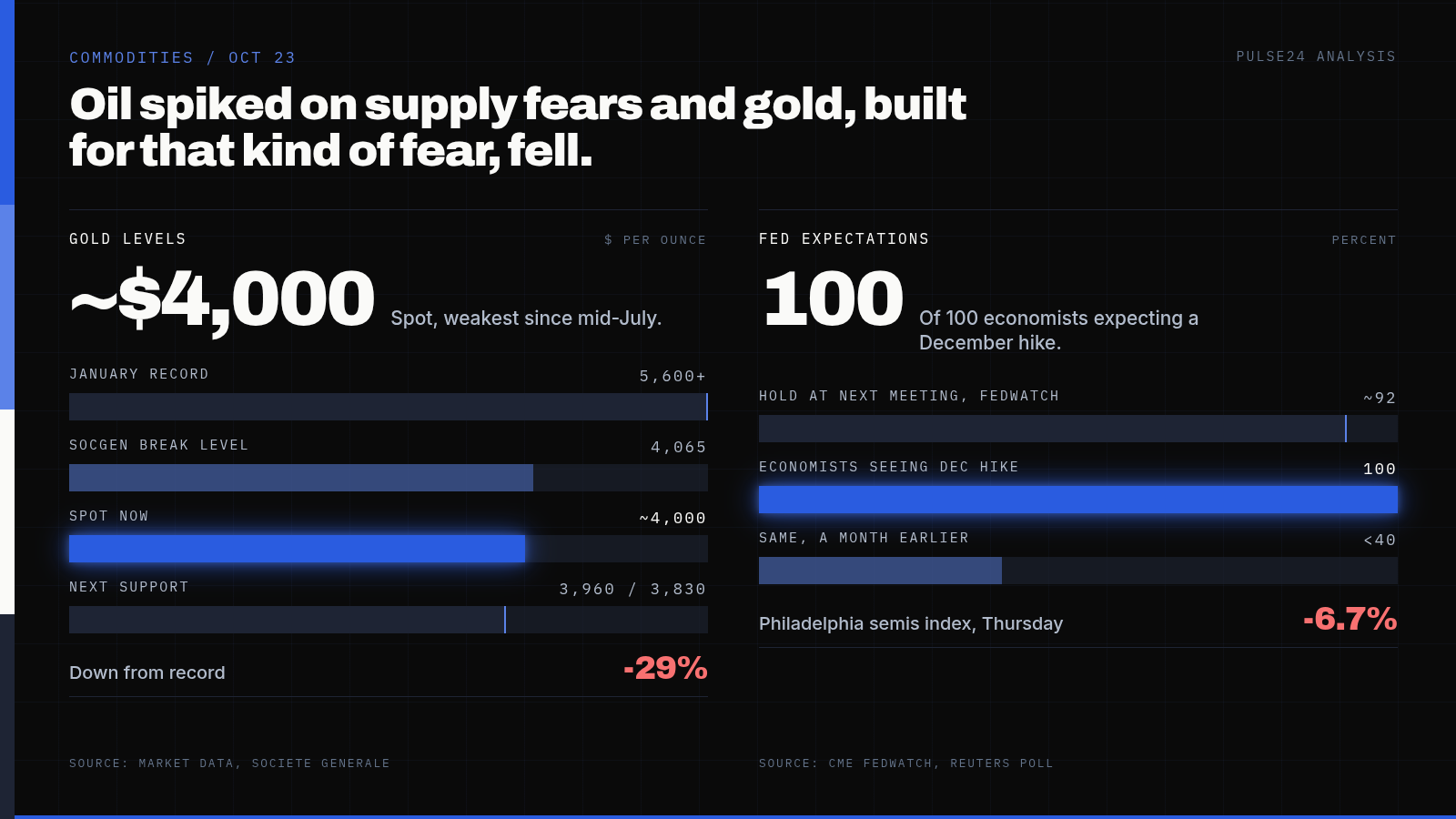
Gold should have caught at least some of that bid. Instead, spot prices opened near $4,040 an ounce and kept drifting lower, down about 3.6% over the past week and roughly 8% over the past month. Societe Generale's desk notes gold carved out an interim low near $4,065 earlier this month and has traded in a narrow band since. A close below that support, the bank says, could extend the slide toward June's low around $3,960 to $3,940, with room down to roughly $3,830 after that.
The gold weakness arrived a day after a separate risk event. The Nasdaq Composite fell 2.6% on Thursday, its steepest drop since early June, as Meta's first negative free cash flow in over a decade reignited doubts about AI spending. The Philadelphia Semiconductor Index fell 6.7% that session, its worst day since June 23, even though it's still up more than 50% for the year.
Why It Matters
Gold doesn't pay a coupon or a dividend, so its appeal rises and falls with the cost of holding it instead of something that yields interest. That's the chain connecting Friday's oil spike to gold's slide. Higher oil feeds into inflation expectations, and higher inflation expectations feed into how long the Fed is expected to keep rates elevated. A Reuters poll released this week found all 100 economists surveyed now expect the Fed to raise rates again in December, up from fewer than four in ten who thought so a month earlier. The CME's FedWatch tool still puts the odds of a hold at the Fed's upcoming meeting near 92%, but December is where the market expects the next move, and it's priced as a hike rather than a cut.
That's an unusual backdrop for gold. Much of the metal's rally earlier this year rested on the idea that the Fed would eventually ease, not tighten again. A prior look at gold's technical resistance near $4,200 found Wall Street and Main Street reading the same hike odds differently: professional positioning leaned toward further weakness while retail buying stayed resilient. Friday's price action looks like the professional read winning out, at least for now.
What to Watch Next
Two things will decide whether this divergence holds. One is whether the Saudi attacks escalate into a broader supply disruption. A sustained move toward $120 Brent would test whether gold can keep ignoring geopolitical risk altogether. The other is next week's Fed meeting. Markets are confident the Fed holds in the near term, but any shift in language about the pace of hikes into year-end could matter more for gold than the headline decision itself. A hawkish surprise would reinforce the rate-driven selling. A dovish one could reverse it quickly, given how stretched positioning already looks after a nearly 29% drawdown from January's record high.
The Pulse24 Take
Markets like a clean story: war pushes oil higher, and higher oil pushes investors toward gold. Friday didn't follow that script. Rates are overriding geopolitics in the gold market right now, and that's worth remembering the next time a scary headline seems to demand a flight to safety. The real question isn't whether the news is frightening. It's whether the Fed's next move makes holding a zero-yield asset more or less expensive. Right now the market's answer is more expensive, and gold is paying for it even while oil climbs and stocks wobble. Positioning this stretched tends to snap back hard eventually, in one direction or the other. For now, though, the trade is rates first, headlines second.
How we read the data
Curious how we get from raw data to a take like this? Our Trader's Toolkit walks through the tools we lean on.
Explore the Toolkit