Pulse24 Original
Core PCE Held at 3.3% in July, Exactly as Forecast. Gold Still Fell From a Three-Month High of $4,697 Within Hours of the Report.
August 26, 2026
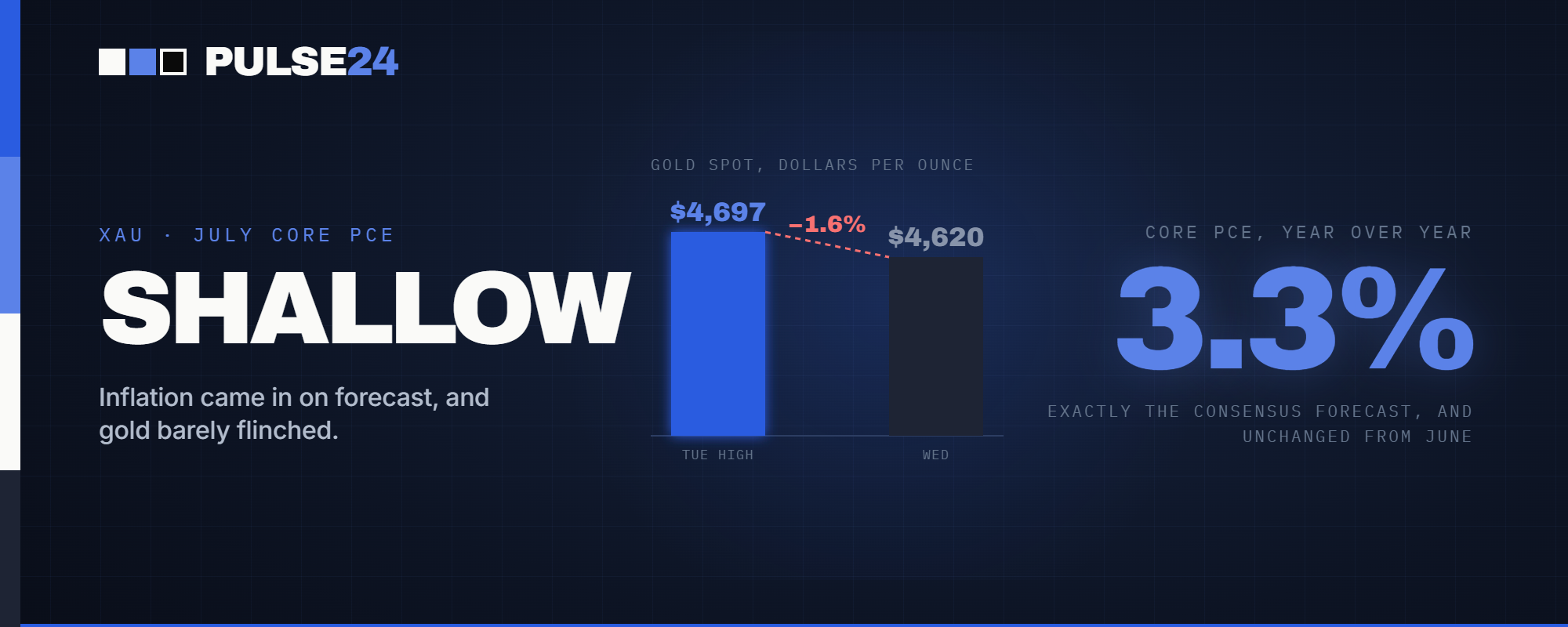
Core inflation held at 3.3% in July, matching forecasts exactly, but gold still slid from a three-month high near $4,700 within hours of the report landing. The muted reaction says more about the Treasury's ballooning bond buybacks than about the Fed's next move.
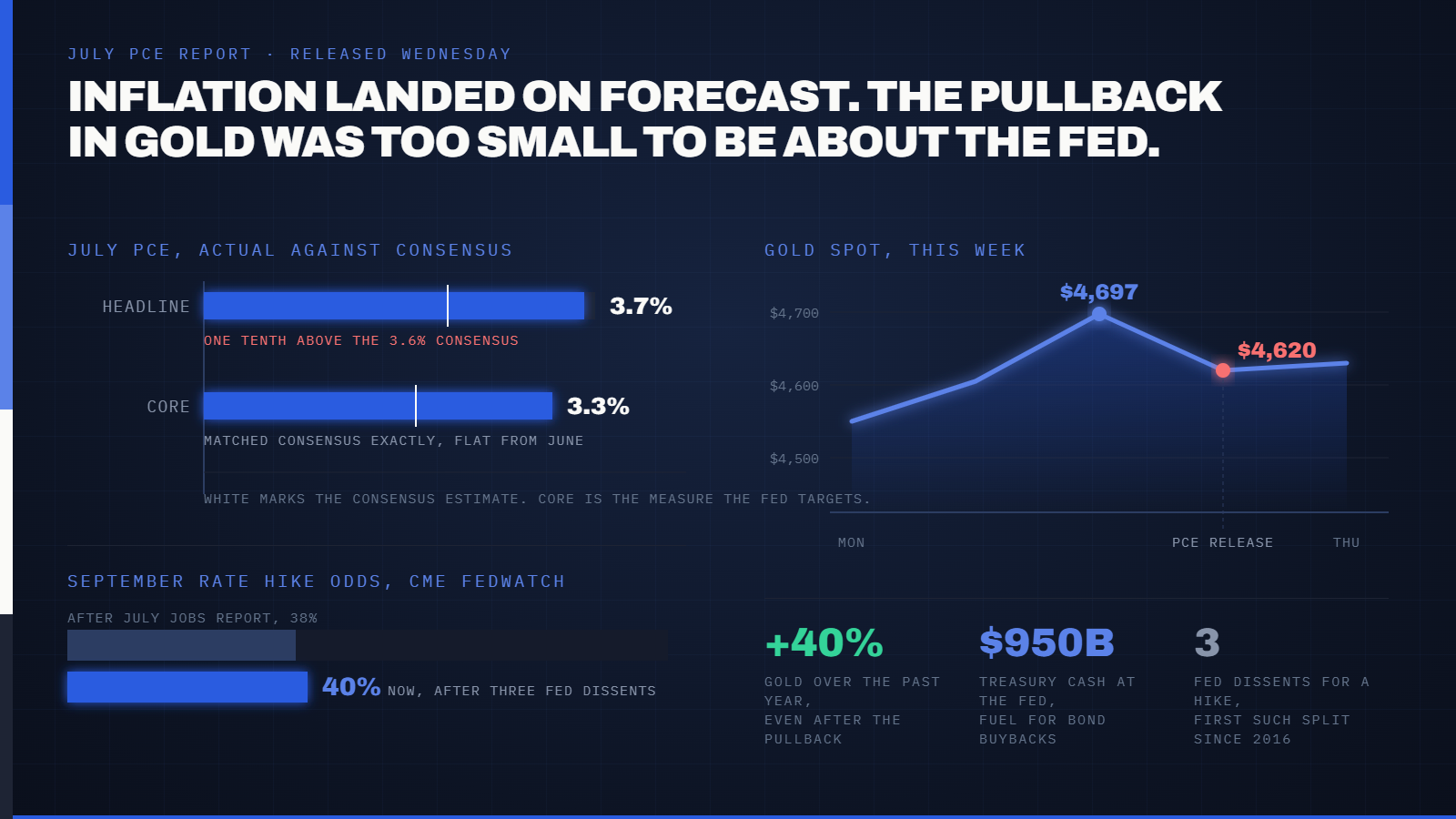
Gold touched $4,697 an ounce on Tuesday, a fresh three-month high, then gave most of that gain back within about a day. By Wednesday morning it was trading closer to $4,620, a retreat of roughly 1.6%, right as the Commerce Department released the Personal Consumption Expenditures report for July. The index rose 3.7% from a year earlier, slightly ahead of the 3.6% economists had penciled in. Core PCE, the version that strips out food and energy and the one the Fed actually targets, held at 3.3%, exactly where forecasters expected and exactly where it sat in June.
What Changed
None of these numbers look dramatic on their own. A tenth of a point above consensus on the headline print isn't much of a surprise, and a core reading that matched expectations exactly is about as uneventful as inflation data gets. Even after its pullback, though, gold remains up close to 40% over the past year, and the context around Wednesday's report is doing more work than the report itself. Three regional Fed presidents dissented in favor of raising rates at July's FOMC meeting, the first time three policymakers have split from the majority on a hike since 2016. That dissent, layered on top of Wednesday's hotter headline print, has pushed the CME FedWatch Tool's implied odds of a September rate hike to around 40%, up from about 38% in the days right after July's jobs report. The dollar index ticked up to about 99 on the news, still well off its levels from earlier this summer but no longer sitting at the three-month low near 98.65 it touched last week.
Why It Matters
A hotter inflation print is usually straightforward for gold. Higher inflation raises the odds the Fed holds rates steady or hikes, and higher rates make an asset that pays no yield less attractive next to a Treasury bill. Wednesday's retreat from $4,697 followed that script well enough on the surface. What didn't follow the script is how shallow the pullback stayed. A genuine repricing of Fed policy toward a hike would typically produce more than a 1.6% dip. Bitcoin, which traders have been treating as gold's higher-beta cousin all month, cleared $80,000 last week on the same debasement logic and hasn't given back much of that move either.
The bigger reason has less to do with the rate cycle than with the Treasury's own balance sheet. The department's cash balance at the Fed has swelled to $950 billion, nearly double what Janet Yellen kept on hand, and officials have signaled that money could fund an expanded bond buyback program aimed at capping long-end yields. Buybacks funded by a growing cash pile rather than fresh issuance look, to a lot of traders, like a quieter form of debt monetization than an outright deficit expansion would. That's the trade gold and Bitcoin have both been pricing since gold first cleared $4,600 last week, and it's proving sticky enough that one hot inflation print wasn't enough to undo it.
What to Watch Next
Kevin Warsh steps to the Jackson Hole podium Friday for his first keynote since taking the chair, and Wednesday's inflation data will have shaped what he says before he ever reaches the microphone. A chair with a hawkish reputation now has fresher ammunition than he had a week ago to lean into it, or he could use the platform to signal patience and let the September 16 meeting speak for itself instead. The speech lands into a market that's already repricing the odds of a hike rather than a pause, which raises the stakes for whatever tone he strikes.
Watch the dollar index alongside gold in the days ahead. A DXY that keeps climbing back toward 100 would suggest rate-hike odds are starting to matter more than the debasement trade, at least for now. A DXY that stalls near 99 despite hotter inflation data would suggest the opposite, that the fiscal story is still doing more work on precious metals than the monetary one.
The Pulse24 Take
Markets like clean narratives, and "hot inflation, Fed turns hawkish, gold falls" is about as clean as they come. Wednesday only half cooperated. Gold did retreat, but not by much, and Bitcoin barely moved at all. That gap between what the textbook says should happen and what actually happened is usually where the more interesting story lives.
Two forces are pulling on gold right now, and they don't always point the same direction. One is the ordinary rate cycle, where hotter data raises the odds of tighter policy and pressures assets that pay no yield. The other is a structural worry about how the government is financing a debt load north of $40 trillion, and that worry doesn't particularly care what July's PCE print looked like. For most of this year, the second force has been winning. Friday's speech from Warsh, and the September meeting behind it, will be an early test of whether a genuinely hawkish signal can finally tip the balance back toward the first one.
How we read the data
Curious how we get from raw data to a take like this? Our Trader's Toolkit walks through the tools we lean on.
Explore the Toolkit