Pulse24 Original
The 10-Year Yield Is at a 2007 High and the Yen Keeps Testing 160. The S&P 500 Barely Blinked.
September 26, 2026
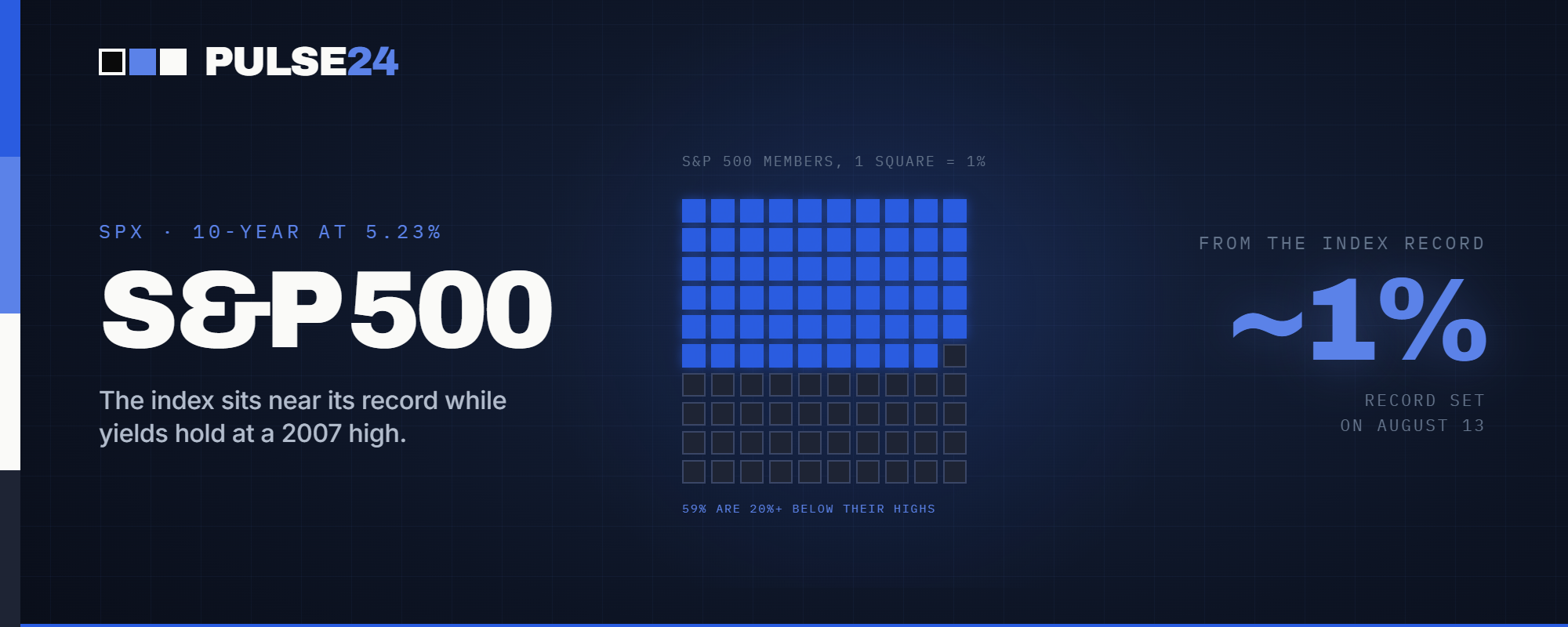
Treasury yields are at levels unseen since 2007 and the yen keeps testing 160 per dollar, yet the S&P 500 sits near its record. Markets reacted very differently the last two times pressure like this appeared. Understanding why helps explain what's holding stocks together now, and what could still break that resilience.
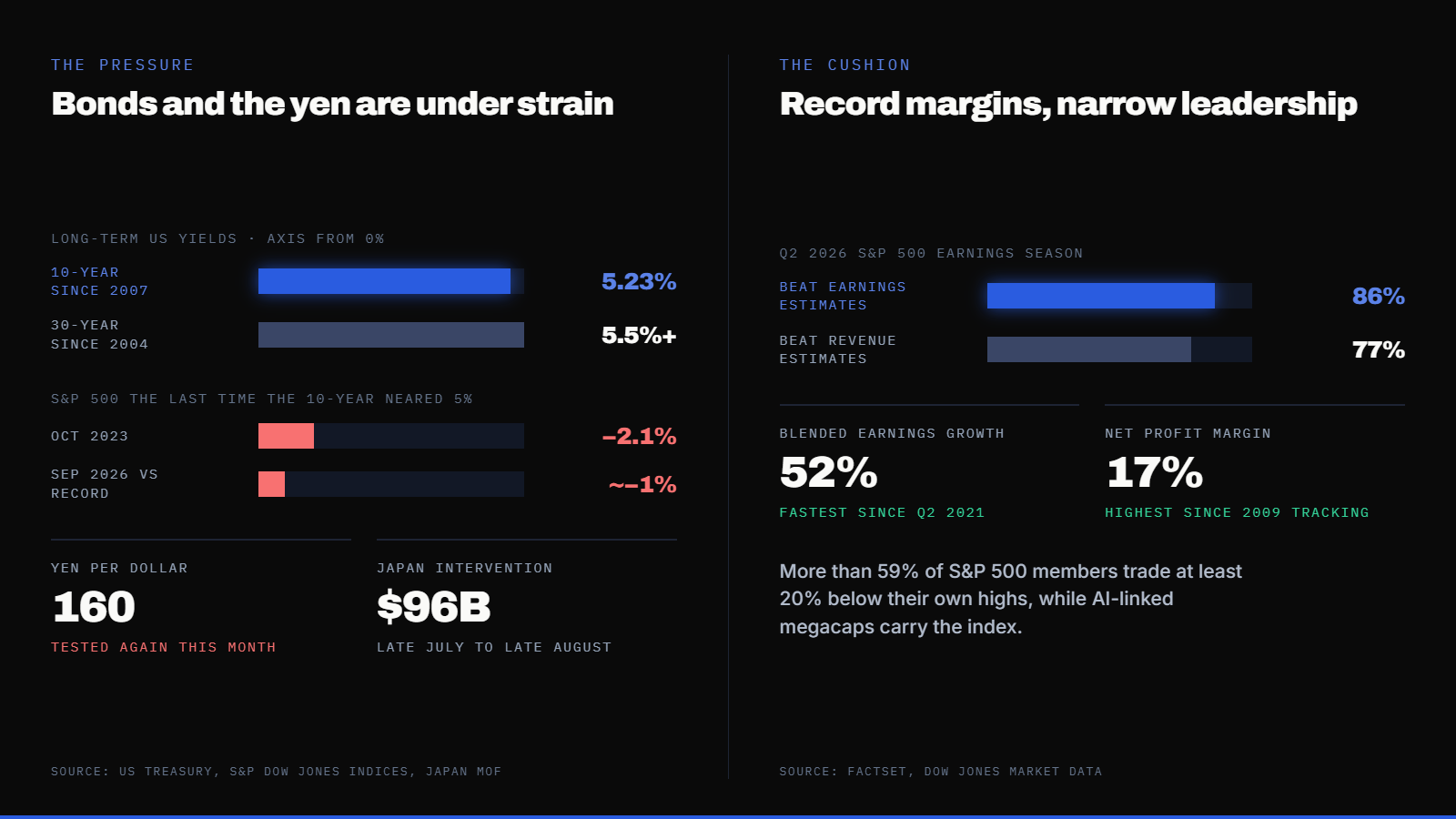
In October 2023, the 10-year Treasury yield spent weeks grinding toward 5%, and the S&P 500 fell for three straight months, a 2.1% drop in October alone among them, even though the economy was growing at a 4.9% annualized clip that quarter. This week, the 10-year traded as high as roughly 5.23%, a level unseen since 2007, and the 30-year pushed past 5.5%, its highest since 2004. The S&P 500 sits within about 1% of its own record, set on August 13. The yen tells a similar story a continent away: still testing the same 160 level that forced Japan into a record currency intervention this summer, without producing anything like 2024's disorderly unwind.
What Changed
The move hasn't been entirely smooth. The Dow dropped roughly 300 points over a four-day stretch in mid-September as yields and oil prices climbed together, and it fell more than 300 points again on September 22 as the Nasdaq slid about 1%. What hasn't happened is the kind of sustained, multi-week retreat that showed up in 2023, when the S&P 500 fell for three consecutive months as the 10-year first approached 5%. This time, the index has absorbed a similarly stressed bond market and still sits close to its high.
New York Fed President John Williams has offered one interpretation: what's driving yields higher, he said, is "really a strong U.S. economy and a strong economic outlook fuelled by big investments in AI and data centres and technology in general." Fed Chair Kevin Warsh pointed to similar signs of strength in his August Jackson Hole speech, citing real consumer spending growth above 2% over the past four quarters and private domestic final purchases running near a 3% annual pace. But Warsh's conclusion wasn't that investors should relax. "On balance, I would be hard pressed to describe broad financial conditions as restrictive," he said, an argument for why the Fed still had room to raise rates further, not a case that high yields are harmless.
The resilience argument has support beyond the Fed too. Economist Ed Yardeni, who coined the term "bond vigilantes" in 1983, notes that a 10-year yield in the 4% to 5% range still sits below nominal GDP growth, within what he calls the old normal. Second-quarter earnings gave that argument real support. According to FactSet, 86% of S&P 500 companies beat earnings estimates and 77% beat revenue estimates, both above their five and ten-year averages. Blended earnings growth came in at 52%, the fastest pace since the second quarter of 2021, and net profit margins reached 17%, the highest FactSet has recorded since it began tracking the metric in 2009.
A similar dynamic, minus the calm, is playing out in currency markets. The yen pushed past 160 to the dollar repeatedly in 2026, in April, June, August, and again this month. Japan responded with its largest currency intervention on record, spending roughly $96 billion between late July and late August, and the yen still slipped back above 160 within weeks. The Bank of Japan then raised its policy rate to 1.25% this month, a 31-year high, on a 7-2 vote that saw two board members dissent. Currency strategist Ray Attrill described the market's response bluntly: the decision had "clearly underwhelmed versus expectations," and analyst Naka Matsuzawa attributed the yen's wobble afterward to a knee-jerk reaction to the dissenting votes rather than genuine alarm. Compare that to August 2024, when a yen carry-trade unwind sent Japan's Nikkei 225 down 12.4% in a single session, its worst day since the 1987 Black Monday crash, and dragged the Dow down roughly 1,000 points the same day. This time, Japan's currency markets have gone dark for holiday stretches with intervention risk hanging over them, and the Nikkei is still up 27% for the year despite a record intervention, a policy hike, and a currency that keeps returning to the same level anyway.
Why It Matters
Higher discount rates are supposed to punish stock valuations, particularly for growth and technology names whose profits are weighted toward the distant future. Vanguard's Roger Aliaga-Diaz has laid out the mechanism plainly: if the 10-year settles meaningfully above 5%, expected future cash flows are worth less in today's dollars, which typically pulls equity valuations down with it. That's the same math behind September's earlier yield spike, when a hot flash PMI reading pushed the 10-year through 5% for the first time since 2007 and Fed Governor Michael Barr said further hikes were likely needed. One important reason stocks have absorbed that discount-rate pressure better this time is that earnings have also been growing exceptionally fast. A higher discount rate pushes valuations down, but stronger expected cash flows push them the other way, and so far earnings growth has been powerful enough to offset much of that pressure at the index level.
That resilience isn't evenly distributed, though. According to Dow Jones Market Data, more than 59% of S&P 500 companies are trading at least 20% below their own all-time highs, even with the index itself sitting near a record. The gap is being carried disproportionately by AI-linked megacap technology and semiconductor names, as investors continue to price in an enormous multi-year buildout in AI infrastructure, while large parts of the rest of the market haven't fully recovered. An index absorbing 5%-plus yields is not the same thing as the average stock absorbing them.
The yen side works differently but points to a related conclusion. August 2024's crash wasn't really about the yen's level. It was about crowded, leveraged carry trades unwinding all at once when the Bank of Japan hiked into a market that wasn't positioned for it. October's rate-hike odds swung from 42% to 58% in a single week earlier this month on comments from Kevin Warsh, and nothing comparable has hit currency markets since. Estimates of yen-funded carry exposure still run into the trillions of dollars, and record intervention plus a rate hike haven't eliminated that exposure, only adjusted it. A well-telegraphed, "underwhelming" rate hike is a very different event from one that catches a crowded trade by surprise, but that difference describes how the pressure has been released so far, not proof the pressure is gone.
What to Watch Next
The argument that yields are "good" rests on growth and earnings staying strong enough to keep outrunning the discount-rate math. If earnings growth decelerates from its current pace, the fastest since 2021, while yields stay elevated, or if inflation data forces the Fed's hand further, the framing stops holding and the more familiar relationship between yields and valuations could reassert itself quickly.
On the currency side, Tokyo has already shown it's willing to intervene at record scale, and the yen returned to 160 anyway within weeks. The more useful question now is whether that pattern repeats: another intervention that fails to hold, a faster Bank of Japan tightening path, or a sudden reversal in US yields would each test whether the relatively orderly adjustment seen so far can stay that way. The next BOJ meeting and any further dissent on the board are worth watching for signs of whether that adjustment is still holding.
The Pulse24 Take
A muted reaction isn't the same thing as no risk. The 10-year above 5% still raises the discount rate applied to every future dollar of corporate earnings, and a yen still testing 160 despite record intervention leaves a large carry trade exposed to a sharper reversal. What's different so far is that neither pressure point has forced indiscriminate selling.
Earnings are growing fast enough to offset some of the valuation pressure from bonds, at least at the index level, even though that resilience is concentrated in a relatively small number of megacap names. In Japan, record intervention and a 31-year-high policy rate have so far produced adjustment rather than the disorderly deleveraging seen in August 2024.
October 2023 offers the caution on the equity side. The economy was growing at a 4.9% annualized pace that quarter, and stocks still fell for three consecutive months as yields repriced higher. Strong growth can make 5% Treasury yields easier to absorb. It doesn't make the discount-rate math disappear.
The calm today depends on two things continuing to hold: earnings staying strong enough to offset pressure from higher discount rates, and Japan's currency adjustment remaining gradual rather than forced. Neither is guaranteed. If earnings slow while yields stay above 5%, or if a rapid yen move forces leveraged positions out at once, today's unusually resilient markets could start looking much more familiar.
How we read the data
Curious how we get from raw data to a take like this? Our Trader's Toolkit walks through the tools we lean on.
Explore the Toolkit