Pulse24 Original
U.S. Factory Input Costs Jumped 6.8 Points in September. The Dollar and the 10-Year Yield Both Hit Multi-Year Highs the Same Week.
October 2, 2026
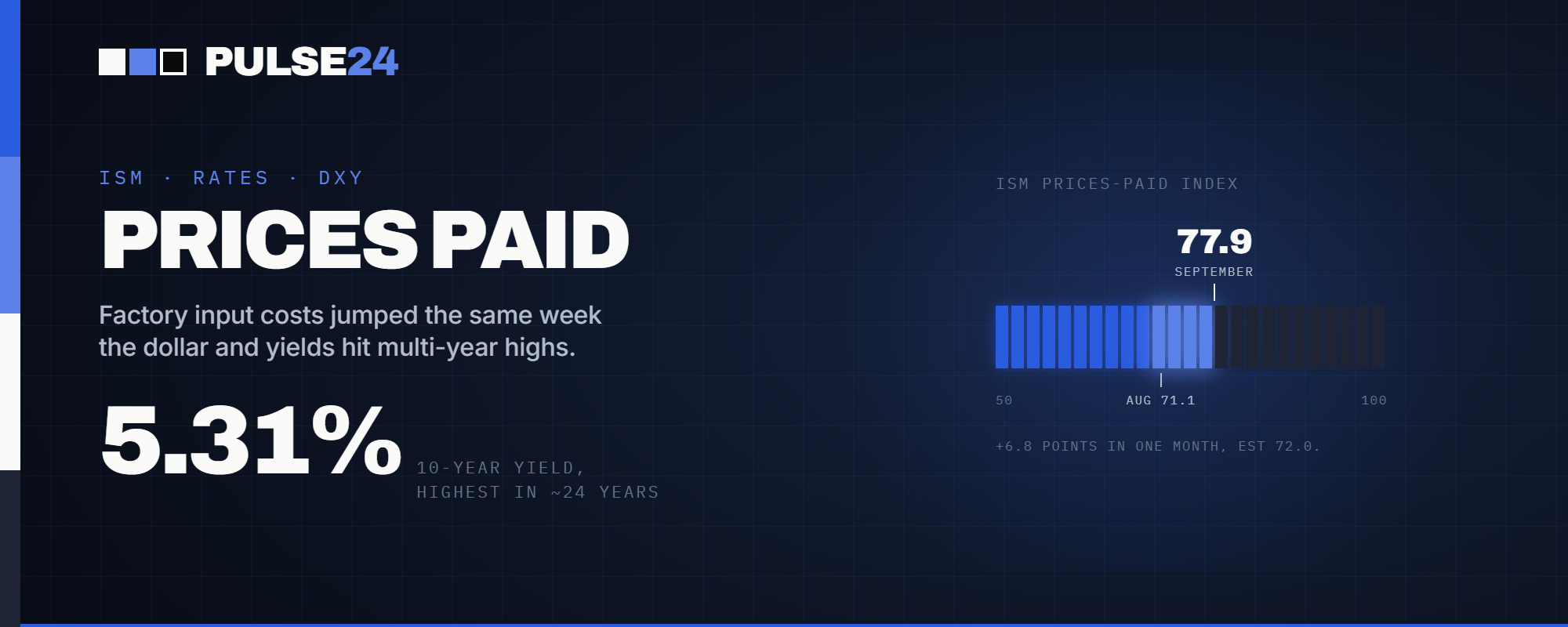
ISM's prices-paid index jumped nearly seven points in September, the dollar index hit a fresh yearly high, and the 10-year Treasury yield touched its highest level in 24 years, all within 48 hours of today's jobs report. Minneapolis Fed President Neel Kashkari says current policy isn't providing much restraint, and he's not done hiking yet.
Seventy-seven point nine. That's where the ISM's prices-paid index landed in September, up from 71.1 in August and well past the 72.0 economists expected. It's one of the sharpest one-month jumps in input costs this cycle, and it arrived the same week the dollar and the 10-year Treasury yield both pushed to levels they haven't touched in years.
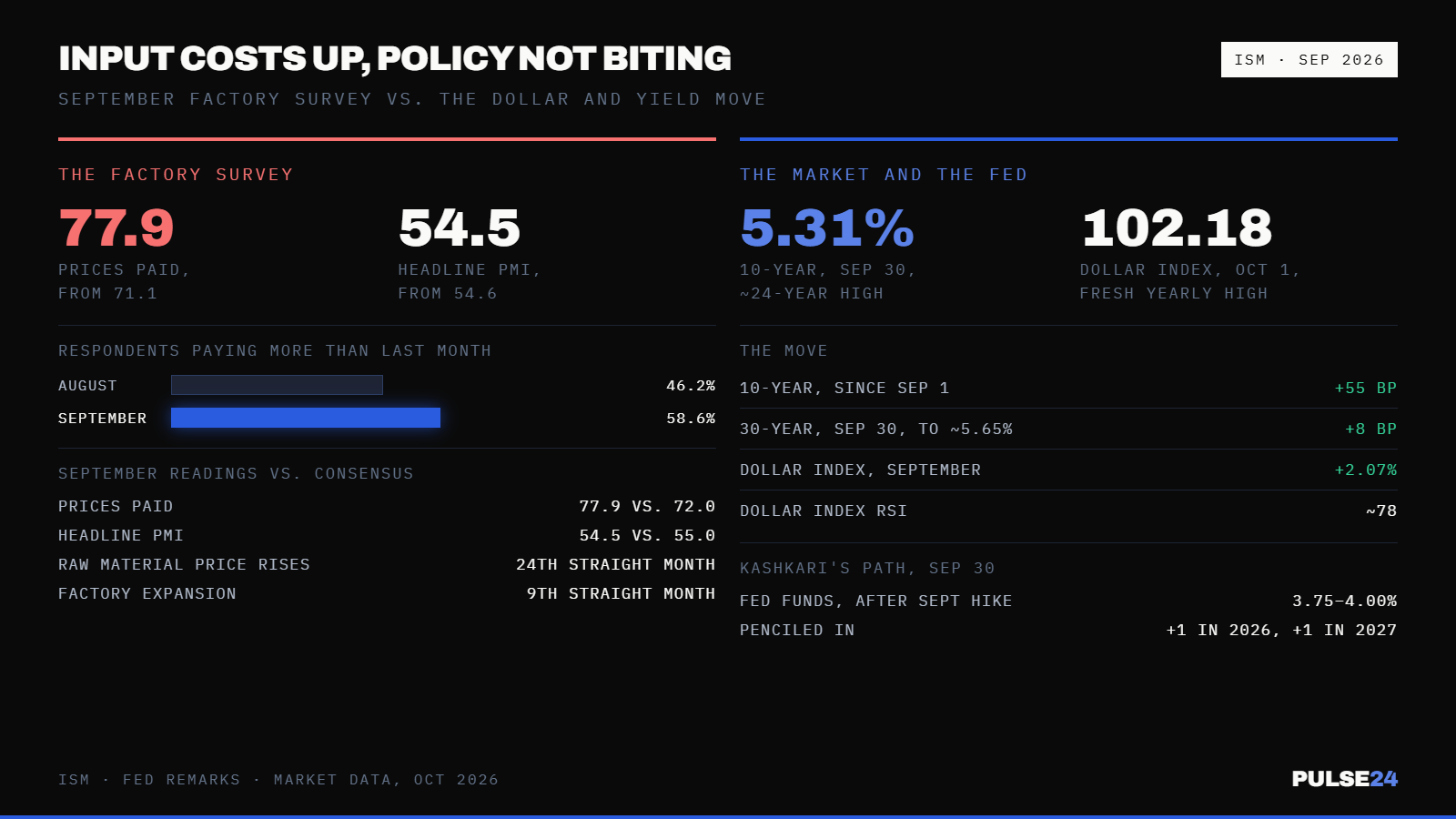
The headline manufacturing number barely moved. ISM's overall PMI came in at 54.5 for September, a tenth of a point below August's 54.6 and shy of the 55.0 consensus, marking a ninth straight month of factory expansion. Underneath that steady headline, though, input costs are re-accelerating. Raw material prices rose for a 24th consecutive month, and 58.6% of survey respondents reported paying more than they did a month earlier, up from 46.2% in August. Steel, aluminum, petroleum products, and tariff-affected imports took most of the blame.
What Changed
Three separate markets reacted to pieces of the same story within about 48 hours. The U.S. Dollar Index climbed to a fresh yearly high near 102.18 on October 1, gaining 0.70% that day and 2.07% over the course of September. Analysts at Brown Brothers Harriman tied the move to widening interest-rate differentials between the U.S. and its G6 trading partners, and the technical picture backs that up: the index's relative strength index sits near 78, solidly in overbought territory, after clearing its 50-day, 100-day, and 200-day moving averages. Part of that widening gap sits with Japan, where a former Bank of Japan official has pegged October hike odds at just 20% to 30%, keeping a lid on the currency most likely to offset dollar strength.
Bond markets moved in the same direction. The 10-year Treasury yield touched 5.31% on September 30, a level last seen roughly 24 years ago, and the 30-year climbed 8 basis points to about 5.65% the same day. Longer-dated yields have outpaced the short end all month: the 10-year is up roughly 55 basis points since the start of September. Short-term yields told a different story a day earlier, when New York Fed President John Williams talked October hike odds down from 72% to 51%, but that dovish signal hasn't done much to slow the long end.
Minneapolis Fed President Neel Kashkari added the policy voice to the move. Speaking at a Council on Foreign Relations event on September 30, he said he doesn't hold a strong view on whether the Fed hikes again in October specifically, but he's still penciling in one more increase before the end of 2026 and another in 2027. His reasoning: current policy, even after September's hike to 3.75% to 4.00%, the first increase since 2023, isn't providing much restraint, and he doesn't see meaningful tightening showing up in financial conditions given the data collected so far. He added that he has some confidence inflation will fade over time, though shocks keep interrupting that path, and that market-based inflation expectations are still centered near 2%.
Why It Matters
A stronger dollar and higher long-term yields moving together amount to a specific kind of tightening, one that doesn't require the Fed to lift the funds rate again to bite. Dollar strength makes imports cheaper for American consumers but squeezes dollar-denominated debt and commodity prices for the rest of the world, while a 24-year-high 10-year yield raises the discount rate applied to every long-duration asset, AI infrastructure spending included. That same dynamic has already shown up in how markets price Fed hike odds against gold and Bitcoin, with sixteen of eighteen FOMC officials on record supporting at least one more increase this year, and it helps explain why August's core inflation data, even after a methodology rewrite from the BEA, hasn't been enough on its own to cool this repricing.
Kashkari's framing is the more interesting piece of this. A Fed official arguing that a 3.75% to 4.00% funds rate, delivered just two weeks earlier, isn't restraining the economy much is a different message than cooling inflation would normally produce. It suggests at least part of the committee believes the neutral rate, the level at which policy neither stimulates nor restrains growth, sits higher than previously assumed. Markets that spent the past year waiting for rate cuts may need to recalibrate how long borrowing stays expensive, regardless of where next month's inflation headlines land.
What to Watch Next
Today's September jobs report is the next real test. Bloomberg's survey points to roughly 90,000 new payrolls and a 4.1% unemployment rate, soft enough to look consistent with a cooling labor market but not so weak it would force the Fed's hand toward easing. A print meaningfully below consensus would likely pull the dollar and yields back from this week's highs, while a hotter number, paired with Kashkari's comments and the ISM prices-paid spike, could push both further into territory markets haven't had to navigate in decades. Treasury auction results over the coming weeks are worth watching too. If demand for long-dated paper stays firm even as yields climb, that says more about term premium and deficit financing than about any single data release.
The Pulse24 Take
The easy read on this week is that inflation is back, so the dollar and yields are rising together. Reality looks messier than that. ISM's prices-paid jump is worth tracking, but it's one survey response, not a CPI print, and the dollar's overbought technical reading suggests at least some of this move is stretched rather than purely fundamental. Harder to dismiss is Kashkari putting a number on how little restraint current policy provides. Kashkari is making a claim about where neutral sits, not a forecast about next month's meeting, and if more officials start agreeing with him, the market's whole framework for when borrowing costs come back down may need rebuilding.
For now, three different markets are pricing three different degrees of conviction in the same hawkish story, and today's jobs number is the first real chance to see which of them had it right.
How we read the data
Curious how we get from raw data to a take like this? Our Trader's Toolkit walks through the tools we lean on.
Explore the Toolkit