Pulse24 Original
Core Inflation Slowed to 3.0% in August. The BEA Also Rewrote How It's Measured.
October 1, 2026
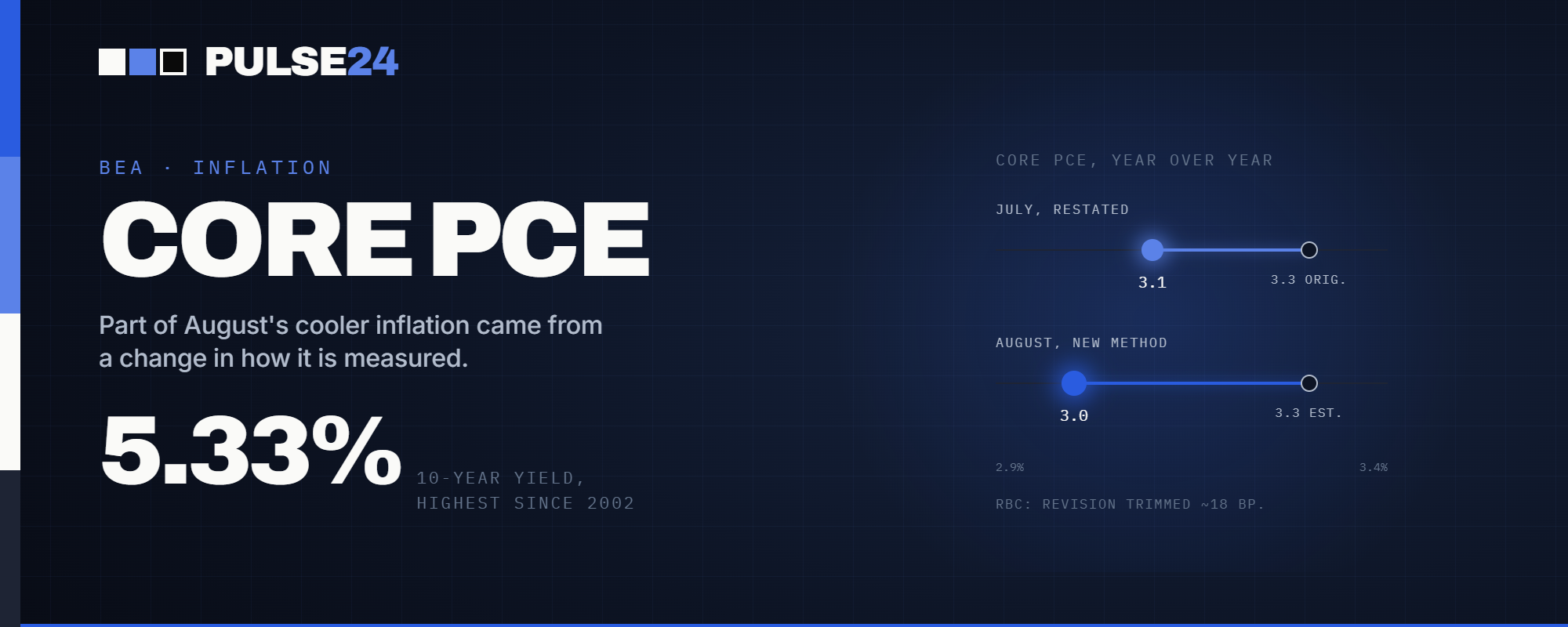
August's core PCE cooled to 3.0% year over year, well below the 3.3% economists expected, but a chunk of that improvement traces to a BEA accounting overhaul rather than genuine disinflation. Treasury yields and the dollar barely blinked, both still grinding toward multi-decade highs.
Three percent. That's where the core PCE price index landed for August, the Bureau of Economic Analysis said Wednesday, a full three tenths below the 3.3% economists had penciled in and the softest annual reading in months. Headline PCE came in at 3.4%, personal spending jumped 0.9%, and for a few hours Wednesday morning, it looked like the Fed had finally gotten the number it wanted.
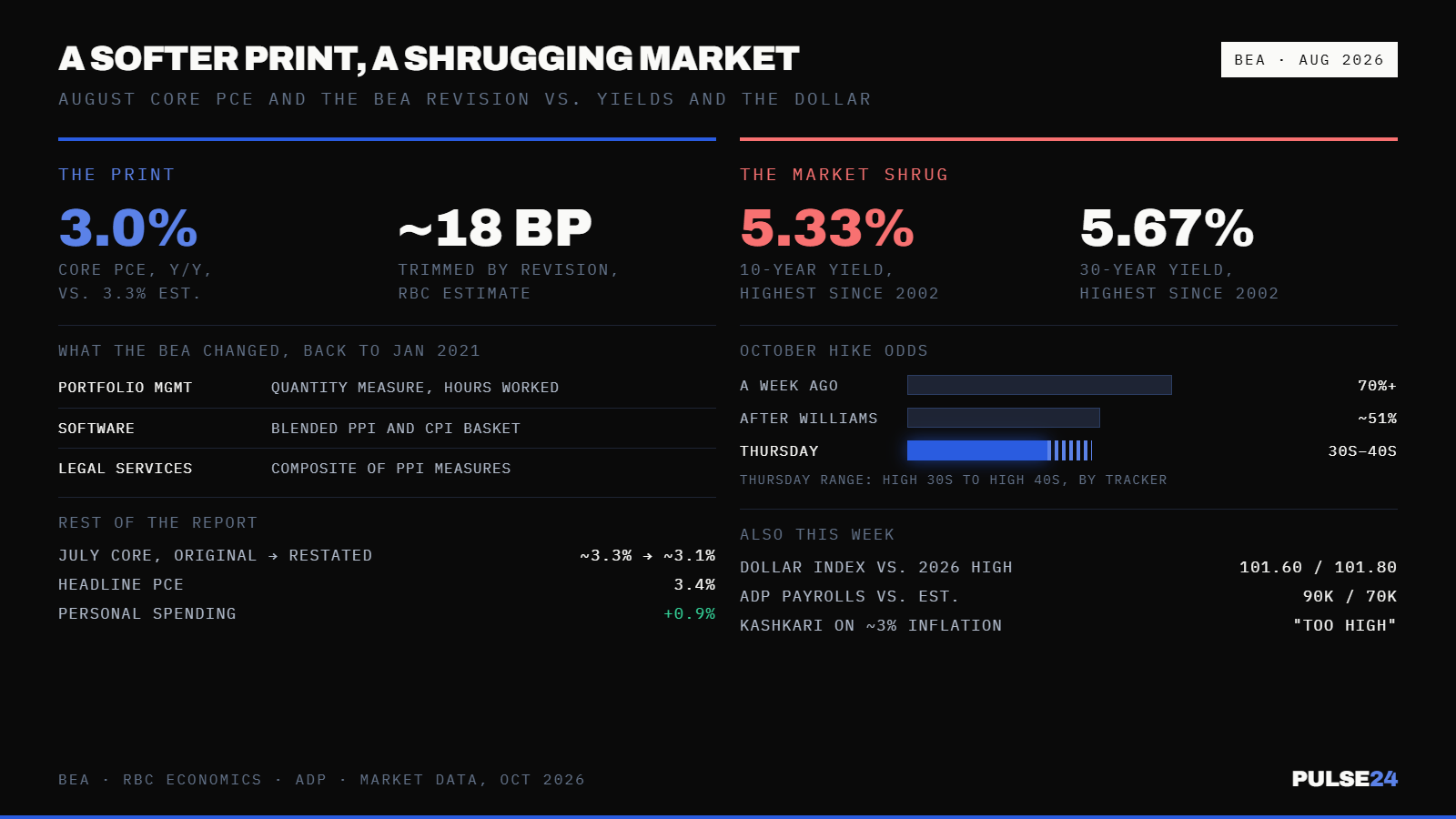
Then the fine print showed up. Buried in the same release was an annual update to the national accounts, the kind of housekeeping exercise the BEA runs every September, except this year it touched three categories that feed directly into core PCE: portfolio management services, computer software, and legal services. RBC Economics put a number on it afterward, estimating the changes trimmed roughly 18 basis points off the reported pace of core inflation, enough to turn a borderline print into a clearly better one. The firm's own conclusion was blunt: this is a retroactive revision, not a disinflationary signal.
What Changed
The three fixes are narrower than they sound. Portfolio management services used to get deflated using a flawed price series; the BEA switched to a quantity measure tied to hours worked, pulled from the same Current Employment Statistics data the monthly jobs report draws on. Computer software and accessories keep a price-based deflator, but it's now built from a blended basket of producer and consumer price indexes instead of one standalone CPI line. Legal services got the same treatment, swapping an unreliable CPI deflator for a composite of PPI measures. Each one addresses a real measurement problem flagged by Fed researchers, mostly around how quality improvements get priced into software and services that don't trade like physical goods.
None of that means prices actually cooled by 18 basis points in August. It means July's core PCE, originally reported near 3.3%, now computes to about 3.1% under the new methodology, and August's 3.0% print inherits some of that same math. Fed officials have spent most of this year debating whether one more hike is still warranted, and a chunk of the inflation improvement they're debating against turns out to be an accounting choice rather than looser prices at the register.
Why It Matters
Bond and currency traders treated the report the way a skeptical analyst would: with a shrug instead of a rally. October rate-hike odds had already slid from above 70% to roughly 51% earlier in the week after Williams said the Fed has time to wait, and the softer PCE number did little to push that number lower still. By Thursday, odds of an October move were sitting anywhere from the high 30s to high 40s depending on which tracker you followed, a wide enough spread that it says more about market uncertainty than about any consensus view.
The 10-year Treasury yield climbed to roughly 5.33% Thursday, its highest level since 2002, while the 30-year reached about 5.67%, a level last seen the same year. Both moves continue a trend that predates this week: the 30-year was already pushing into 2002 territory before the PCE report even landed, driven as much by Treasury issuance and AI-related corporate borrowing as by anything the Fed does month to month. A reading that trims the inflation picture by a fraction of a percentage point doesn't move the term premium much when the bigger worry is how much debt the government and the hyperscalers are both trying to sell into the same pool of savings.
The dollar told a similar story. The index traded near 101.60 Thursday, within range of its 2026 high around 101.80, lifted less by the PCE data than by a parade of hawkish Fed commentary. Minneapolis Fed President Neel Kashkari said inflation near 3% "remains too high" and that he still expects one more hike this year and another in 2027. Fed Governor Michael Barr struck a similar tone, while Governor Lisa Cook pointed to AI-related capital spending and firmer oil prices as ongoing sources of price pressure. A private payrolls report released this week also beat expectations, with ADP reporting 90,000 jobs added versus 70,000 forecast, giving hawks another data point to lean on.
What to Watch Next
Friday's September jobs report is the next real test. The Fed's December decision has already been described as a fight over timing rather than direction, and a labor market that keeps running hot would make it easier for officials like Kashkari and Barr to argue the case for one more move before year-end. A weak print would do the opposite, and either way it will matter more than this week's PCE revision did. Beyond Friday, keep an eye on upcoming Treasury auctions. If long-dated paper keeps finding soft demand even as near-term hike odds fade, that's a clearer signal that term premium, not Fed policy, is setting the price of long-term money.
The Pulse24 Take
It's tempting to read August's PCE report as proof the inflation fight is nearly won. The headline cooled, spending held up, and for a morning it looked like vindication for anyone betting the Fed is close to done. Then the methodology note surfaced, and the easy story got more complicated.
That doesn't make the report meaningless. Some of the August improvement is real: oil aside, there's genuine evidence pricing pressure in a handful of categories has eased. But investors who treat every soft inflation print as a green light for lower yields are going to keep getting surprised this cycle, because the bond market has made clear it's pricing in something bigger than next month's FOMC meeting: a decade of heavy government borrowing and a corporate sector racing to fund AI infrastructure, both competing for the same dollar of savings. A single data point, even a good one, doesn't resolve that fight.
How we read the data
Curious how we get from raw data to a take like this? Our Trader's Toolkit walks through the tools we lean on.
Explore the Toolkit