Pulse24 Original
U.S. Copper Imports Hit Their Highest Level in 12 Years. Traders Aren't Waiting to Find Out What Trump Decides on Tariffs.
August 4, 2026
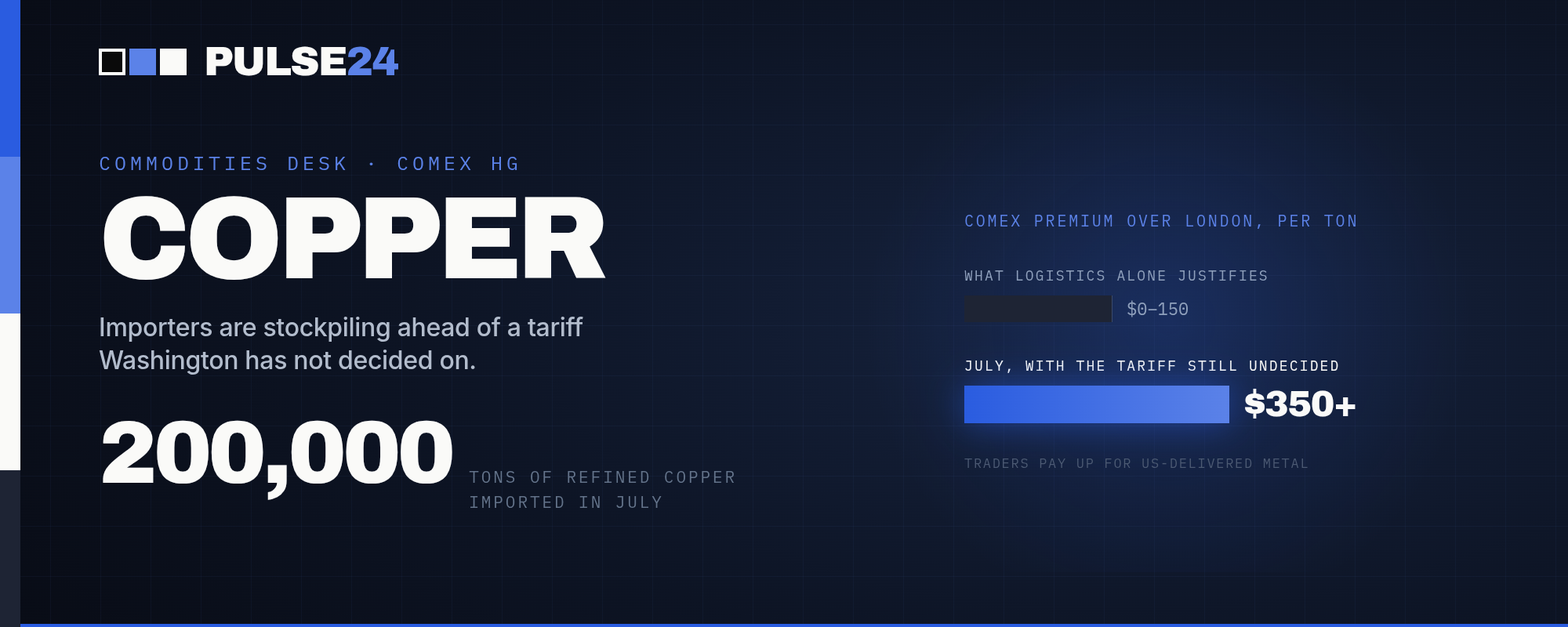
The U.S. imported 200,000 metric tons of refined copper in July, the most in at least 12 years, as traders stockpile the metal ahead of a tariff decision the White House still hasn't made. The scramble is already showing up in near record COMEX prices and a stockpile north of a million tons.
Two hundred thousand metric tons of copper landed at U.S. ports in July. That single month was the largest refined copper inflow the country has recorded since IHS Markit started tracking the trade back in 2014, and it arrived on top of a stockpile that was already the biggest on record.
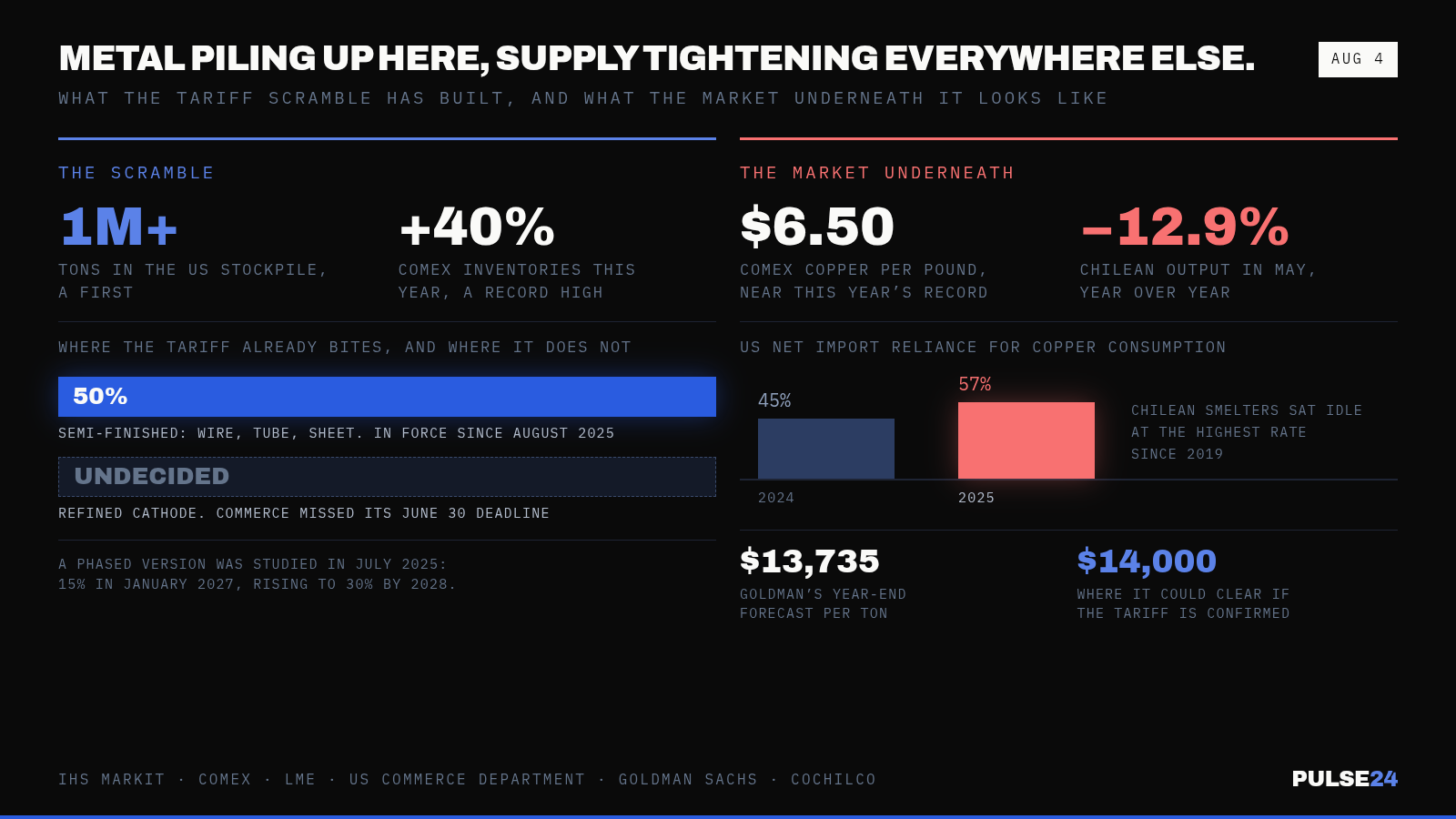
Nobody ordered that much copper because they suddenly need more wire. Importers are racing a deadline that technically already passed. Section 232 tariffs of 50% have applied to semi-finished copper products such as tubing, sheet and wire since August 2025, part of the same national security review that hit steel and aluminum. Raw refined copper, the cathode form that feeds wire mills and smelters, was carved out while the Commerce Department studied whether to extend the tariff to it too. Secretary Howard Lutnick had until June 30 to send that recommendation to the White House. The deadline came and went with no announcement, and the administration still hasn't said when a decision is coming.
Why It Matters
That limbo is doing something unusual to prices. COMEX copper is trading close to $6.50 a pound, within striking distance of the records set earlier this year, while the futures spread between COMEX and the London Metal Exchange widened past $350 a ton in July, more than double the $0 to $150 gap that logistics costs alone would normally justify. Traders are effectively paying up for U.S.-delivered metal today so they aren't caught holding an LME contract if a tariff lands tomorrow. That premium is a real-time bet on Washington, and it has stayed priced into the market for weeks without a decision arriving.
The distortion runs deeper than price. Net import reliance for U.S. copper consumption climbed to roughly 57% last year, up from about 45% in 2024, even as supply from major producers tightened. Chile, the world's largest copper producer, saw smelter capacity sit idle at the highest rate since 2019 amid maintenance and permitting delays, and Chilean output fell 12.9% year over year in May. Tariff-driven hoarding landing on top of a market that was already tight means metal keeps piling into U.S. warehouses instead of moving to where it's needed, the kind of supply chain kink that tends to show up later as a price spike nobody priced in ahead of time.
There's a demand-side version of this story too, and Pulse24 already covered it. When China's manufacturing PMI fell to 49.2, snapping a four-month growth streak, copper sold off on fears that the world's biggest buyer was pulling back. Both things are true at once. Chinese demand growth has cooled while a U.S.-specific tariff scramble adds an entirely separate source of price support. Commodities rarely move for one reason, and copper right now is a clean example of two forces pulling in different directions landing on the same tape.
Copper matters to this publication beyond the commodities page. It's the wiring and transformers that go into every new data center and grid upgrade behind the AI buildout, part of the same repricing of AI infrastructure costs Pulse24 covered in July. A sustained move toward $14,000 a ton raises the build cost of every data center and transmission project in the pipeline, at a moment when Texas is already forcing data centers to cover their own power costs. None of that shows up in a single earnings report, but it compounds across a multi-year capex cycle.
Then there's the Fed angle. Tariff-driven input costs are the kind of supply shock that muddies an inflation read, and this one is landing the same week the Dow's record close pushed hike odds higher than cut odds. Copper touches construction, autos, electronics and now AI infrastructure, and a structural rise in what it costs to buy adds a quiet, durable source of price pressure underneath whatever the next inflation print shows. Policymakers weighing a hike already have earnings strength to point to. A metal that's becoming permanently more expensive gives them one more argument for patience over cuts.
What To Watch Next
The next real catalyst is procedural: a decision out of the Commerce Department on the refined copper tariff. Whenever that lands, expect a sharp repricing either way. A confirmed tariff, even a phased one of the kind Trump directed Lutnick to study back in July 2025, starting at 15% in January 2027 and rising to 30% by 2028, would likely send COMEX toward Goldman's $14,000 ceiling and could start draining the glut sitting in U.S. warehouses, since importers would no longer have a reason to front-run a rate that's already locked in.
No tariff, or another delay, would leave the market with the opposite problem. Metal that was rushed in under tariff fear would have nowhere urgent to go, and that overhang could pressure prices lower into year end. Shares of major producers, including Freeport-McMoRan and Southern Copper, have already shown how sharply they swing on tariff headlines, and Chile's smelter utilization rate is worth watching as a read on whether the supply side ever catches up to the stockpiling.
The Pulse24 Take
Markets have spent the better part of a year pricing a copper tariff that still doesn't exist. That previews how tariff uncertainty behaves once enough traders build strategies around it. The metal itself turns into a hedge against Washington's own timeline. Right now the price on COMEX reflects ordinary supply and demand for copper plus a standing bet on a phone call that hasn't happened yet. Whichever way that call eventually goes, the more interesting move afterward might sit in the spread between COMEX and London rather than in the outright price, since that spread is the part of the market built almost entirely on the tariff bet itself.
How we read the data
Curious how we get from raw data to a take like this? Our Trader's Toolkit walks through the tools we lean on.
Explore the Toolkit