Pulse24 Original
OPEC+ Just Finished Unwinding a 1.65 Million Barrel Cut. Oil's 4% Slide Could Be the Fed's Best Inflation News in Weeks.
August 3, 2026
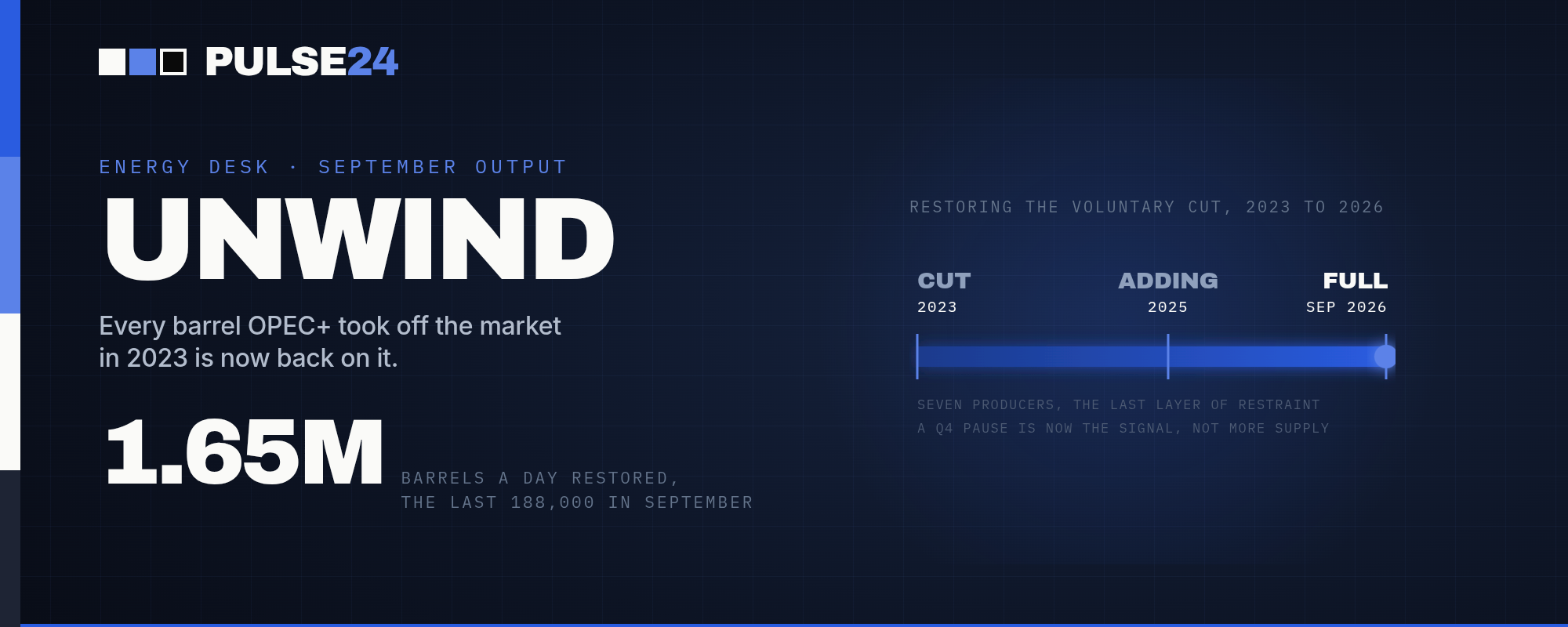
OPEC+ closed out its two-year unwind of voluntary output cuts with a fresh 188,000 barrel-a-day increase for September, and oil pulled back to start August. For a Fed weighing a September rate hike, cheaper crude might end up mattering more than the next inflation report.
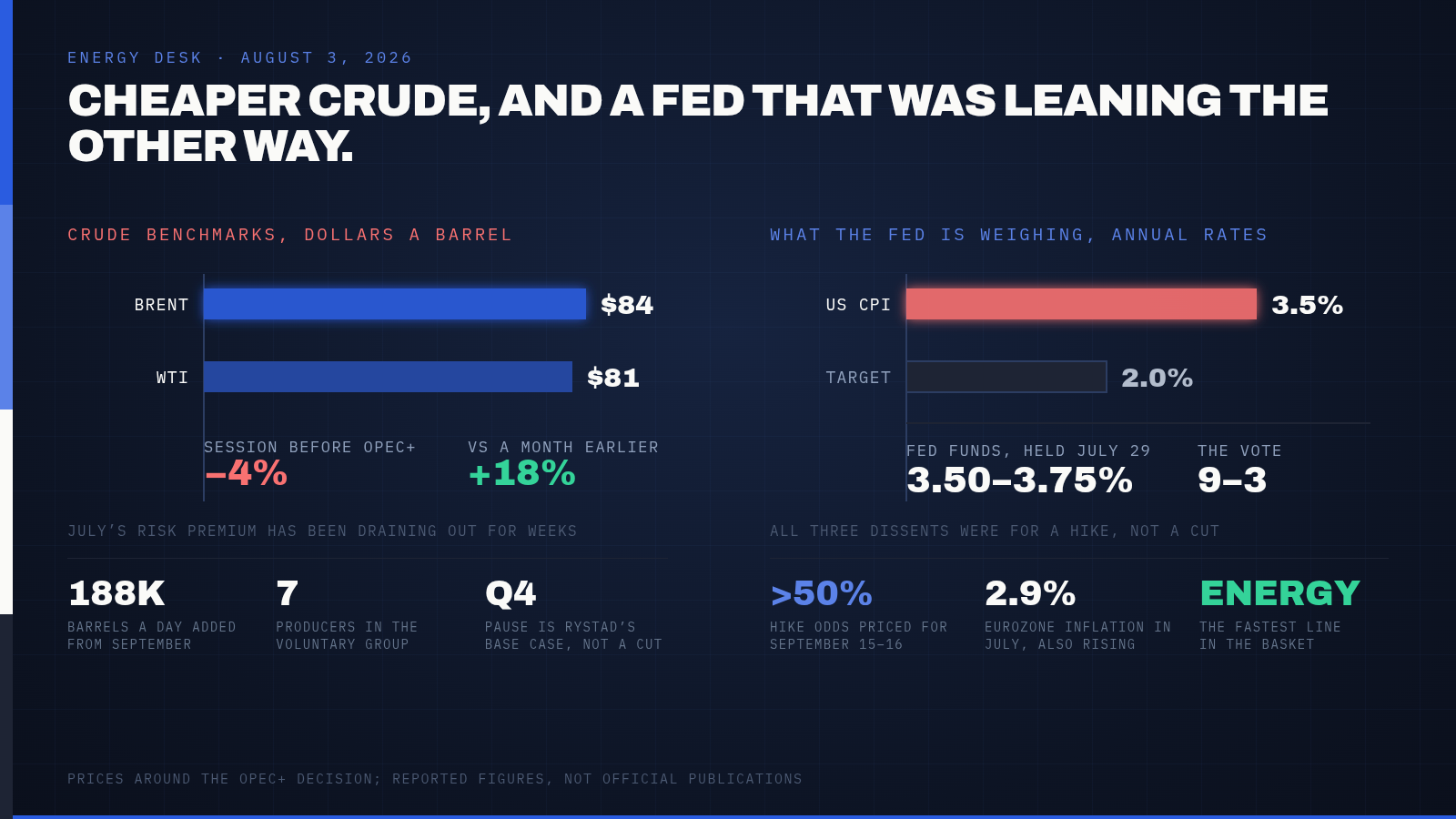
OPEC+ approved a production increase of 188,000 barrels a day for September, and with that single vote, the group finished unwinding a 1.65 million barrel-a-day cut it first put in place back in 2023. Oil did not celebrate. WTI slipped toward $81 a barrel and Brent toward $84, both benchmarks giving back roughly 4% in the session ahead of the meeting. It was a small move by the standards of a summer that saw crude climb about 18% in a matter of weeks, but small moves matter when a central bank is trying to figure out whether inflation is turning a corner or just catching its breath.
What Changed
The seven members that had voluntarily throttled back supply (Saudi Arabia, Russia, Iraq, Kuwait, Algeria, Kazakhstan and Oman) agreed to add the extra 188,000 barrels a day starting in September. That completes the full unwind of the 1.65 million barrel-a-day voluntary cut the group first agreed to in 2023, the last layer of pandemic-era restraint it has been walking back for more than a year. Not every ounce of OPEC+ discipline disappears with this vote. Rystad Energy's Jorge Leon said the group's base case is now a pause in the fourth quarter rather than another round of increases, buying time before what he called potentially difficult 2027 quota negotiations. The official statement from the meeting stopped short of confirming a pause outright, but the direction of travel points toward restraint, not more supply.
Prices had already been drifting lower into the decision. Both benchmarks fell about 4% in the session before the meeting even happened, and they remain roughly 18% above where they sat a month earlier, a gap built up during a stretch of elevated Middle East tensions in July that added a risk premium to every barrel. That premium has been fading for weeks. Analysts at Rystad Energy noted OPEC+ has little incentive to keep adding supply aggressively once the restoration campaign wraps up, which is part of why the group is signaling restraint for the fourth quarter rather than a fresh round of hikes.
Why It Matters
Cheaper energy filters into the inflation numbers the Fed watches most closely faster than almost anything else in the basket. The Fed held rates at 3.50% to 3.75% on a 9-3 vote in late July, and headline CPI has been running at 3.5% year over year, still well above the central bank's 2% target. Some of that stickiness has come from energy. Oil briefly carried a war-risk premium during July's Middle East tensions, and that premium has been draining out of the price since. The same dynamic showed up earlier this summer, when a week of war premium vanished in a single trading day. The OPEC+ decision gives the current retreat a supply-side reason to hold, rather than just a geopolitical one that could reverse itself overnight.
Futures markets had been pricing better than even odds of a quarter-point hike at the Fed's September 15-16 meeting, largely on the assumption that energy costs would keep leaning on inflation through the fall. A steady flow of extra barrels from OPEC+, arriving right as the group signals a pause rather than a full reversal, takes some of the urgency out of that case. It does not erase it. Eurozone inflation climbed to 2.9% in July, and both the ECB and the Fed have spent the summer sounding more worried about prices than growth. But a market that was bracing for oil to keep pushing inflation higher just got a data point pointing the other way.
What to Watch Next
The next real test comes at OPEC+'s following meeting, when the group has to decide whether the signaled fourth-quarter pause holds or whether members keep adding barrels into a market that's already showing some fatigue. Watch U.S. crude inventory data in the weeks ahead too. Prices moved on the OPEC+ headline before inventories had a chance to confirm anything, and a market getting ahead of the data has a way of correcting hard if the numbers don't cooperate. On the Fed side, the September 15-16 meeting is the next checkpoint, and every inflation print between now and then, especially anything showing energy's contribution easing, will move those hike odds around.
The Pulse24 Take
Markets have a habit of treating supply decisions and geopolitical de-escalation as separate stories when they're really the same story told twice. Oil spiked this summer for reasons that had little to do with fundamentals, and it's coming back down for reasons that have everything to do with them. OPEC+ finishing its unwind is the more durable signal of the two. A geopolitical premium can snap back overnight if tensions flare again, but a cartel that just added supply and is talking about pausing rather than reversing is telling you something about how it sees demand holding up. For a Fed stuck between an above-target CPI print and a labor market that hasn't cracked, cheaper oil is one of the few inputs that could move the September decision without a single new data release. That's worth watching more closely than the headline number suggests.
How we read the data
Curious how we get from raw data to a take like this? Our Trader's Toolkit walks through the tools we lean on.
Explore the Toolkit