Pulse24 Original
The National Debt Just Crossed $40 Trillion, Doubling in Under a Decade. Interest Payments Alone Now Cost More Than the Defense Budget.
August 21, 2026
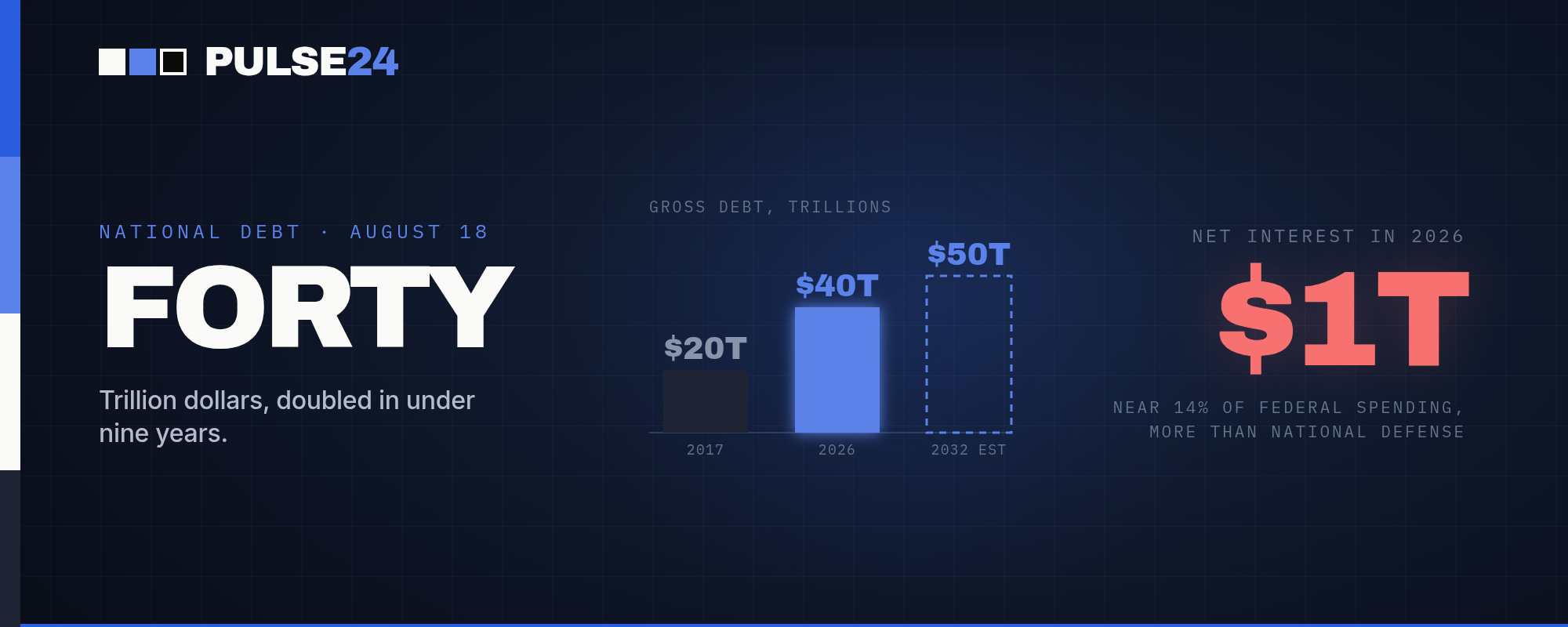
The US national debt closed above $40 trillion for the first time on August 18, doubling in under a decade. Gold broke $4,600 an ounce and the dollar slipped to a three-month low the same week, three assets clearly pricing in the same worry.
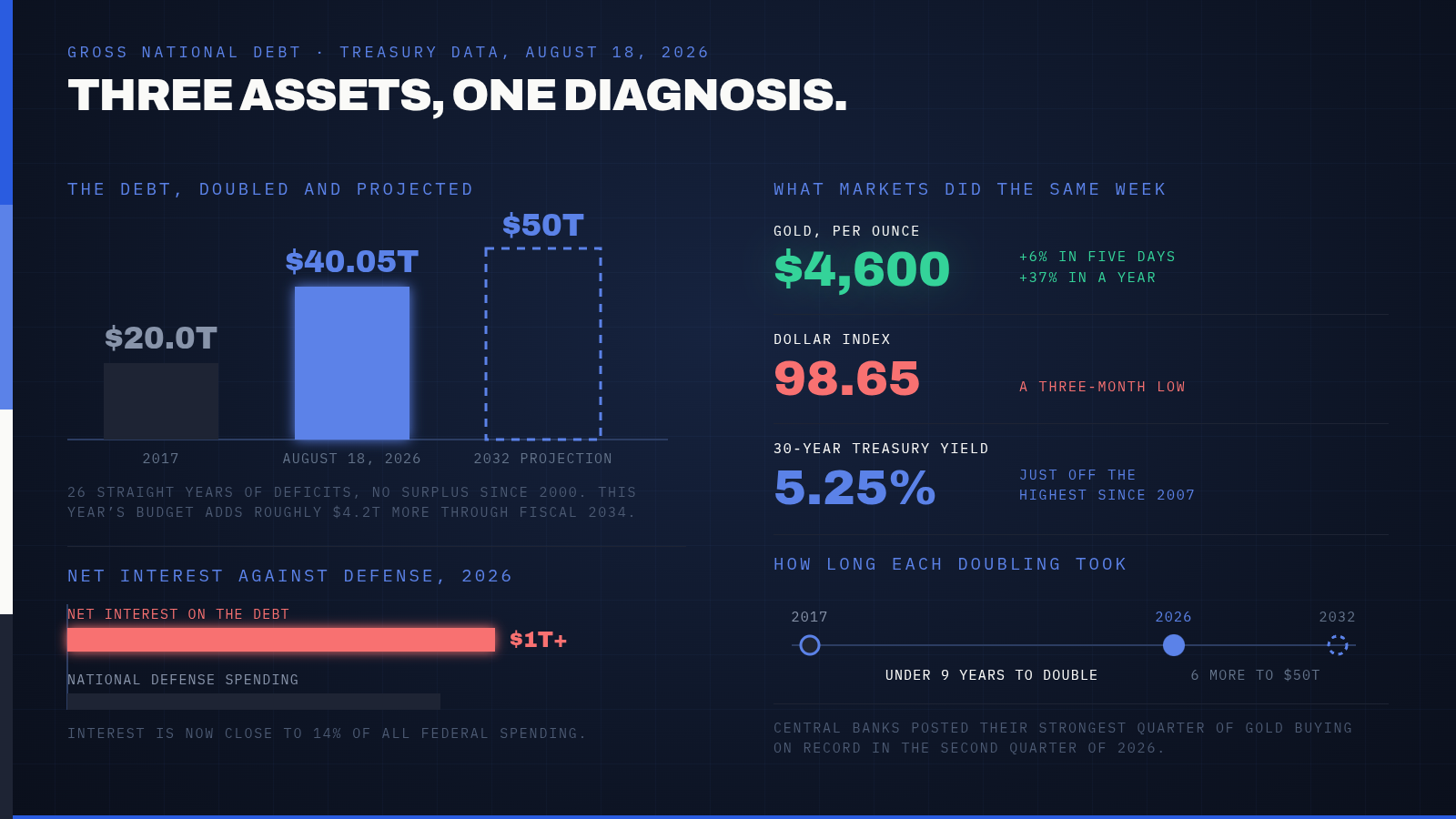
The US gross national debt closed above $40.05 trillion on August 18, a milestone that took less than nine years to reach after crossing $20 trillion in 2017. Twenty-six consecutive years of budget deficits got the country here, and the bill is starting to show up in markets far from the Treasury auctions where the debt itself gets sold. Gold broke $4,600 an ounce this week. The Dollar Index slipped to its lowest level in three months. And the 30-year Treasury yield is still hovering near its highest level since 2007, barely off the peak it hit five days ago.
What Changed
Treasury Department data show the debt topped $40.05 trillion on August 18, up from $20 trillion as recently as 2017. That means the debt effectively doubled in under nine years, a pace that outstrips anything in the country's peacetime history. Net interest payments are on track to exceed $1 trillion in 2026 alone, close to 14% of all federal spending and more than Washington spends on national defense.
None of this happened in a single dramatic event. The debt has grown for 26 straight years without a single annual surplus, through two recessions, a pandemic, and multiple rounds of tax cuts that reduced revenue without a matching cut in spending. A budget package signed earlier this year is projected to add roughly $4.2 trillion more to the debt through fiscal 2034. Aging demographics compound the math further: Social Security and Medicare costs keep climbing as more of the workforce retires, and neither program has been reformed to match.
Why It Matters
Michael A. Peterson, CEO of the Peter G. Peterson Foundation, put it plainly: "It's shocking that we've doubled the federal debt in less than 10 years, and we must change course." His own warning carries a specific number too: "If we don't reform our budget, we will hit $50 trillion in just 6 years." That projection assumes no recession, no new war, and no financial crisis, just the current trajectory continued for six more years.
Markets are already pricing some of that in, just not through the Treasury market directly. The dollar slid to a three-month low this week as the debt milestone landed, a move tracing back to the same worry driving gold higher: a government that keeps borrowing more, faster, eventually erodes confidence in the currency issuing that debt. Buyers still show up at Treasury auctions, but they increasingly demand a higher yield to do it, part of why the 30-year yield has spent the past week camped near its highest level since 2007.
Gold has been the cleanest expression of the unease. The metal broke $4,600 an ounce this week, extending a rally that has it up roughly 37% over the past year and nearly 6% in the last five trading days alone. Central banks have been buying too. The second quarter of 2026 was their strongest three months of gold purchases on record, even as private demand through ETFs has been more uneven. When a government's own creditworthiness becomes a subject of debate, gold's appeal as an asset nobody can print more of tends to widen its bid.
What To Watch Next
The next Treasury refunding announcement, due in the first week of November, will show how the government plans to finance a debt load growing by roughly $1 trillion every few months. Auction results between now and then matter more than usual. A weak 30-year auction, one where indirect bidders pull back and dealers have to absorb more of the supply themselves, would be a clearer signal than any speech that investors want more compensation for the risk they're taking.
Congress returns from recess in September facing a government funding deadline, and any fight over spending levels will be read against this backdrop. Rating agencies have already flagged the trajectory, and a further downgrade or negative outlook revision would likely accelerate the same dynamic already showing up in gold and the dollar. September's inflation and jobs data could matter too, since lower short-term rates would ease some of the government's own interest burden even as they complicate the inflation picture.
The Pulse24 Take
Forty trillion dollars is a number large enough to stop meaning much on its own. What matters more is the shape of the trend: the debt doubled in under a decade, interest costs alone now exceed the defense budget, and the increase came without a single deliberate decision anyone can point to as the cause. Twenty-six years of small deficits compound the same way twenty-six years of small savings would, just in the wrong direction.
Markets are responding the way they usually do to a slow-moving problem, with a gradual repricing spread across several assets at once rather than a single panic. Gold's rally, the dollar's slide, and Treasury yields near multi-decade highs are symptoms of the same diagnosis, not three separate stories that happened to land in the same week. Nothing this week points to an imminent crisis. It does suggest markets are starting to treat the debt trajectory as a permanent feature of the landscape rather than a temporary one.
How we read the data
Curious how we get from raw data to a take like this? Our Trader's Toolkit walks through the tools we lean on.
Explore the Toolkit