Pulse24 Original
Japan's 10-Year Bond Yield Just Hit 2.94%, Its Highest Level Since 1996. Tokyo Wants to Cut the Food Tax to 1% for Two Years and Still Hasn't Said How It Will Pay for It.
August 19, 2026
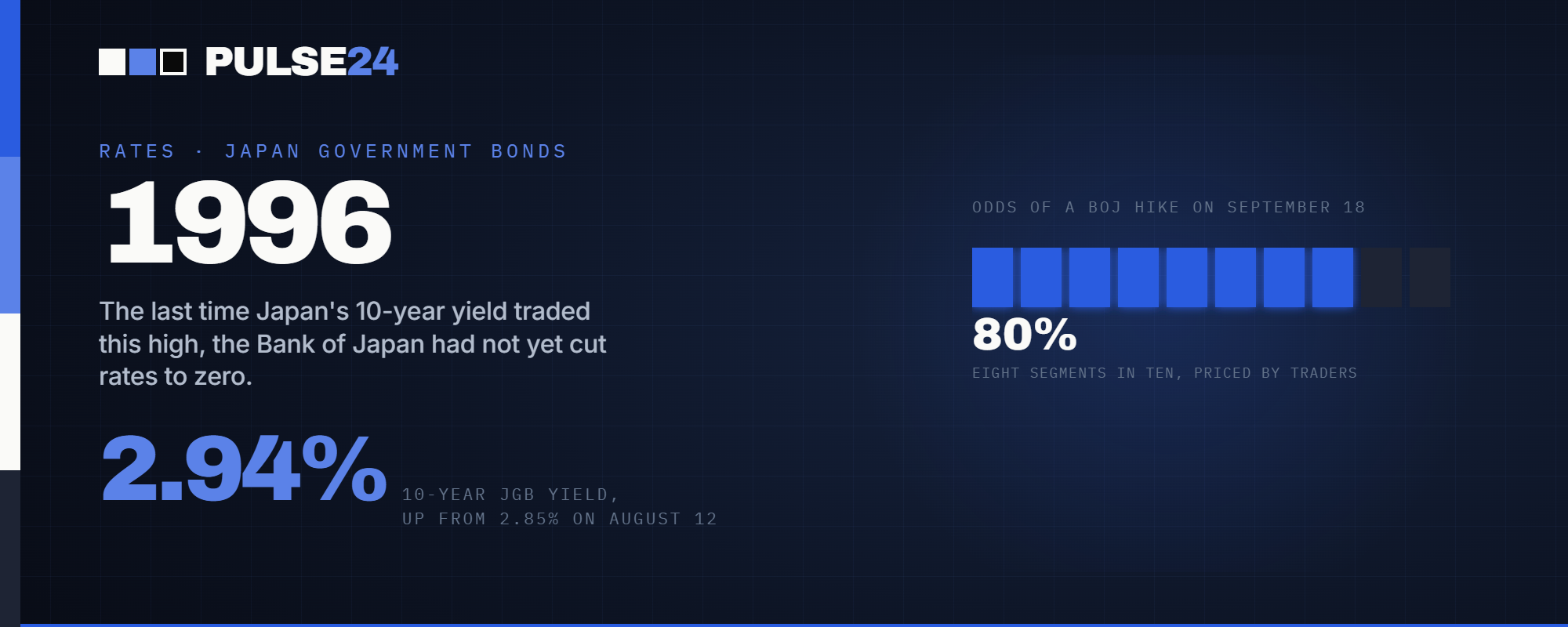
Japan's 10-year government bond yield climbed to its highest level since 1996 this week, driven by rising Bank of Japan rate hike bets and a food tax cut plan that still lacks a funding source. The move is already rippling into the yen and, potentially, US Treasury demand.
Japan's 10-year government bond yield touched 2.94% this week, a level the market hasn't traded at since 1996. Six days earlier, on August 12, the same yield sat at 2.85%. A nine-basis-point move in less than a week is a fast climb for a bond that spent three decades as the sleepiest instrument in global finance.
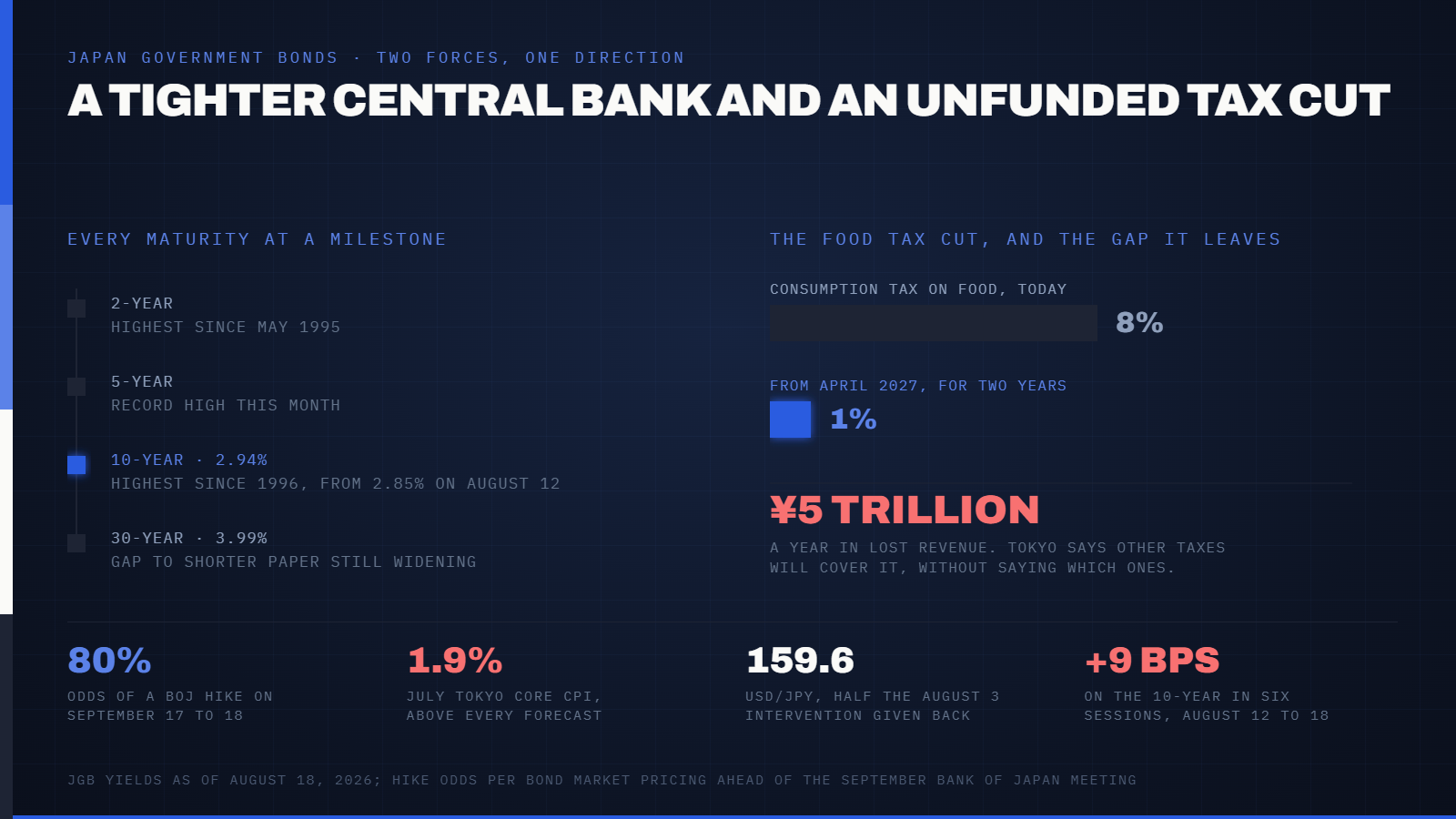
Two forces are pushing in the same direction. Bond traders have grown increasingly confident the Bank of Japan will raise its policy rate at the September 17-18 meeting, with odds now sitting around 80%, sharply higher than where they stood just a few weeks ago. Separately, Prime Minister Sanae Takaichi's cabinet approved a plan to cut the consumption tax on food from 8% to 1% for two years starting in April 2027, a policy expected to cost the government about 5 trillion yen a year in lost revenue. The administration says the shortfall will come from other tax increases rather than new bond sales, but it hasn't said which taxes or by how much.
What Changed
The move isn't confined to the 10-year. Five-year JGB yields set a record high this month, and the 2-year climbed to its highest level since May 1995. Even the 30-year, which sits near 3.99%, has widened its gap versus shorter maturities, a sign investors want more compensation for holding paper further out on the curve. July's Tokyo core inflation reading came in hot at 1.9%, beating every forecast on the Street, and it's already pushed at least three Bank of Japan board members toward wanting to hike faster than the bank's usual twice-a-year pace. That inflation backdrop is fueling both halves of this story: a central bank leaning toward tighter policy, and a government proposing a tax cut that adds to the deficit without saying how it will pay for it.
The food tax cut is the part markets are struggling to price. Analysts broadly support the aim (Japanese households have absorbed years of rising grocery costs), but the mechanism worries bond investors more than the policy itself. Economists have flagged that a consumption tax cut financed by unspecified future tax increases reads less like fiscal discipline and more like a promise to figure it out later, and JGB yields have historically punished that kind of ambiguity harder than they punish spending itself.
Why It Matters
Rising JGB yields don't stay contained to Japan. USD/JPY has been trading near 159.6 this week, already giving back close to half of what the August 3 joint intervention by the US Treasury and Japan's Ministry of Finance achieved. A weaker yen makes imported energy and food more expensive, which feeds back into the same inflation numbers pushing the BOJ toward a hike, a loop that's proven difficult to break with currency intervention alone.
There's a second channel worth watching, and it runs through the US Treasury market. Japanese life insurers and banks are among the largest foreign holders of US government debt, and when JGB yields climb enough to compete with hedged Treasury returns, that money has less reason to stay abroad. It's a slow-moving flow, not a single trigger, but it adds a quiet source of demand pressure on US Treasuries at the same time America's own 30-year yield just hit its highest level since 2007. Two bond markets pushing higher for related reasons is a bigger story than either one alone.
What to Watch Next
The September 17-18 BOJ meeting is the next concrete test. A hike would confirm what the bond market has already priced in and could take some pressure off the yen, though it would also raise Japan's own debt-servicing costs at the exact moment the food tax cut widens the deficit. If the board holds instead, especially after odds ran this high, USD/JPY would likely drift back toward the levels that triggered the August 3 intervention in the first place. Also worth tracking is any government detail on how the food tax cut actually gets funded, since a credible plan, even a partial one, would probably calm the long end of the JGB curve faster than a rate decision would.
The Pulse24 Take
Japan's bond market spent decades as the example everyone used for what near-zero rates could do. This year it's become the example of what happens when that changes fast, on two fronts at once. A central bank finally moving to fight inflation is normal, even healthy. But a government cutting revenue by 5 trillion yen a year without saying how it plans to cover the gap is the part that unsettles bond investors, because it's the piece they can't model. Yields at a 30-year high aren't a crisis by themselves. They're the market's way of asking a government to show its math, and so far, Tokyo hasn't.
How we read the data
Curious how we get from raw data to a take like this? Our Trader's Toolkit walks through the tools we lean on.
Explore the Toolkit