Pulse24 Original
Gold Fell $103 in a Single Session, Its Steepest Drop in Weeks. A 2-Year Treasury Yield Near a One-Month High Is Why.
September 2, 2026
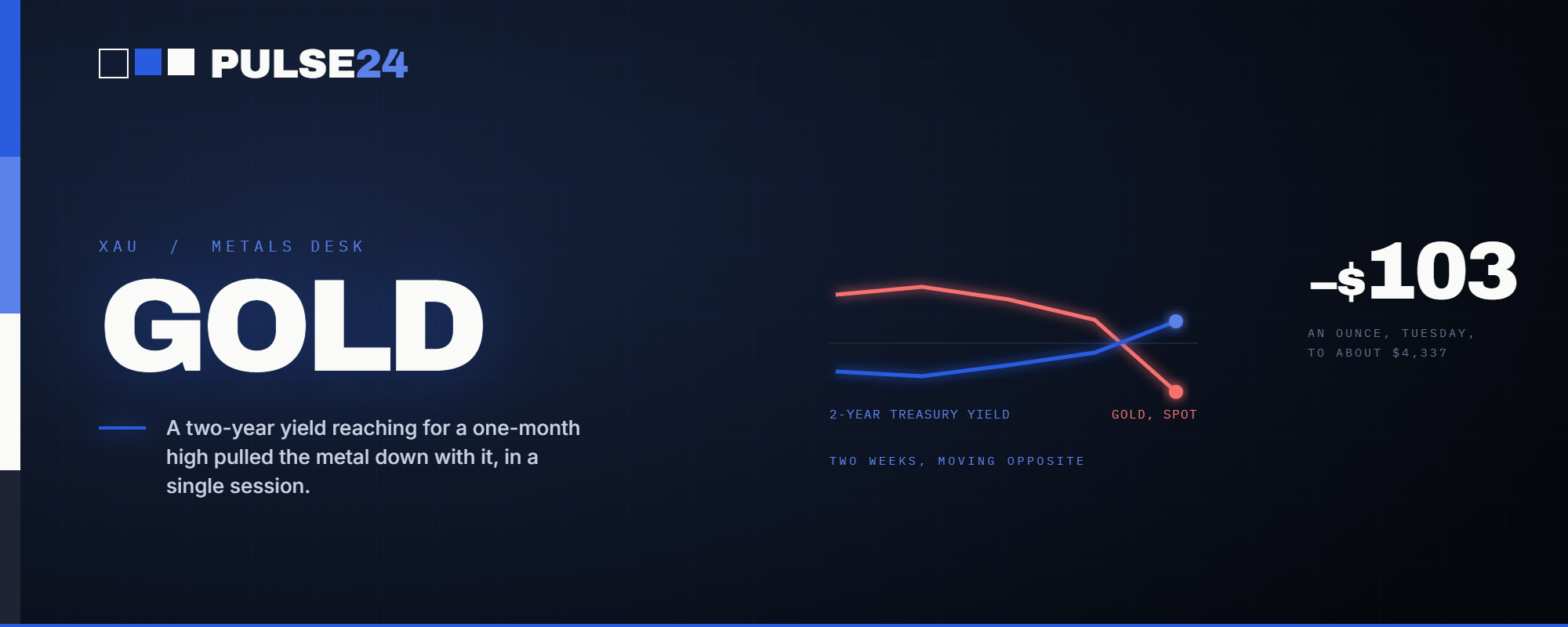
Gold slid to a two-week low on Tuesday as traders piled into bets on a September rate hike, pushing the dollar and short-term Treasury yields higher ahead of Friday's jobs report. The pullback comes just weeks after gold matched UBS's year-end target four months early.
Gold lost $103.66 an ounce on Tuesday, closing near $4,337 and marking its steepest one-day drop in weeks. That's the metal's lowest level since August 19, and the timing lines up with a 2-year Treasury yield pushing toward 4.33%, its highest mark in roughly a month.
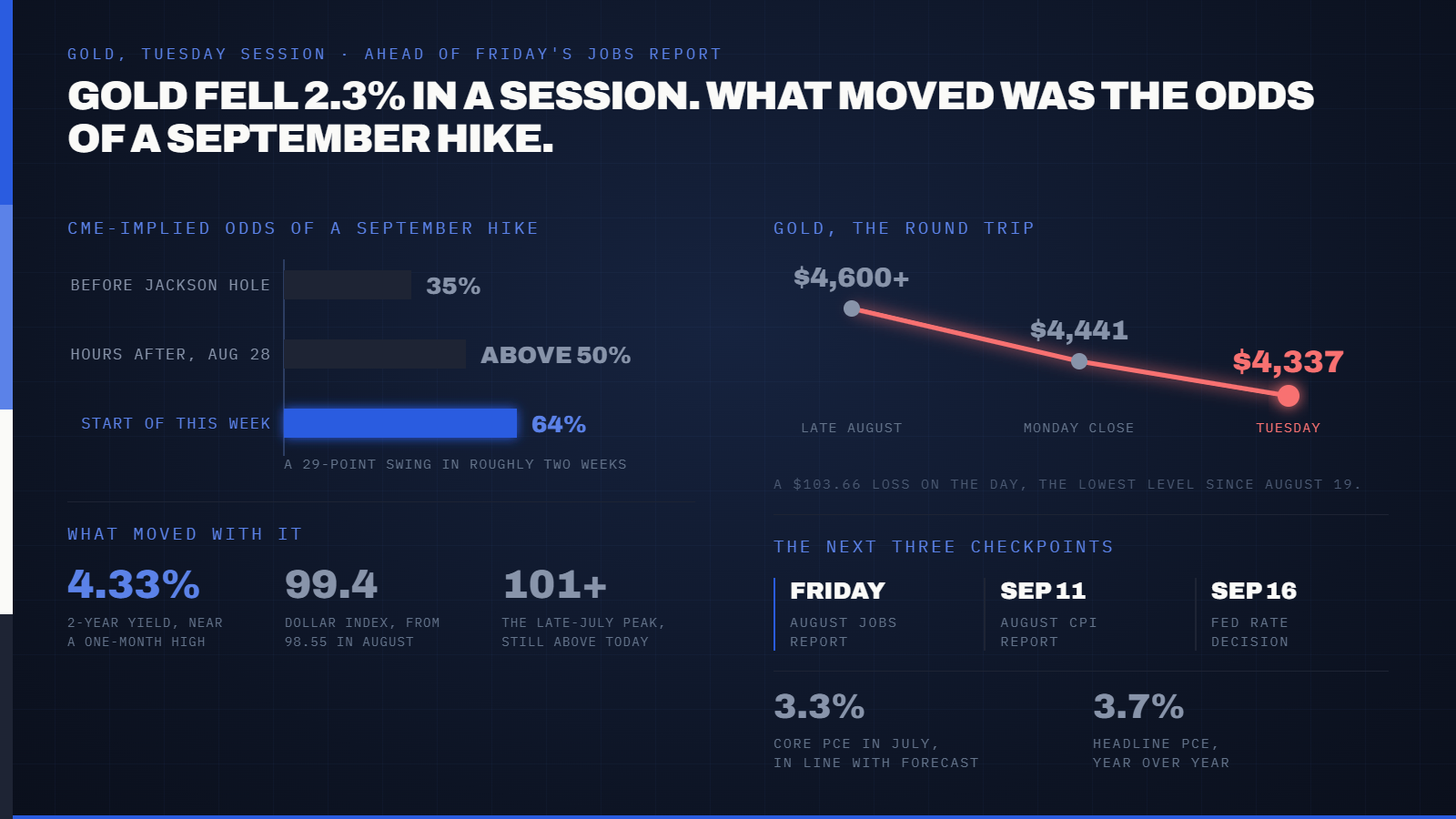
The move lines up closely with one clear catalyst. Fed Chair Kevin Warsh's Jackson Hole speech on August 28 pushed the market's implied odds of a September rate hike from around 35% to above 50% within hours. Those odds kept climbing through the week, and by CME's measure they sat near 64% as traders and futures pricing began to diverge on just how confident the market really is.
What Changed
Fed funds futures are now pricing somewhere in the low-to-mid 60s for a quarter-point hike at the September 16 meeting. That's a sharp swing from where the market stood two weeks earlier, and Treasury's 2-year note, the maturity most sensitive to near-term Fed moves, has tracked the shift closely. It's trading near 4.33%, within striking distance of where it sat about a month ago.
The dollar has moved the same direction, climbing to roughly 99.4 on the ICE index after bottoming near 98.55 in late August, though it's still well short of the 101-plus level touched in late July. Higher real yields raise the opportunity cost of holding an asset that pays no interest, and a firmer dollar makes gold more expensive for buyers transacting in other currencies. Both pressures hit at once this week, which helps explain why gold's drop was sharper than a routine pullback.
Why It Matters
Gold had been on a strong run into late August, climbing back above $4,600 an ounce and matching UBS's year-end price target roughly four months ahead of schedule. Traders were calling it the debasement trade, a bet that persistent deficits and a softer dollar would keep pushing investors toward hard assets regardless of what the Fed did next.
This week's reversal doesn't erase that story, but it's a useful reminder that gold's rally was never a one-way bet. When rate expectations move quickly, gold tends to feel it first among major asset classes, since it carries no yield of its own to offset higher returns elsewhere. Something similar happened in late July, when core PCE inflation held at 3.3%, exactly in line with forecasts, and gold still fell from a three-month high within hours of the report. A data point that confirms the Fed's caution can move gold just as much as one that changes it.
What to Watch Next
Friday brings the August jobs report, the next major data point before the Fed's September 16 decision. A weak print could send hike odds tumbling back toward where they sat before Jackson Hole, with gold, the dollar, and short-dated yields likely reversing course. Should the report run hot instead, this week's move would probably extend into next week. The August CPI report on September 11 sits in between and carries its own weight, particularly with headline PCE inflation already running at 3.7% year over year.
Investors should also watch how wide the gap stays between what traders are quoting informally and what futures markets actually price. That spread has run more than 20 percentage points at times over the past week, which usually signals the market hasn't settled on real conviction yet, in either direction.
The Pulse24 Take
Gold's pullback reads less like a trend change than a market repricing risk in the middle of an unfinished story. An asset that rallied on the promise of Fed patience will almost always give some of it back once that patience looks like it might run short. What happens next depends less on this week's headlines than on Friday's jobs numbers and the CPI report two weeks out. Until the data actually confirms or denies a September hike, treat this pullback as a data point rather than a verdict. Gold has absorbed bigger swings than 2.3% this year and found its footing again, and there's no clear signal yet that this time is different.
How we read the data
Curious how we get from raw data to a take like this? Our Trader's Toolkit walks through the tools we lean on.
Explore the Toolkit