Pulse24 Original
October Fed Hike Odds Jumped From 64% to 70% in a Single Session. Gold Fell to a Seven-Week Low, and Silver Fell Harder Still.
September 29, 2026
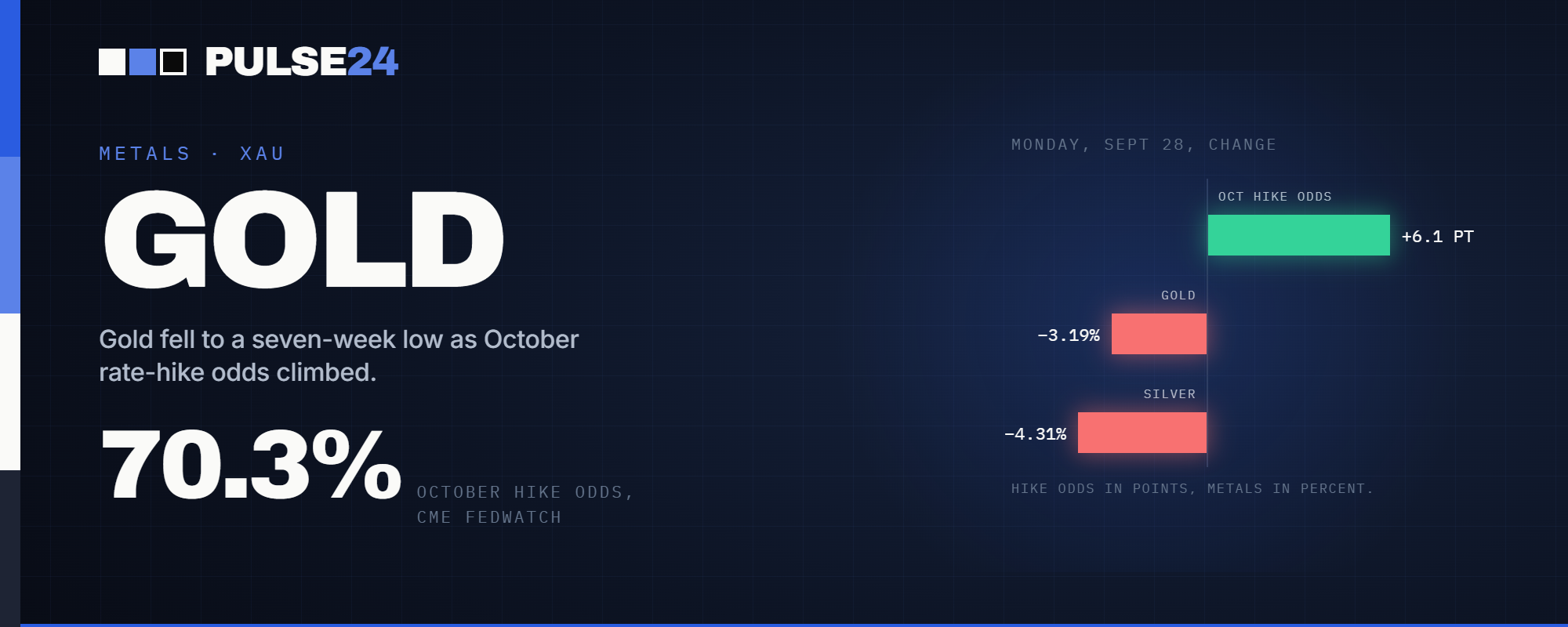
Fed rate-hike odds for October jumped seven percentage points in a single trading session, and gold posted its worst day in seven weeks. The reason: an oil-driven inflation scare hit metals instead of lifting them the way an inflation scare normally would.
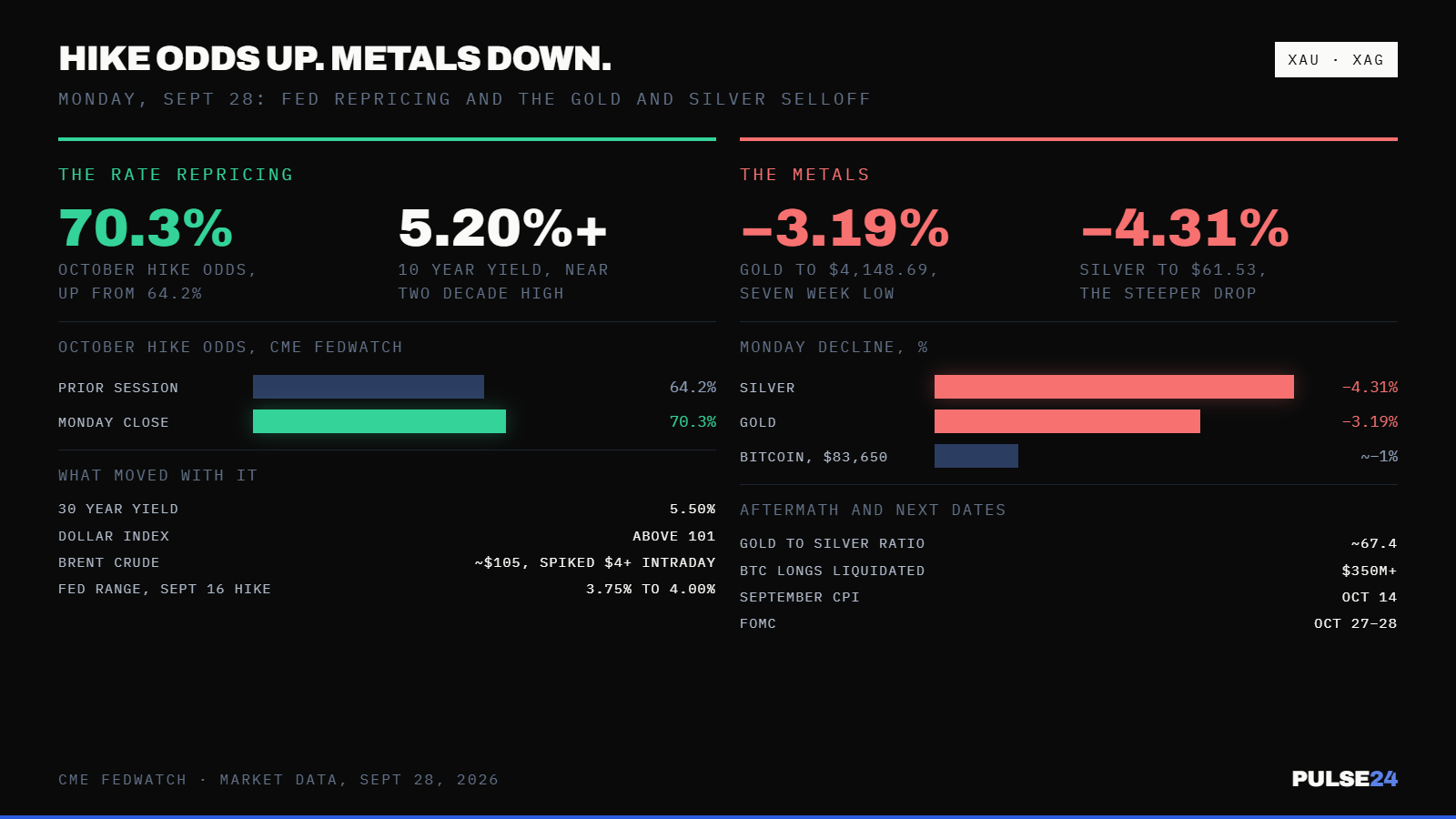
Seventy point three percent. That's where CME FedWatch put the odds of an October Federal Reserve rate hike by Monday's close, up from 64.2% a day earlier. Gold's reaction was immediate: the metal fell 3.19% to $4,148.69 an ounce, its lowest price in seven weeks. Silver dropped even harder, down 4.31% to $61.53.
Oil was the trigger. President Trump rejected an Iranian proposal to reopen the Strait of Hormuz on Monday, and Brent crude spiked more than $4 a barrel within minutes of the news. The rally cooled once traders learned Qatari mediators would hold fresh talks with both sides later this week, and Brent settled near $105, up roughly 1% on the day. WTI barely moved, adding about 20 cents to settle near $93. Even a partial, contained spike in oil was enough to put inflation back at the center of the conversation.
What Changed
Gold and the 10-year Treasury yield moved in opposite directions Monday, which is not how this usually plays out. The 10-year yield topped 5.20%, its highest level in nearly two decades, while the 30-year climbed to 5.50%. A supply shock that stokes inflation fear typically lifts bond yields and gold together, since gold is supposed to work as the inflation hedge. Instead, gold sold off harder than almost any other asset in the room.
The explanation comes down to what actually moves gold's price day to day: real interest rates and the dollar, not inflation headlines in the abstract. When the market raises its odds of a Fed hike, it's pricing in higher rates for longer, and that raises the opportunity cost of holding a metal that pays no yield. The dollar index held above 101 Monday, itself lifted by the same rate-hike repricing, and a stronger dollar makes dollar-priced gold more expensive for buyers using other currencies. Both forces pushed in the same direction, and together they outweighed whatever safe-haven bid the oil headlines might otherwise have generated.
Silver's move tells a related but distinct story. It carries less of a monetary safe-haven role than gold and more exposure to industrial demand and speculative positioning, which tends to make it swing harder in both directions. Monday's 4.31% drop against gold's 3.19% pushed the gold-silver ratio to roughly 67.4, extending a widening trend that was already visible last week. A rising ratio usually signals that traders are pulling back from risk broadly rather than rotating between the two metals.
Why It Matters
The bigger picture is a Federal Reserve that's now hiking, not cutting, for the first time in three years. The FOMC voted 12-0 on September 16 to raise the federal funds rate a quarter point to a range of 3.75% to 4.00%, its first increase since 2023. The Fed's own dot plot already shows most officials expecting at least one more hike before year-end, with a median year-end rate projection of 4.1%. Fed Chair Kevin Warsh put it plainly at the announcement: inflation is too high, and has been for too long. Governor Michael Barr echoed that view last week, saying further increases will likely be needed to get inflation back to the Fed's 2% target.
Bond investors are already behaving as if that's the base case. The 10-year yield's move above 5.20% extends a climb that first pushed it to its highest level since 2007 last week, and gold's cooling run fits a similar pattern. The metal is still meaningfully higher than where it stood a year ago, even though that annual gain has narrowed sharply from the pace it was running earlier in 2026. Monday's drop looks like a continuation of that cooldown rather than a reversal of gold's longer trend, but it shows how sensitive the metal has become to every shift in hike odds.
Risk assets outside of metals felt it too. Bitcoin slid to about $83,650, down roughly 1% on the day, as more than $350 million in leveraged long positions were forcibly liquidated across derivatives exchanges, a reminder that a rate-driven repricing rarely stays contained to one corner of the market once it starts moving.
What to Watch Next
Two dates matter most from here. The September CPI report lands October 14, and a hot print would harden the case for the hike that's currently priced at roughly 70% odds. The FOMC itself meets October 27 and 28, and unless inflation data cools meaningfully between now and then, this week's repricing suggests the committee is more likely to hike than to hold. Oil remains the wildcard in between: Qatar's mediation between the US and Iran resumes this week, and either a breakthrough or a breakdown in those talks could swing Brent by several dollars a barrel in either direction, with knock-on effects for both the inflation outlook and the Fed odds currently driving gold and silver.
The Pulse24 Take
The easy read on Monday's move is that gold fell because of Middle East tension, but that gets the mechanism backwards. Gold fell because rate-hike odds rose, and the standoff over the Strait of Hormuz is what pushed those odds higher by making the oil-and-inflation math worse. The metal isn't failing as a hedge so much as responding to a specific kind of shock: one where the market's dominant fear is a hawkish Fed rather than a generic flight from risk.
That distinction matters for anyone using gold as a portfolio hedge right now. A pure safe-haven bid would have pushed gold higher Monday. What happened instead was a real-rates story, and real rates are set by the Fed's own decisions as much as by any single geopolitical headline. Until the October 28 decision is behind us, expect gold and silver to keep trading more like rate-sensitive assets than crisis hedges, with every inflation print and every Fed comment carrying outsized weight.
How we read the data
Curious how we get from raw data to a take like this? Our Trader's Toolkit walks through the tools we lean on.
Explore the Toolkit