Pulse24 Original
Britain's 30-Year Bond Yield Is Higher Now Than During the 2022 Mini-Budget Crisis. The Bank of England Wants to Stop Selling Them.
September 15, 2026
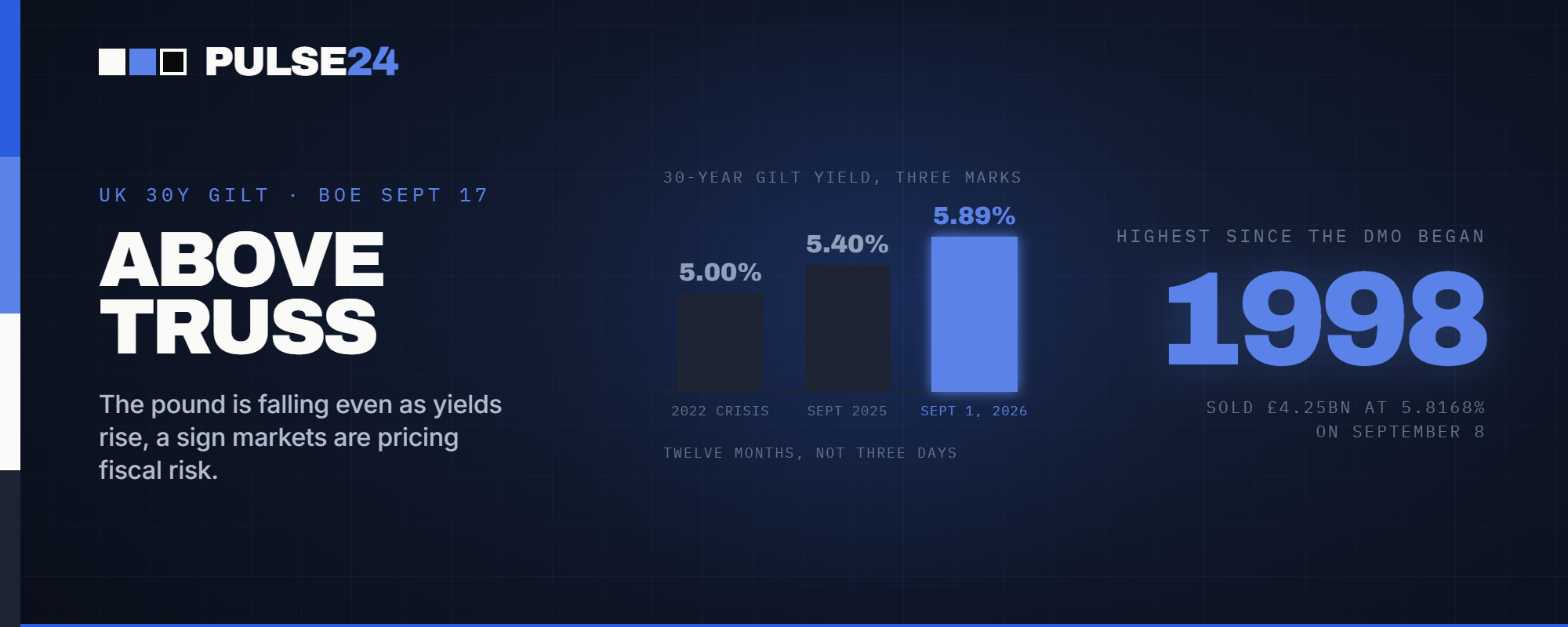
Britain's 30-year gilt yield has climbed past the peak reached during the 2022 mini-budget crisis, and the Bank of England is reportedly preparing to stop selling its longest bonds altogether. The pound is falling even as yields rise, a sign markets are pricing fiscal risk rather than opportunity.
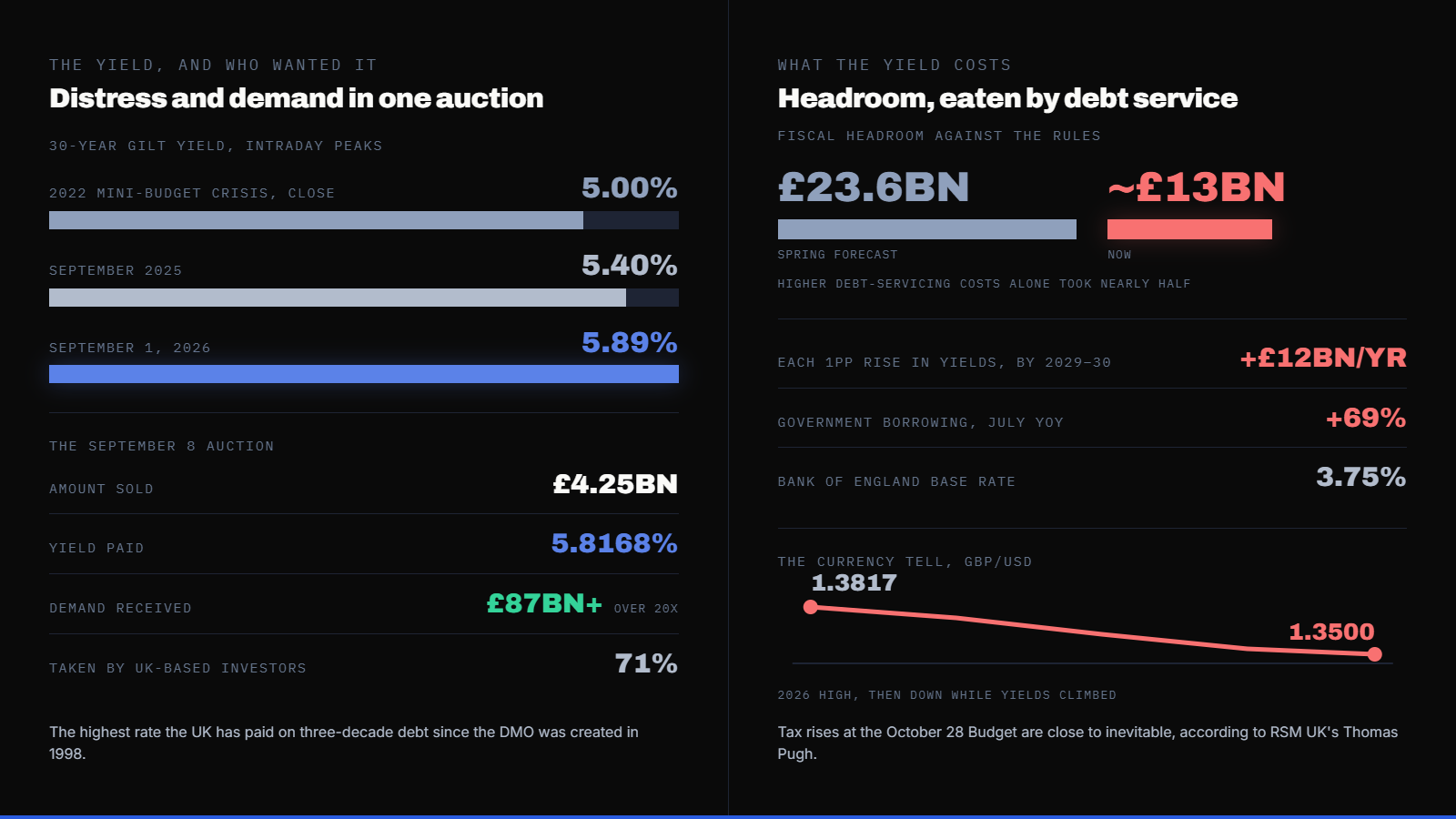
Britain sold £4.25 billion of 30-year gilts on September 8 at a yield of 5.8168%, the highest rate the UK government has paid on three-decade debt since the Debt Management Office was created in 1998. Demand came in above £87 billion, more than twenty times the amount on offer, with UK-based investors taking 71% of the allocation. A yield that looks like distress and demand that looks like confidence are sitting inside the same auction result, and that contradiction is the story running through Britain's bond market this week.
What Changed
The 30-year gilt actually touched 5.89% intraday on September 1, a level that sits above anything markets saw during the 2022 mini-budget crisis. Liz Truss's government sent that same bond to a 5% close within three frantic trading days back then, and the Bank of England had to step in with emergency bond purchases to stop a spiral in pension-fund collateral calls. Nothing like that is happening now. A year ago, in September 2025, the 30-year gilt was trading closer to 5.4%, and the climb toward 5.9% has unfolded over roughly twelve months rather than three days. Slow stress reads very differently than fast panic, even when the destination is worse.
Behind the climb is a mix of familiar and newer pressures. UK inflation keeps running above the Bank of England's 2% target. Investors have pushed back their expectations for how quickly the Bank will cut its base rate from 3.75%. The government's own borrowing has swelled, rising 69% year over year in July, and the UK now carries the fastest-rising government borrowing costs of any G7 economy. Add heavier gilt issuance to fund that borrowing, and the supply-and-demand math tilts toward higher yields almost mechanically.
Why It Matters
The fiscal math is blunt. Chancellor John Healey had roughly £23.6 billion of headroom against his fiscal rules in the spring forecast. Higher debt-servicing costs alone have eaten nearly half of that, leaving closer to £13 billion, according to analysts tracking the Office for Budget Responsibility's projections. RSM UK's Thomas Pugh has been direct about what follows: tax rises at the October 28 Budget are close to inevitable if Healey wants to keep his fiscal rules intact. The Debt Management Office's own estimate shows why. A permanent one-percentage-point rise in gilt yields adds an estimated £12 billion a year to Britain's borrowing costs by 2029-30. That money has to come from somewhere, and investors are pricing in where.
The currency market is the tell here. A country offering 5.9% on its longest government debt would normally pull in yield-hungry capital and lift its currency. Instead, the pound has slipped toward 1.3500, down from its 2026 high of 1.3817. That's not how carry trades are supposed to work. When a higher yield fails to attract buyers, it usually means the yield is compensation for risk rather than an invitation to earn it, and that kind of problem doesn't get fixed by a single rate decision.
What to Watch Next
A Telegraph report this week said the Bank of England plans to stop selling 20- and 30-year gilts altogether, a meaningful change to how it winds down its pandemic-era bond holdings, and one that could be confirmed alongside Thursday's rate decision. The Bank's base rate sits at 3.75%, and most economists still expect a hold on September 17, but the bigger signal may sit in the debt-management overhaul rather than in the rate itself. Stepping back from selling the longest bonds would remove a source of supply pressure that's been pushing yields higher, though it also raises the question of who absorbs that duration instead.
Britain's move doesn't sit in isolation. The ECB already raised rates to 2.50% this month, and the Fed and Bank of Japan are each weighing their own decisions within days of the UK's. The US faces its own version of this problem: the 30-year Treasury yield hit 5.37% this week, its highest level since before the 2008 financial crisis, and the US Treasury responded by doubling its bond-buyback program rather than cutting issuance outright. Two governments, two different fixes, the same underlying problem: long-dated sovereign debt is getting harder to sell at yields anyone is happy with.
The Pulse24 Take
The comparison to 2022 is instructive precisely because this isn't 2022. The Truss crisis was fast, self-inflicted by an unfunded tax-cut package, and resolved within days once the Bank of England stepped in. What's happening now is slower and structural: persistent inflation, heavy borrowing, and a market reassessing how much it's willing to lend a government for thirty years. None of that resolves with a single policy U-turn. A crisis everyone can see coming and nobody can stop is arguably a harder problem than a panic that burns out in a week. For investors, the practical read is that UK long-duration assets, and the pension funds and insurers that hold them, are being repriced for a higher-for-longer borrowing environment. Watch Thursday's Bank of England decision less for the rate itself and more for what it reveals about whether central banks still feel they control the long end of the curve at all.
How we read the data
Curious how we get from raw data to a take like this? Our Trader's Toolkit walks through the tools we lean on.
Explore the Toolkit