Pulse24 Original
The 10-Year Treasury Yield Hit 5% Monday for the First Time Since 2023. Fed Funds Futures Put Rate-Hike Odds Above 90% for Wednesday.
September 15, 2026
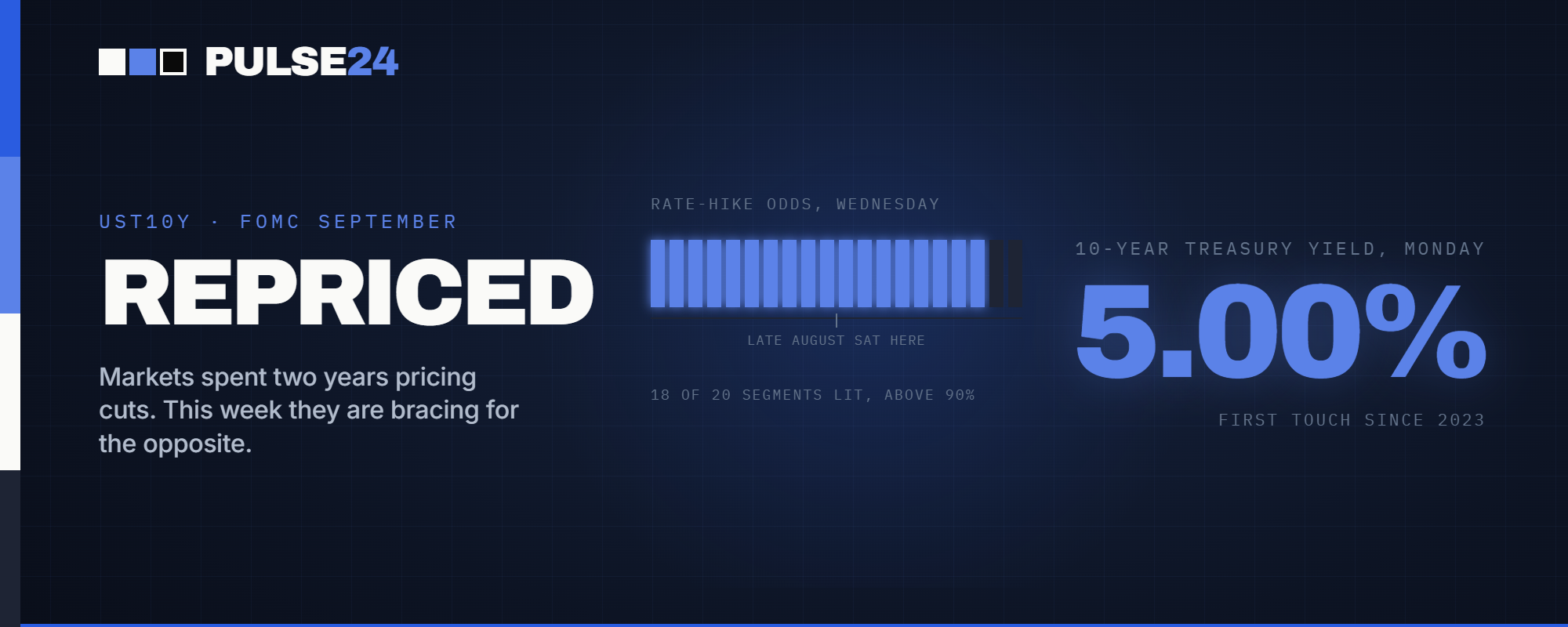
The 10-year Treasury yield touched 5% for the first time since 2023 as the Fed's two-day meeting opens with rate-hike odds above 90%. Markets spent most of the last two years pricing in cuts; this week they're bracing for the opposite.
Ten-year Treasury notes yielded 5% on Monday, a level the bond market hadn't touched since 2023. The move landed one trading day before the Federal Reserve opened a meeting that, as recently as this spring, most traders expected to end in a rate cut, not a hike.
What Changed
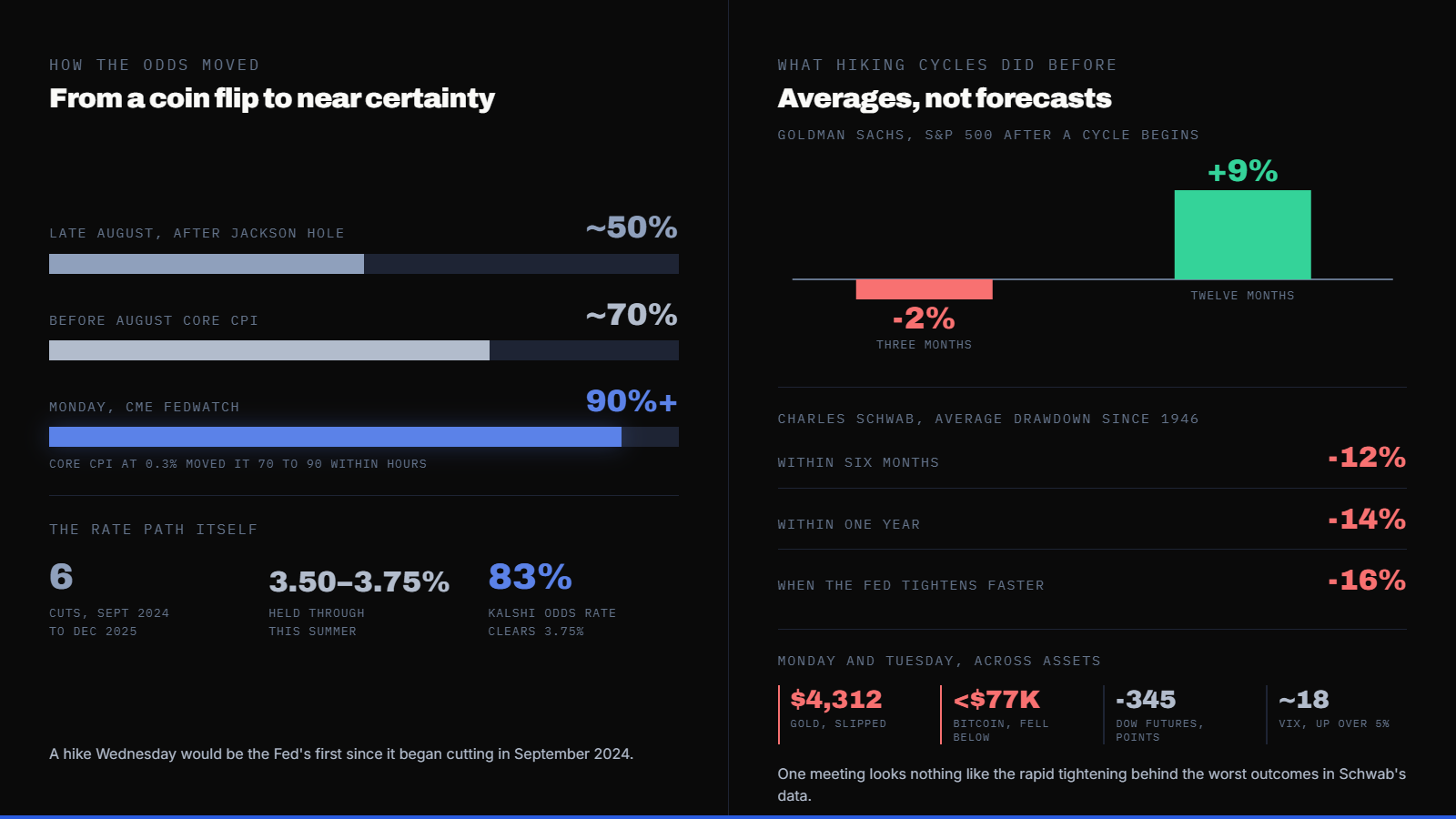
The Federal Open Market Committee began its two-day meeting Tuesday with markets positioned about as hawkish as they've been all year. CME Group's FedWatch tool shows better than 90% odds of a quarter-point increase when Chairman Kevin Warsh announces the decision Wednesday afternoon. On Kalshi, traders put the odds of the fed funds rate clearing 3.75% at 83%, a move that would be the Fed's first hike since it started cutting in September 2024.
That's a sharp reversal in a short window. Odds sat close to a coin flip in late August, right after Warsh used his Jackson Hole speech to argue that summer inflation readings hadn't shown the improvement the Fed wants to see. Pulse24 covered the next leg of that move when August's core CPI came in at 0.3%, a reading that by itself pushed hike odds from roughly 70% to 90% within hours. Add last week's producer price data, and by Monday the market had all but priced in a hike before the meeting even started.
The bond market moved first, with the 10-year yield's run to 5% pulling the dollar up by the most in a single session since June. Pulse24 flagged the setup for this three days earlier, when the European Central Bank's own hike to 2.50% raised the question of whether the Fed and the Bank of Japan would follow. The Fed looks likely to answer that question first.
Why It Matters
A Fed that hikes instead of cutting changes the math for nearly every other market Pulse24 tracks. Higher discount rates hit the stocks trading on the biggest future-earnings assumptions hardest, and few sectors carry bigger assumptions right now than the AI buildout. Nasdaq futures were down roughly half a percent Tuesday morning, with Dow futures off 345 points and the VIX up more than 5% to just under 18. Some of that pressure has nothing to do with rates at all. Anthropic CEO Dario Amodei published an essay over the weekend calling for a slower pace of AI development, warning that unchecked AI agents could pose serious risks within the next year. OpenAI's Sam Altman voiced agreement within days, adding a second source of caution to a sector already digesting rich valuations. Pulse24 covered the industry's diverging bets on AI's timeline last week, when OpenAI shelved its own IPO over similar concerns while Anthropic pushed toward one anyway.
Gold and Bitcoin took a more direct hit. Both tend to struggle when real yields rise and the dollar strengthens at the same time, since neither pays a coupon that gets more attractive when rates go up. Gold slipped toward $4,312 and Bitcoin fell below $77,000 as the same risk-off mood spread across markets. It's a pattern this cycle has already produced once, when an earlier jump in hike odds sent both assets lower in a single session. History offers a rough guide to how much further a genuine hiking cycle could push risk assets. Goldman Sachs' own analysis points to the same pattern: an average 2% decline in the S&P 500 over the three months after a hiking cycle begins, followed by an average 9% gain over the next twelve. Charles Schwab's longer dataset, running back to 1946, found an average drawdown of roughly 12% within six months and 14% within a year of a hiking cycle's start, with steeper declines, up to 16%, when the Fed tightens faster. A single 25 basis point increase is a very different animal from the rapid-fire tightening that produced the worst outcomes in that dataset.
What to Watch Next
Wednesday's decision matters less than what comes with it. Warsh's press conference and the Fed's updated dot plot will tell markets whether this is a one-and-done adjustment meant to reassure inflation hawks, or the first move in something longer. A hike paired with a dot plot showing further increases next year would likely extend Monday's selloff across bonds, gold, and high-multiple tech stocks. Pair that same hike with language suggesting the Fed is finished, or a surprise hold instead, and it could spark a relief rally in those same assets. Either way, watch the dollar index and short-term yields first. They tend to move before equities catch up, and both are already signaling that the market has stopped treating this meeting as a coin flip.
The Pulse24 Take
It's worth separating the signal from the noise here. A quarter-point hike by itself won't reshape the economy, and Fed officials have framed a possible hike as a matter of inflation credibility rather than a pivot toward aggressive tightening. What matters more is the path implied by Wednesday's dot plot. Markets spent most of the past two years pricing a Fed that was done raising rates for a while. If this meeting marks a genuine change in direction, the adjustment in asset prices probably isn't finished after one session. The historical base rates from Goldman and Schwab argue for caution, not panic. Averages hide a wide range of outcomes, and the pace of this cycle, one meeting so far, looks nothing like the rapid tightening behind the worst six-month drawdowns in Schwab's data. The more useful question for Wednesday isn't whether the Fed hikes. It's whether Warsh signals this is the start of something or the end of it.
How we read the data
Curious how we get from raw data to a take like this? Our Trader's Toolkit walks through the tools we lean on.
Explore the Toolkit