Pulse24 Original
Target Just Raised Its Profit Forecast by $2.40 a Share. All But 75 Cents of That Increase Came From a One-Time Tariff Refund It Didn't Have Three Months Ago.
August 20, 2026
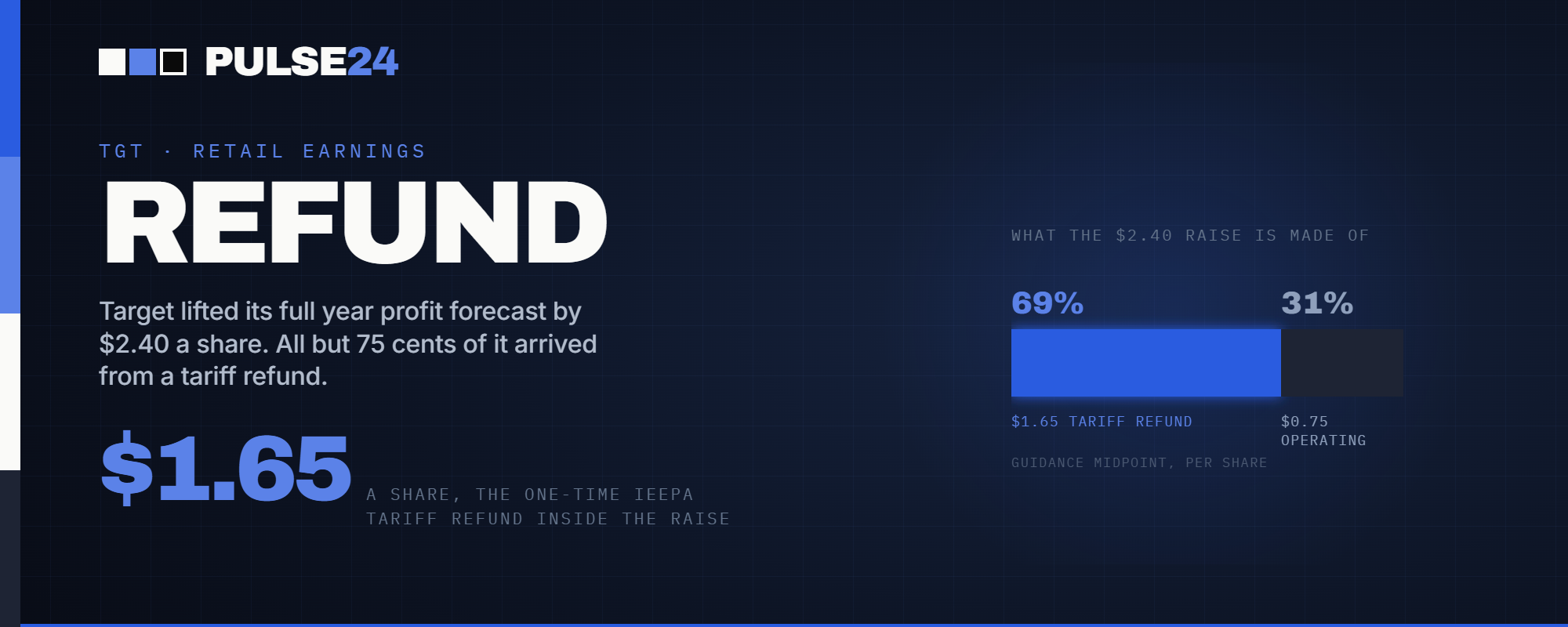
Target raised its full year profit forecast by $2.40 a share and the stock closed up 4.3%, but $1.65 of that increase came from a one time tariff refund. The results landed the same week government data showed retail sales fell and consumer sentiment sank well below forecasts.
Target's stock closed up 4.3% on Wednesday after the company posted its strongest quarter in years and raised its full year profit forecast by roughly 30% at the midpoint. Chief executive Michael Fiddelke, who took over the role in February, said customers have given a "strong response" to a round of merchandise refreshes and price cuts. Analysts responded with a string of more bullish notes on the stock following the report.
Not all of that improvement is what it looks like, though. Nearly seventy percent of the guidance increase traces back to a single, non recurring event: a $994 million pretax refund tied to tariffs the Supreme Court struck down back in February.
What Changed
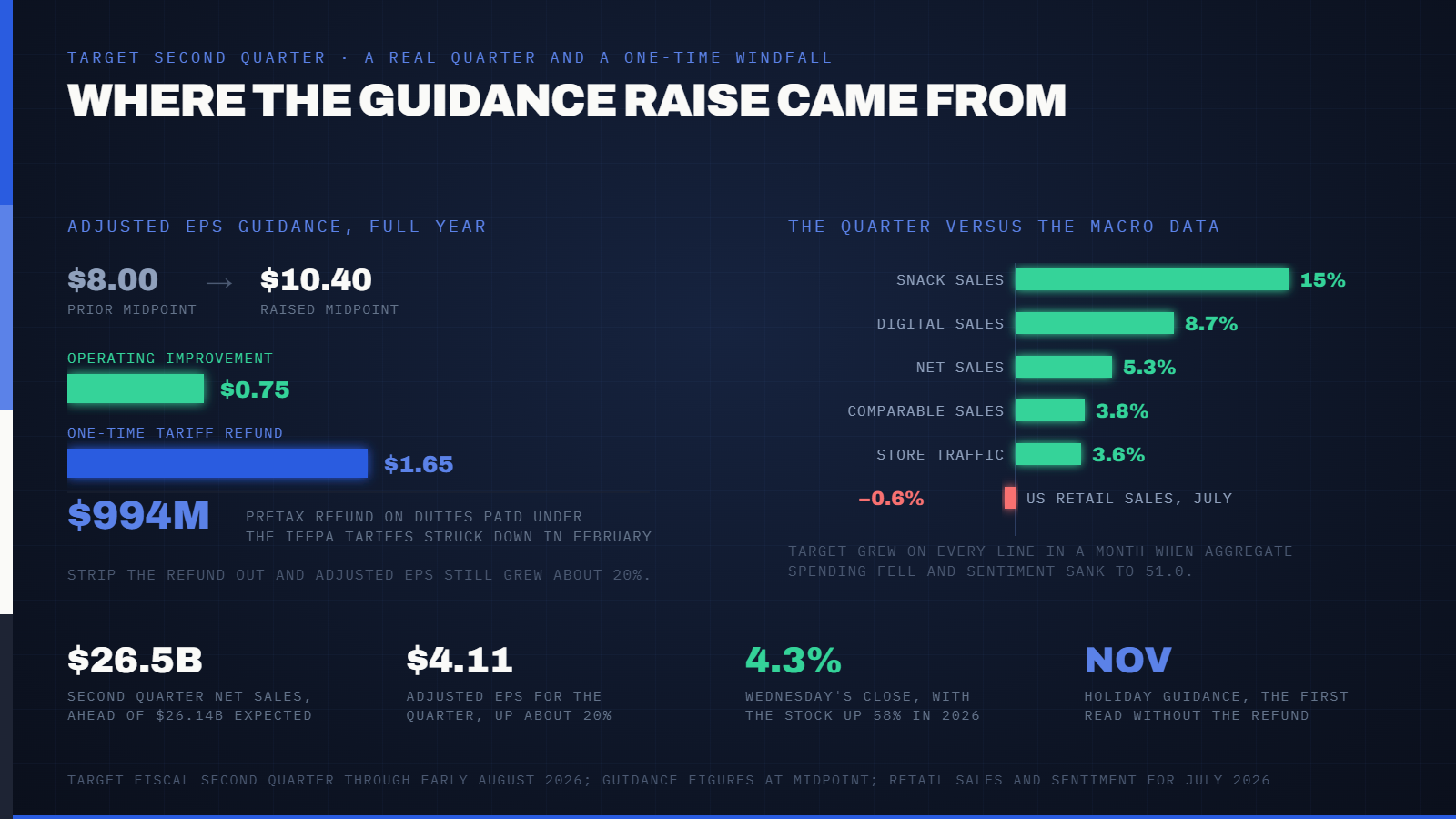
Target's fiscal second quarter, the three months through early August, was the clearest sign yet that Fiddelke's turnaround plan is working. Comparable sales grew 3.8%, the strongest showing in several quarters for a chain that investors have been watching for proof its merchandise refresh and price cuts were translating into actual traffic. Digital sales, up 8.7%, outpaced store sales for a fourth straight quarter, and same day delivery orders grew more than 25%. Grocery held up too: Target said snack sales grew 15% year over year following a broader food and beverage overhaul.
The tariff refund is a separate story layered on top. In February, the Supreme Court ruled that tariffs imposed under the International Emergency Economic Powers Act exceeded presidential authority, opening the door for importers to claim refunds on duties already paid. Target's share of that came to $994 million pretax, worth $1.65 a share after tax by the company's own guidance math. Strip that out and the underlying quarter still holds up: Target's $4.11 in adjusted second quarter earnings per share was up about 20% year over year excluding the refund, a real improvement for a retailer that had been struggling to grow sales at all.
The Retail Earnings Divide
Target's report lands in the middle of a retail earnings week that is telling two different stories about the American consumer. Home Depot, which reported a day earlier, grew sales 5.7% to $47.9 billion and beat estimates even as executives described the housing market as effectively frozen, with customers sticking to small repair projects instead of big renovations. Both retailers beat expectations. Neither read as unambiguous good news about consumer health.
That split matters because the macro backdrop this month has leaned negative. Retail sales fell 0.6% in July, the sharpest monthly drop in more than a year, and consumer sentiment sank to 51.0 in the University of Michigan's survey, badly missing forecasts. Target and Home Depot's numbers do not erase that data. They complicate it. A retailer executing well on price and assortment can grow sales even while the aggregate consumer pulls back, particularly if some of that growth comes at a competitor's expense rather than from new spending entering the system.
What to Watch Next
Fiddelke was careful this week to frame the quarter as early progress rather than a finished turnaround, saying "there's a lot more to come" and that the company still needs to "execute well." The next real test arrives with holiday guidance, typically given alongside third quarter results in November, when the tariff refund tailwind will have mostly worked through the numbers and the company will be judged on organic growth alone. Investors should also watch whether other retailers report similar refund driven boosts this earnings season, since a wave of one time tariff windfalls across the sector could make year over year comparisons unusually noisy into early 2027.
The Pulse24 Take
Target's headline numbers are good news, and investors are right to notice a comparable sales figure that finally moved in the right direction after quarters of drift. But good news presented without its asterisk is how markets get surprised later, and the asterisk here is a nine figure sum that will not repeat next quarter. Strip out the tariff refund and Target still grew earnings by a respectable margin in a soft consumer environment, which is the more durable story even if it is the less exciting headline. The bigger question the market has not fully priced is what happens to retail earnings broadly once refund related boosts roll off across the sector, right as the numbers get compared against quarters that had the benefit baked in. Customers responding to Target's price cuts is a real signal; a one time check from the Treasury is not, and conflating the two is exactly the kind of mistake that turns a solid quarter into an overreaction.
How we read the data
Curious how we get from raw data to a take like this? Our Trader's Toolkit walks through the tools we lean on.
Explore the Toolkit