Pulse24 Original
Super Micro Raised Its Revenue Guidance by $4 Billion in One Update. Its Margins Are Rising Even Faster.
October 22, 2026
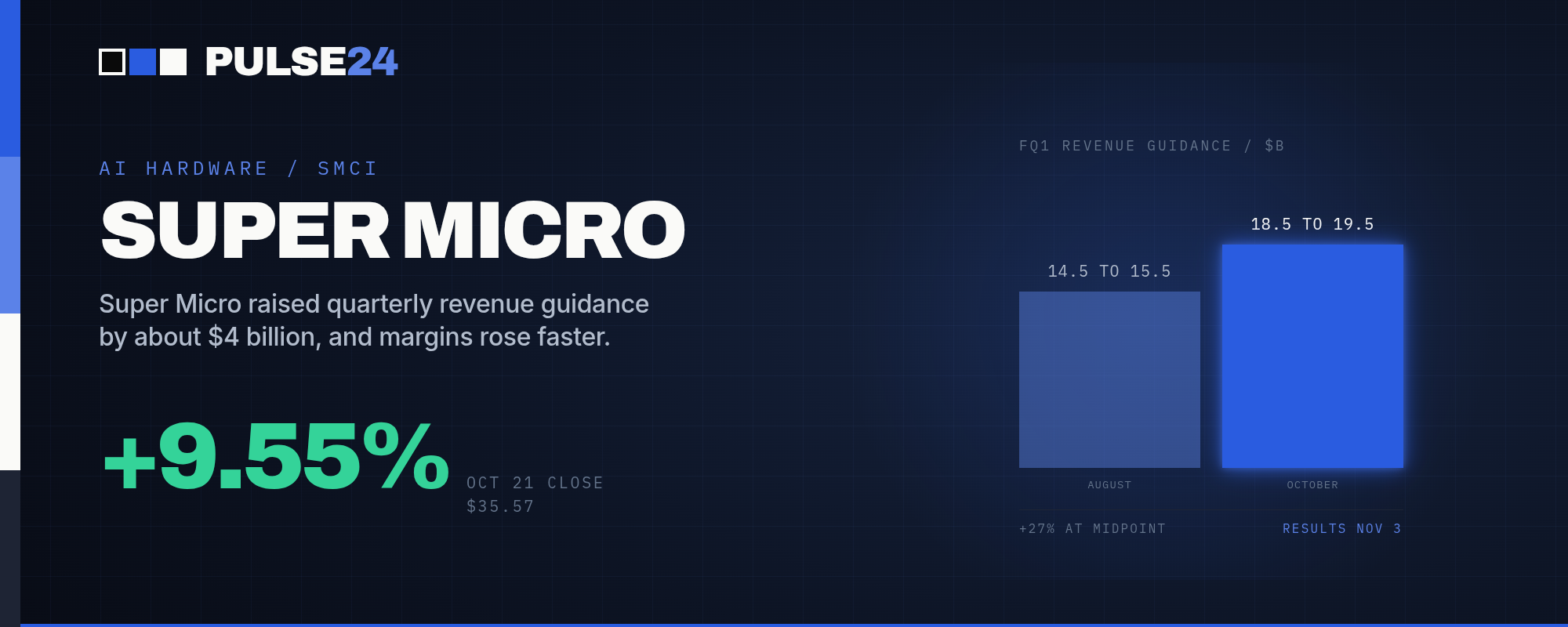
Super Micro's preliminary quarterly numbers landed nearly 25% above Wall Street's forecast, and gross margins climbed even faster than revenue did. The beat raises an uncomfortable question for the AI trade: why did a similar infrastructure story sink CoreWeave's stock only weeks earlier.
Super Micro Computer's new revenue guidance landed nearly $4 billion above the number it gave Wall Street in August, and the market didn't wait for an explanation before reacting. Shares jumped 9.55% on October 21, the stock's best single session in months, after the server maker said preliminary results for the quarter ended September 30 would come in well above its own forecast.
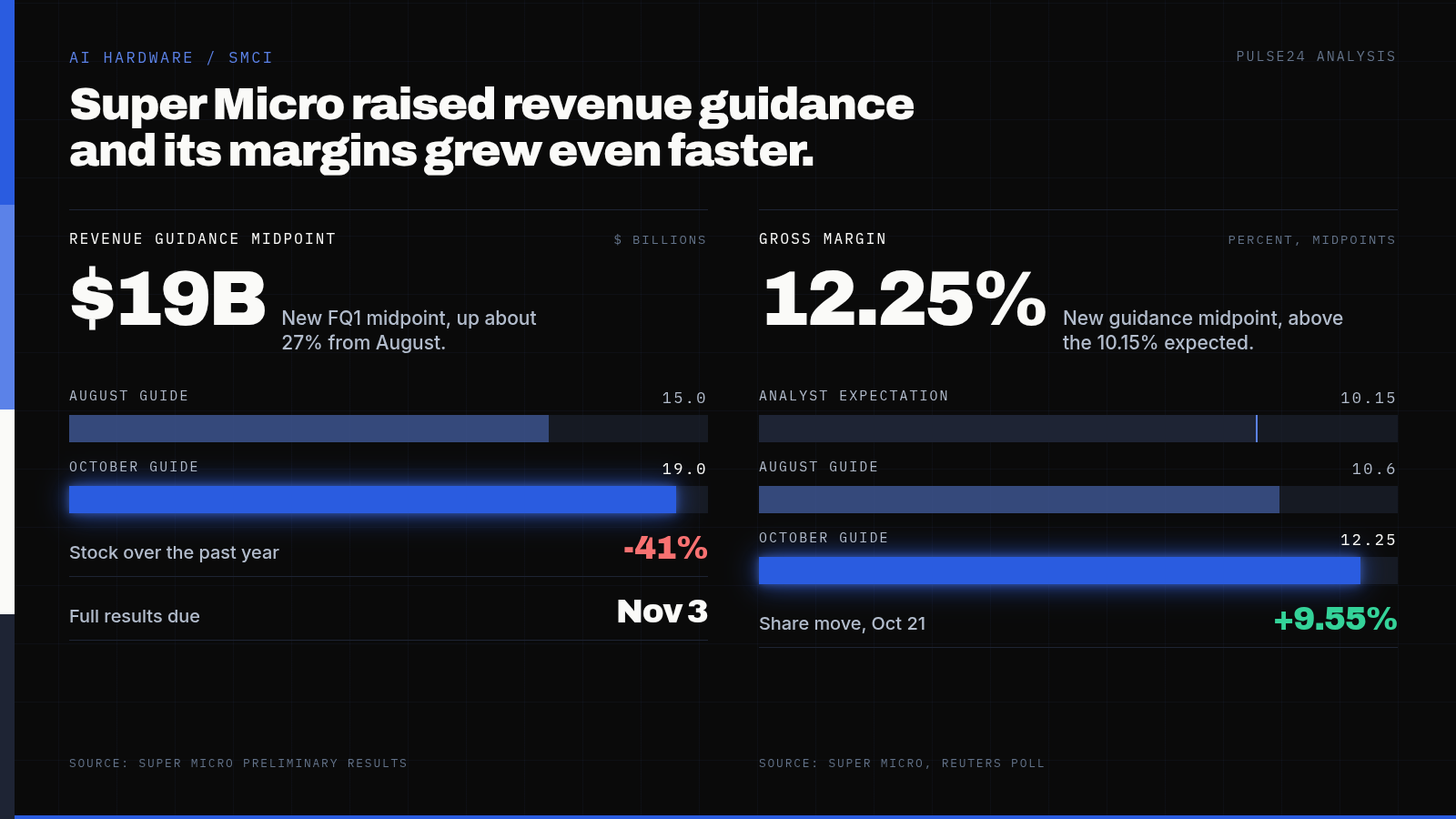
The scale of the revision is unusual even by AI-infrastructure standards. Back in August, Super Micro guided fiscal first-quarter revenue to a range of $14.5 billion to $15.5 billion. The company now expects $18.5 billion to $19.5 billion, a jump of roughly 27% at the midpoint. Put another way, the bottom of the new range sits about 19% above the top of the old one. Wall Street's average estimate, tracked by LSEG, had been $15.23 billion, and the new midpoint beats that by close to 25%.
Margins moved by even more than revenue did. Super Micro now expects gross margin of 12.0% to 12.5%, compared with a prior range of 10.4% to 10.8%, a figure analysts surveyed by Reuters had pegged at 10.15%. At the midpoint, each percentage point of margin is worth roughly $190 million in gross profit on a quarter this size, which is part of why a revenue beat this large moved the stock as much as it did.
The stock's reaction tells its own story. Shares had actually fallen about 17% in the week leading into the update, part of a broader pullback that left Super Micro down roughly 41% over the past year even after this jump. Dell rose 5.3% and Hewlett Packard Enterprise climbed 3.7% in sympathy, while Nvidia also edged higher, suggesting investors read the update as a demand signal for the broader AI server supply chain rather than a Super Micro-specific story.
Why It Matters
This is the same AI capital-expenditure debate that has whipsawed markets all month, just told from the other side. Less than a week earlier, CoreWeave's stock fell 30% since late September before Goldman Sachs cut its price target and then, in the same note, upgraded the stock to buy, a sequence that read like Wall Street talking itself in and out of the same worry. Super Micro's guidance raise argues the underlying demand for AI hardware hasn't slowed at all. It may simply be landing somewhere else, and arriving later than investors expected.
Part of the margin story could be timing catching up with itself. Some of the strength may reflect contracts that were delayed from the June quarter finally showing up, rather than a clean reset higher in underlying demand. That distinction matters for how durable the move proves to be, and it's a reason to treat one guidance update as a data point rather than a verdict on the AI buildout as a whole.
There's a less flattering number buried in the same filings. Super Micro's fiscal 2026 operating cash flow came in at negative $6.8 billion, mostly the result of an inventory build that pushed stockpiles to $12.9 billion by June, and in fiscal 2026, one customer accounted for 10% or more of net sales, more concentrated than the four customers that crossed that threshold a year earlier. Financing an AI buildout this capital-intensive is its own live question across the sector. Debt investors have grown considerably more skeptical of AI-linked financing in recent months, and a company this reliant on external capital and concentrated in a single customer is a reminder that strong guidance and comfortable financing aren't the same thing. Super Micro also spent part of this year managing fallout from a federal indictment tied to alleged export-control violations by former associates. An independent board investigation completed in August cleared current senior management of any knowledge of the scheme, though the company says it continues cooperating with government authorities on the matter.
What to Watch Next
Super Micro reports full fiscal first-quarter results on November 3, and that call will matter more than usual. The figures released this week are preliminary and unaudited, meaning the guidance could still move before then. Investors will also be listening for management's explanation of how much of the margin gain is pricing power versus simply a better mix of complete systems rather than individual components, and for any update on the government investigations the company says it is still cooperating with.
The Pulse24 Take
A guidance raise this size deserves to be taken seriously. It suggests AI hardware demand hasn't cracked the way some of October's selloffs implied, at least not everywhere and not yet. But one company's blowout quarter doesn't settle the argument on its own. The same week delivered a sharp, credit-driven scare at another AI-infrastructure name, and Super Micro's own cash flow and customer concentration numbers explain why that skepticism exists in the first place. Investors chasing a verdict on the AI capex debate are probably looking for the wrong thing. The more useful habit is tracking the data points each earnings season adds, because that is roughly how this story has unfolded all year: one data point at a time.
How we read the data
Curious how we get from raw data to a take like this? Our Trader's Toolkit walks through the tools we lean on.
Explore the Toolkit