Pulse24 Original
Fed Hike Odds Tripled in a Week, to 36%. The Dollar Just Hit a One-Month High.
July 28, 2026
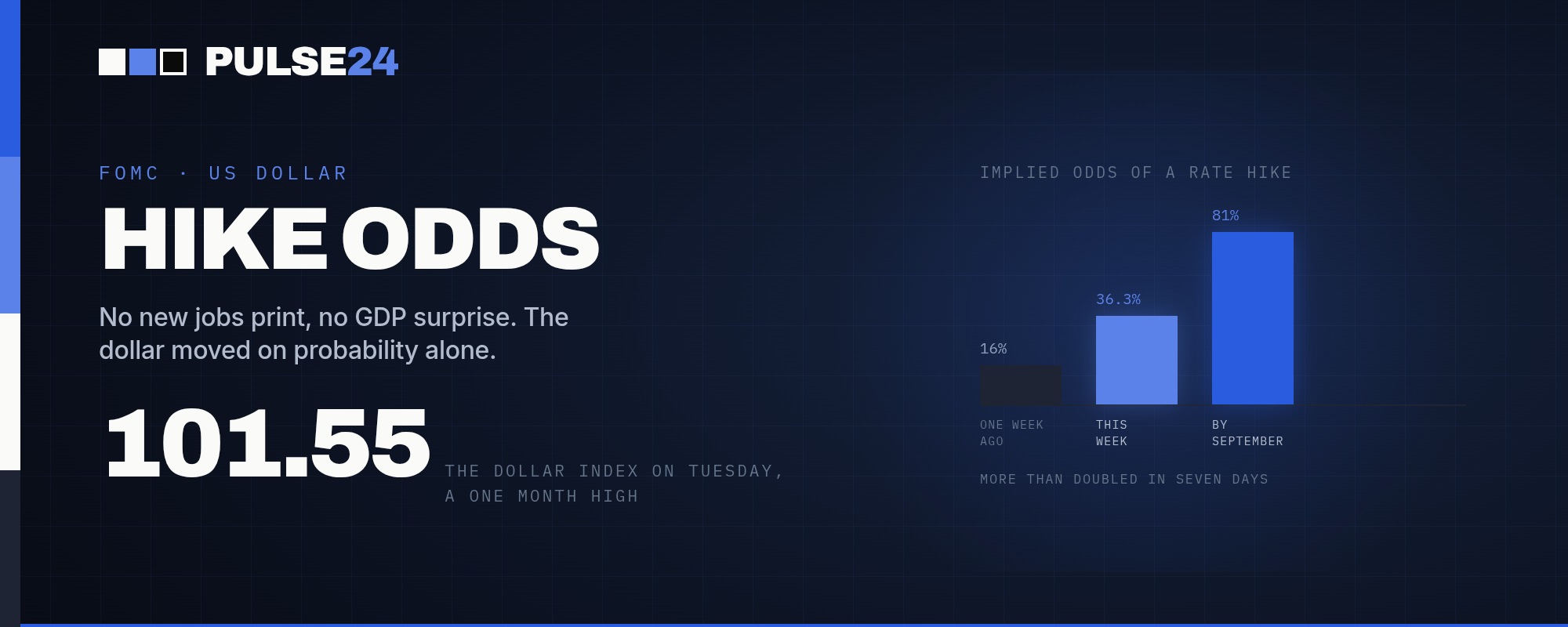
Fed rate hike odds for this week's meeting have more than doubled in seven days, jumping from 16% to 36.3%, and the dollar just hit a one-month high in response. Inflation is still running at 3.7% against a 2% target, and traders now assign an 81% probability to a hike by September regardless of what happens Wednesday.
The dollar index touched 101.55 on Tuesday, its highest level in a month, and the move had nothing to do with a strong jobs report or a blowout GDP print. It came down to odds. A week ago, futures markets priced roughly a 16% chance the Federal Reserve raises interest rates at this week's meeting. That number is now 36.3%, more than double, with the decision due Wednesday afternoon and the current target range sitting at 3.5% to 3.75%.
What Changed
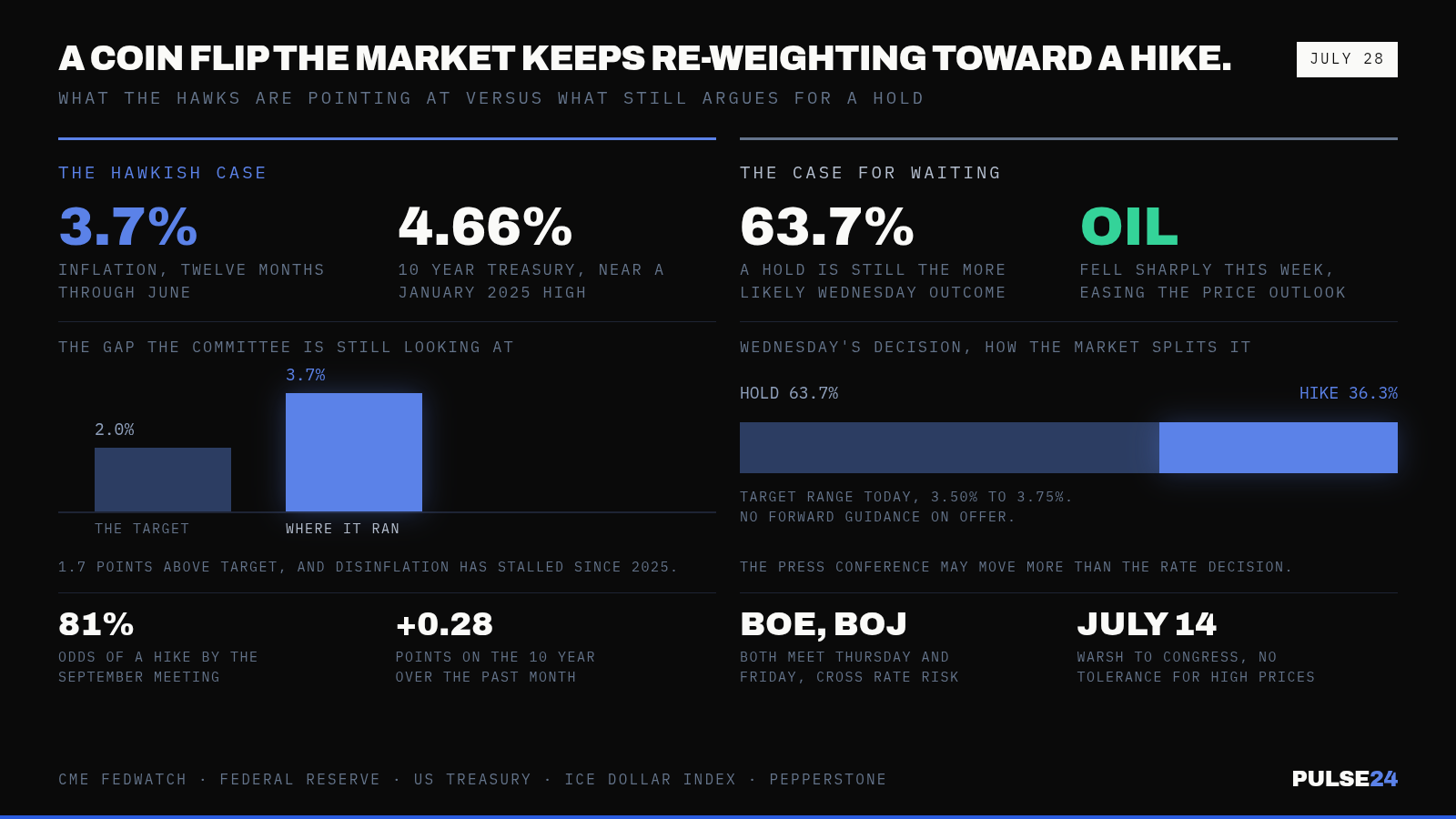
Nothing about the Fed's mandate changed this week. What changed is the data feeding into it. Inflation ran at 3.7% over the twelve months through June, nearly double the Fed's 2% target, and that gap has proven stickier than most forecasters expected heading into 2026. Governor Lisa Cook has flagged the same concern, saying she wants to see stronger evidence that inflation is moving sustainably back toward target before she is satisfied. Disinflation progress has essentially stalled since 2025, and price growth remains well above the Fed's goal. A labor market that won't crack isn't helping the doves' case either: initial jobless claims fell to their lowest level since 1969 earlier this month, one less reason for the Committee to worry about overtightening. Energy costs added to the pressure through July too, the same Brent crude spike past $100 a barrel that tripled rate-hike odds two weeks earlier, giving hawks on the Committee a fresh argument for acting sooner rather than waiting for the September meeting.
Treasury markets moved first. The 10-year yield climbed to 4.66%, up about 0.28 percentage points over the past month and close to its highest level since January 2025. Chris Weston, head of research at Pepperstone, pointed to weak demand at the front end of the curve as a key driver, noting that a lack of meaningful buying there has kept the dollar well supported. When short-term Treasury buyers stay on the sidelines, it usually means the market is bracing for higher rates to stick around longer, not just for one meeting.
Why It Matters
A stronger dollar is never a neutral event. It makes oil, gold, and other dollar-priced commodities more expensive for buyers holding other currencies, which can cool demand even without any change in supply. It squeezes emerging-market borrowers who owe dollar-denominated debt. And it quietly dents the overseas earnings of large US multinationals when they convert foreign revenue back into dollars at a less favorable rate. None of that requires the Fed to actually hike. The dollar is already reacting to the possibility.
Even if Wednesday's meeting ends in a hold, still the more likely outcome at an implied 63.7% probability, traders are signaling the hold may not last. The September odds, at 81%, suggest the market has largely made peace with at least one hike landing before the year is out. Warsh's own language reinforces that read. His July 14 testimony leaned on the phrase "restoring price stability," not "monitoring incoming data," and that distinction matters more than it might sound.
What to Watch Next
Wednesday's decision is the obvious flashpoint, but the press conference afterward will probably move markets more than the rate announcement itself. A hold paired with hawkish language would likely extend the dollar's rally without anyone needing to change the actual rate. A hold paired with dovish caveats about growth risks could unwind some of the past week's move just as quickly.
The calendar doesn't let up after that. The Bank of England and Bank of Japan both meet later in the same week, Thursday and Friday respectively, and either could add volatility to the dollar's cross-rates against the pound and yen. Oil prices are also worth tracking. They fell sharply this week on easing geopolitical tension, which took some pressure off the inflation outlook. A rebound there would hand the hawks on the Committee another data point heading into September.
The Pulse24 Take
Markets are pricing a coin flip that keeps landing more often on "hike" each time the odds get checked, and they're doing it without a single rate actually moving yet. That's the mechanism worth understanding here. Probability itself is information, and when it shifts this fast, both the dollar and the Treasury curve move to price it in ahead of the actual decision.
None of this guarantees a hike is coming, in July or September. Warsh's Fed has been explicit that it isn't offering the kind of forward guidance investors got used to under previous chairs, and that data-dependent posture cuts both ways. A soft inflation print or a wobble in the labor market could push odds back down as quickly as they climbed. For now, though, the message from currency and bond markets is consistent: the path of least resistance is toward higher rates, not lower, and the dollar is behaving accordingly.
How we read the data
Curious how we get from raw data to a take like this? Our Trader's Toolkit walks through the tools we lean on.
Explore the Toolkit