Pulse24 Original
Three Chip Price Hikes in Under a Year Haven't Made Intel a Buy on Wall Street
September 12, 2026
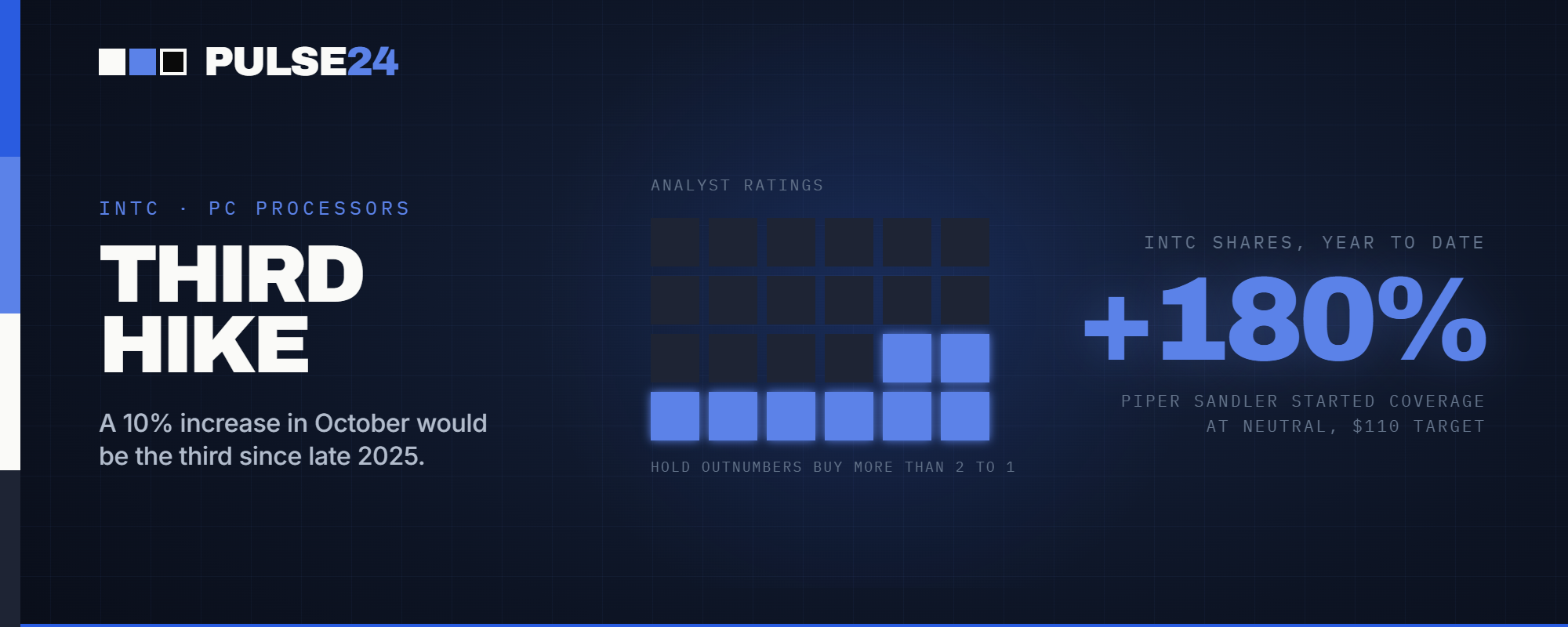
Intel is reportedly planning its third chip price increase since late 2025, and the stock has rallied more than 180% this year on the pricing power story. Most analysts still rate it a hold, and the reason traces back to a memory shortage squeezing the entire PC supply chain.
Intel wants to charge more for its chips again. Supply chain sources cited by DigiTimes on September 8 say the company is preparing a roughly 10 percent price increase on PC processors, with the new prices potentially landing on October 5. If it happens, it will be the third such hike since late 2025, following one round in the first quarter and another in July that touched selected consumer and server processors, moves that ranged from tens of dollars to more than $1,000 depending on the chip.
What Changed
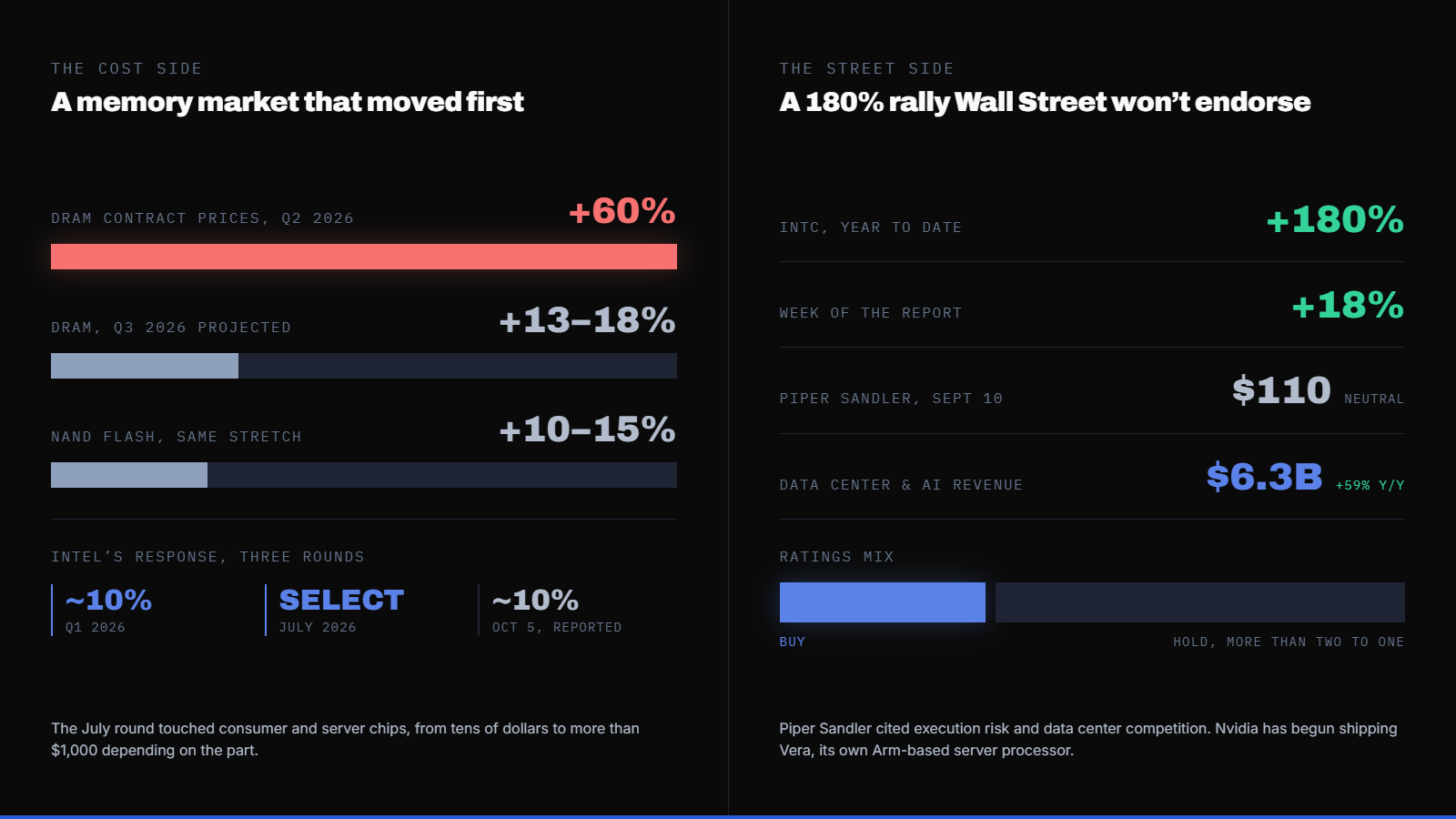
This would be Intel's third price adjustment in under a year. The company raised prices roughly 10 percent in the first quarter, then followed with another round in July covering select consumer and server chips. CFO David Zinsner has described these as like-for-like price changes meant to offset rising input costs, not a departure from strategy.
The stock has rewarded the pattern so far. Intel shares gained close to 18 percent in the week the report circulated and are up more than 180 percent for the year, a rally most of Wall Street still won't fully endorse. Analyst coverage runs more than two to one toward Hold over Buy, and the average price target sits only modestly above where the stock already trades. Piper Sandler initiated coverage on September 10 at Neutral with a $110 target, crediting Intel's manufacturing progress and rising foundry interest while flagging execution risk and data center competition as reasons to wait.
Why It Matters
Behind the pricing decision is a memory market that has gone sideways for nearly every company that touches a circuit board. DRAM contract prices jumped roughly 60 percent quarter over quarter in the second quarter of 2026, and industry trackers still expect another 13 to 18 percent increase in the third quarter as AI data centers keep buying up supply that PC and phone makers also need. NAND flash is following a similar path, up an estimated 10 to 15 percent over the same stretch.
Every company touching consumer electronics has had to decide who eats that cost. Apple has largely absorbed the hit on its newest iPhone rather than pass it to buyers, while Dell used the same DRAM spike to expand margins instead of losing them. Intel is choosing a third path: pass the cost straight through and hope demand holds.
What to Watch Next
The nearer-term test is whether the October increase actually happens, and whether PC makers absorb it quietly or push back the way some did after the July round. Weak PC demand is the exact reason Hold ratings outnumber Buys by more than two to one; a repricing that outruns demand could show up in shipment data before it shows up in Intel's income statement.
The longer-term test is competitive. Intel's Data Center and AI revenue grew 59 percent last quarter to $6.3 billion, its best growth in years, but Piper Sandler's own note cited data center competition as a reason to stay on the sidelines. Nvidia has started shipping its own Arm-based server processor, called Vera, directly challenging the x86 chips that have anchored Intel and AMD's business for decades. ASML's most expensive lithography tool is also bottlenecked by a photomask shortage that TSMC and Samsung have already worked around while Intel has not yet joined the fix, one more sign that Intel's foundry ambitions still trail its two biggest rivals.
The Pulse24 Take
Pricing power and pricing desperation can look identical from the outside, and that tension sits right inside Intel's chart. A company raising prices three times in under a year either has real leverage over its customers or is scrambling to protect a margin the memory market keeps eroding. The bulls will point to accelerating data center revenue, noting the memory squeeze is an industry-wide problem, not an Intel-specific one. Skeptics counter with a stock already up 180 percent, a Hold-heavy analyst base, and a foundry unit still trying to prove it can compete with TSMC on Intel's own timeline. Both can be true at once. What tips the balance from here probably isn't the October price tag itself. It's whether PC demand can absorb another round of increases without cracking, and whether Nvidia's push into server chips turns from a talking point into an actual dent in Intel's data center growth rate.
How we read the data
Curious how we get from raw data to a take like this? Our Trader's Toolkit walks through the tools we lean on.
Explore the Toolkit