Pulse24 Original
Builders Cut Prices at a Record Pace in October. Confidence Still Sank to a 14-Year Low.
October 20, 2026
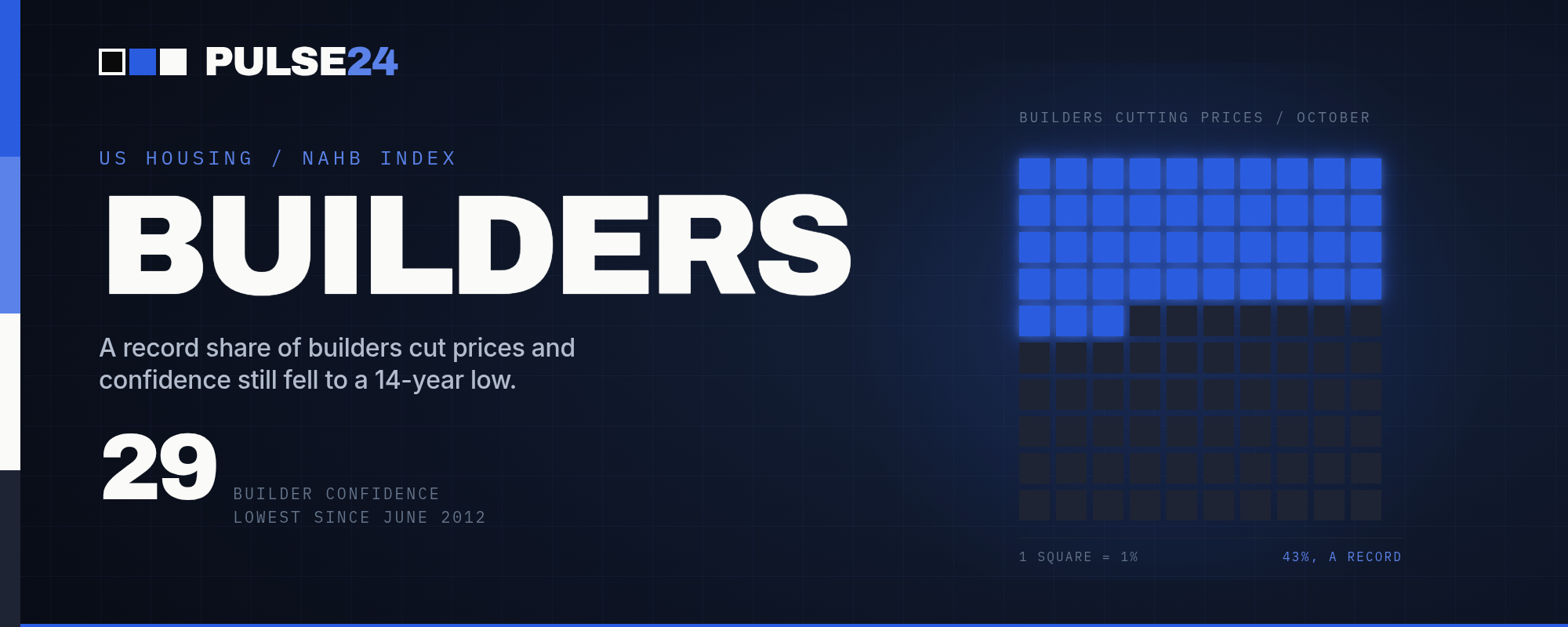
Builders cut prices in October at the highest rate since NAHB started tracking the data, and confidence still sank to its lowest level since June 2012. Mortgage rates above 7% are the main reason buyers are staying on the sidelines.
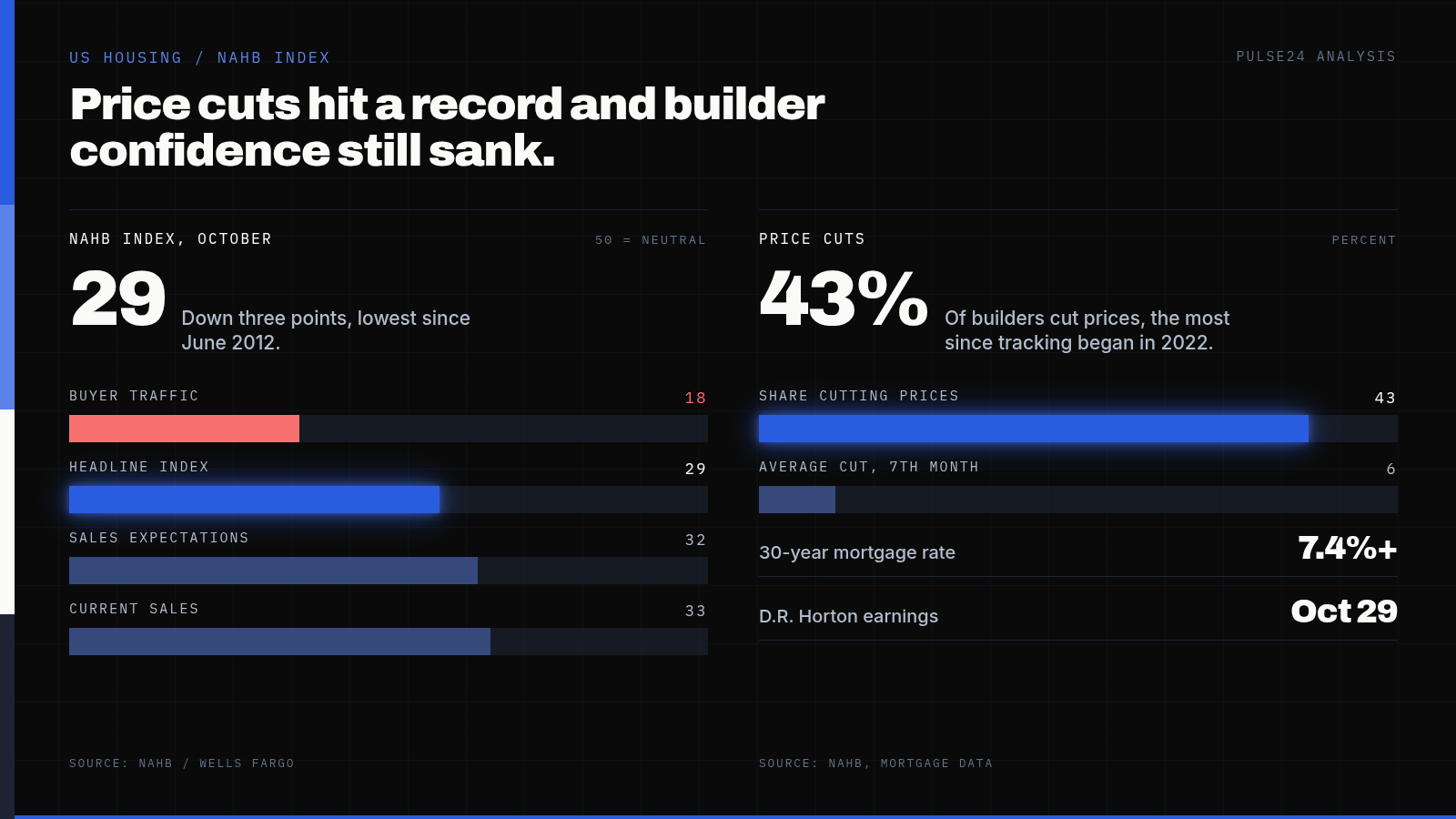
Forty-three percent of U.S. homebuilders cut prices in October. That is the highest share since the National Association of Home Builders began tracking the measure in 2022, and it arrived in the same month builder confidence dropped to a level not seen since June 2012.
The NAHB/Wells Fargo Housing Market Index fell three points to 29 this month. Every major component moved the same direction. Current sales conditions slipped two points to 33. Sales expectations for the next six months dropped five points to 32. Buyer traffic fell five points to 18, a level the trade group says is its weakest since April 2012, excluding the pandemic shock of April 2020.
What Changed
Mortgage rates are the clearest culprit. The 30-year fixed rate has pushed past 7.4%, its highest level in nearly three years, up from 7.28% at the start of October and roughly a full point higher than a year ago. NAHB Chairman Bill Owens put it plainly: mortgage rates have climbed well above 7% in recent weeks, and higher gas prices and inflation have further weakened buyer traffic across much of the country.
Regionally, the pain is uneven. California and the broader West logged the weakest three-month moving average, just 26. The South came in at 30, while a modest bright spot emerged in the Midwest, which held up best at 40, helped by single-family permits that rose 2.9%. Northeastern builders reported 38, rounding out a stretch in which every region slipped from the prior reading.
Builders are responding the way any business does when demand slows: they are cutting prices and leaning harder on incentives. Sixty-five percent reported using sales incentives in October, the 19th straight month that share has held at 60% or higher. NAHB Chief Economist Robert Dietz described the dynamic directly. Demand persists, he said, but higher mortgage rates, elevated construction costs and weaker consumer confidence are keeping buyers on the sidelines.
Why It Matters
Housing is one of the most interest-rate-sensitive parts of the economy, which makes it an early warning system for how the Fed's current stance is actually landing. The Fed has kept hiking even with stocks trading at their second-priciest level in 145 years, and that stance is now showing up directly in mortgage pricing. A 30-year rate near 7.5% changes the monthly math on a median-priced home by hundreds of dollars, and builders would rather give up margin on price than lose a sale entirely.
The price cuts matter beyond homebuilders' own earnings. New home prices feed into broader housing inflation measures with a lag, construction employment tends to follow builder sentiment lower, and regional banks with concentrated construction-loan books are exposed when project timelines stretch out. None of that shows up in a single month of data, but a 14-year low in confidence is the kind of signal that tends to get noticed by people who watch credit conditions for a living.
There is also a feedback loop worth watching. Slower housing activity is disinflationary over time, since shelter costs are a large piece of the inflation basket the Fed is trying to tame. October's hike odds have already swung sharply on a single Fed speech, and a housing market this weak gives officials another data point to weigh against the case for moving again before year-end.
What to Watch Next
Two dates stand out. The Fed's next rate decision lands October 28, and D.R. Horton reports fiscal fourth-quarter results the following day, giving the clearest read yet on how the nation's largest homebuilder by closings is managing the price-cutting environment NAHB just described. New home sales and housing starts data due before both events will show whether October's confidence drop was a one-month wobble or the start of a steeper slide.
Watch the price-cut percentage specifically. It has been climbing steadily for months, and a reading above 43% next cycle would suggest builders are accepting thinner margins rather than betting on a near-term rate reprieve. The incentive share, stuck at 60% or higher for 19 straight months, is the other number worth tracking. A move higher would say builders no longer believe price cuts alone are enough to clear inventory.
The Pulse24 Take
A confidence index sitting at its lowest point since 2012 sounds dramatic, and in some ways it is. Treat it as a symptom, though, not a surprise. Mortgage rates near 7.5% were always going to slow a housing market that spent the last two years adjusting to life without cheap financing. What stands out is the pace: price cuts hitting a record share the same month traffic fell to a 14-year low suggests builders have stopped waiting out the rate environment and started pricing for it.
The read-through for investors is less about homebuilder stocks specifically and more about what this says about the Fed's room to maneuver. A housing market this soft builds disinflationary pressure in the background, even as headline inflation data stays sticky elsewhere. That tension, between a Fed still inclined to hike and a rate-sensitive sector already cracking, deserves more attention than any single month's index reading will get.
How we read the data
Curious how we get from raw data to a take like this? Our Trader's Toolkit walks through the tools we lean on.
Explore the Toolkit