Pulse24 Original
Crude Stockpiles Fell by 8.6 Million Barrels, Nearly 30 Times What Traders Expected. Diesel Supplies Are Running Even Shorter.
October 19, 2026
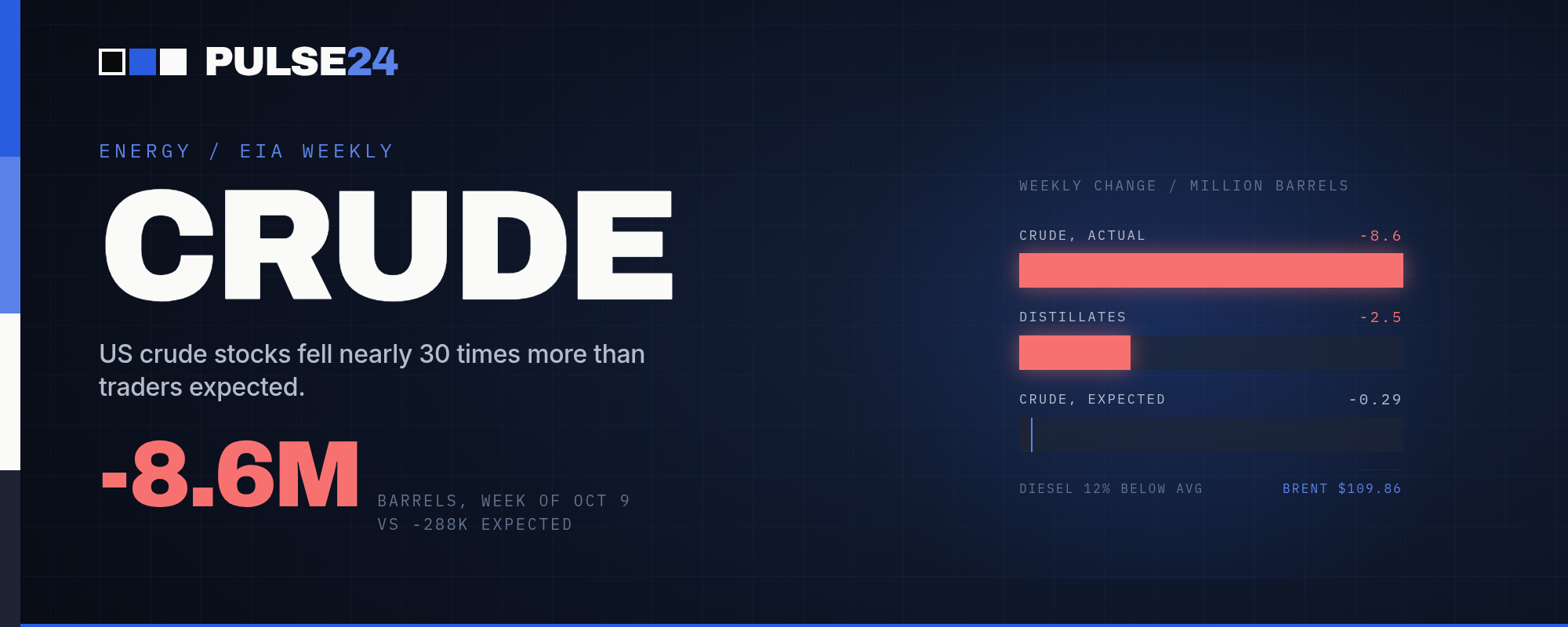
U.S. crude inventories fell by 8.6 million barrels last week, almost 30 times the draw traders had priced in, while diesel stocks sit 12% below their five-year average heading into winter. Oil's climb toward $110 a barrel is feeding an inflation story that's already complicating the Fed's next move.
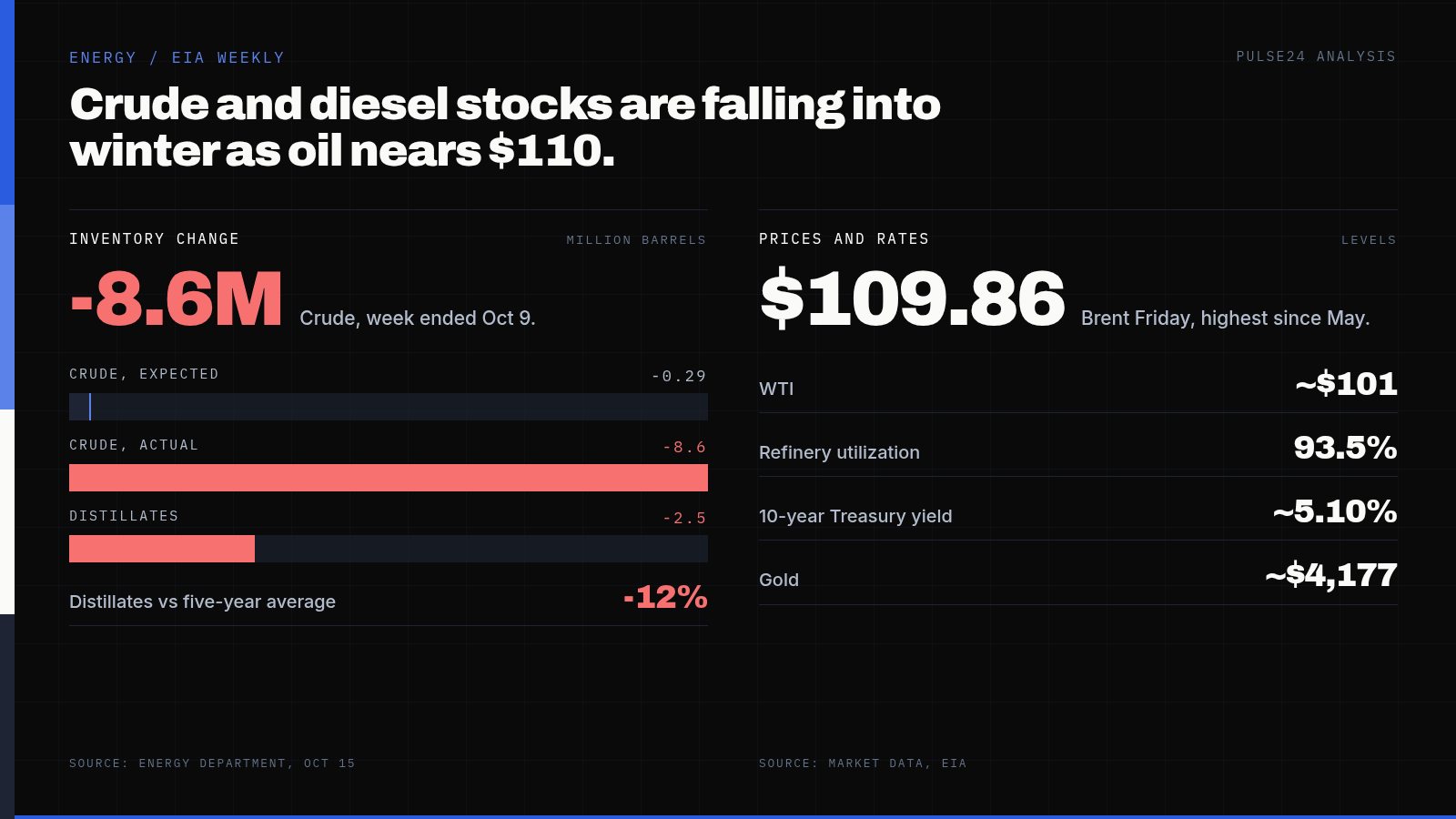
Crude oil inventories in the United States fell by 8.6 million barrels in the week ending October 9, the Energy Department reported on October 15, in data delayed a day by the prior week's federal government closure. Wall Street had penciled in a draw of about 288,000 barrels. The actual figure came in close to 30 times that size.
Commercial stocks now stand at 415.6 million barrels, 3% below the five-year average for this point in the calendar. Brent crude, which had been grinding higher through most of October, jumped 3.7% on the inventory news to touch $109.86 a barrel on Friday, its highest level since May. It eased back to roughly $108.81 by Monday morning. WTI followed a similar path, climbing to $101.41 before slipping to around $101.
What Changed
The crude number draws the headlines, but the more telling figures sit in the distillate column. Diesel and heating oil stocks fell 2.5 million barrels last week and now sit 12% below their five-year seasonal average, a gap opening right as refiners usually start building heating fuel supply ahead of winter. Gasoline stocks actually rose 3.5 million barrels, yet even gasoline remains 4% below its own seasonal norm.
Refiners aren't sitting idle. Utilization climbed to 93.5% of capacity last week, with crude inputs averaging 16.6 million barrels a day, up 135,000 barrels a day from the week before. Crude imports fell 791,000 barrels a day to 6.0 million barrels a day, pulling the four-week average down to 6.1 million barrels a day. Running refineries near full tilt still hasn't closed the distillate gap.
Shipping-lane tensions in the Middle East have added a risk premium to crude prices this month too, and that backdrop helps explain why traders reacted so sharply to Friday's inventory number. A geopolitical premium can fade within a single news cycle, though. A seasonal distillate shortfall, arriving just as diesel and heating oil demand typically climbs, tends to stick around longer.
Why It Matters
Energy costs were already doing heavy lifting in September's wholesale inflation reading, the hottest since 2022, and a crude market holding near four-month highs doesn't make October's number look any friendlier. The 10-year Treasury yield rose to about 5.10% last week, pulled up in part by that same energy-driven inflation math.
Gold didn't get the usual lift from any of this. Spot gold drifted to around $4,177 an ounce Monday morning, a level still roughly 25% below the record near $5,590 an ounce set in late January 2026, and down about 0.7% for the week that just ended. Higher yields tend to outweigh inflation worries for a metal that pays no interest, and yields won that tug of war this time. Fed Chair Kevin Warsh's comments last week pushed October rate hike odds down to around 15%, but December odds remain elevated, and a tighter oil market gives rate hawks on the committee one more data point to cite.
What to Watch Next
The next EIA report, due Wednesday, will show whether last week's draw was a one-time blip tied to refinery timing or the start of a sustained pattern. A second large draw would harden the case that U.S. supply is genuinely tightening into winter. A rebound would suggest traders overreacted to a single data point.
Also worth tracking: whether refiners can narrow the distillate gap before cold weather demand kicks in, and whether crude's climb toward $110 shows up in October's inflation reports the way September's did. The Fed is in its quiet period ahead of the October 27 to 28 meeting, so the next real signal on how policymakers are reading all of this won't arrive until the statement itself.
The Pulse24 Take
It's tempting to read oil's run toward $110 purely as a geopolitical story, and the shipping-lane risk premium is real. The inventory data point to a quieter, more durable explanation sitting underneath it, though: refiners running near 93.5% of capacity still can't keep distillate stocks from falling further behind a five-year average they're already missing by double digits. That points to a supply constraint building in the background, one that a calmer week in shipping lanes wouldn't fix on its own.
None of this locks in a December hike. Inflation data, labor reports, and two more weeks of oil prices all get a vote before the Fed meets again. What it does mean is that anyone betting on energy prices rolling over to cool inflation this winter is now betting against a distillate market that's already short heading into the season that needs supply most.
How we read the data
Curious how we get from raw data to a take like this? Our Trader's Toolkit walks through the tools we lean on.
Explore the Toolkit