Pulse24 Original
The Yen's 40-Year Low Just Forced the BOJ's Hand
July 23, 2026
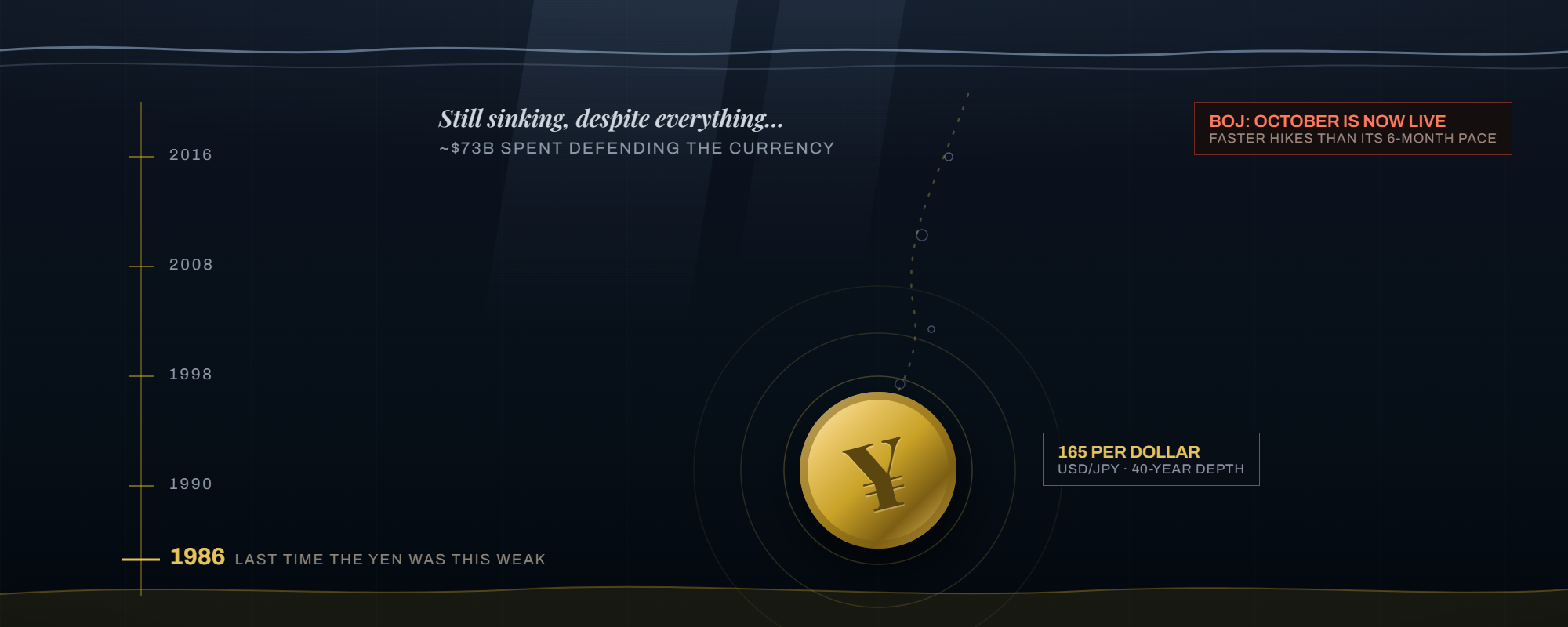
The yen just hit a 40-year low against the dollar. Bloomberg sources say the BOJ is now open to hiking rates faster than its usual six-month pace, and that quiet shift matters more than the currency print itself.
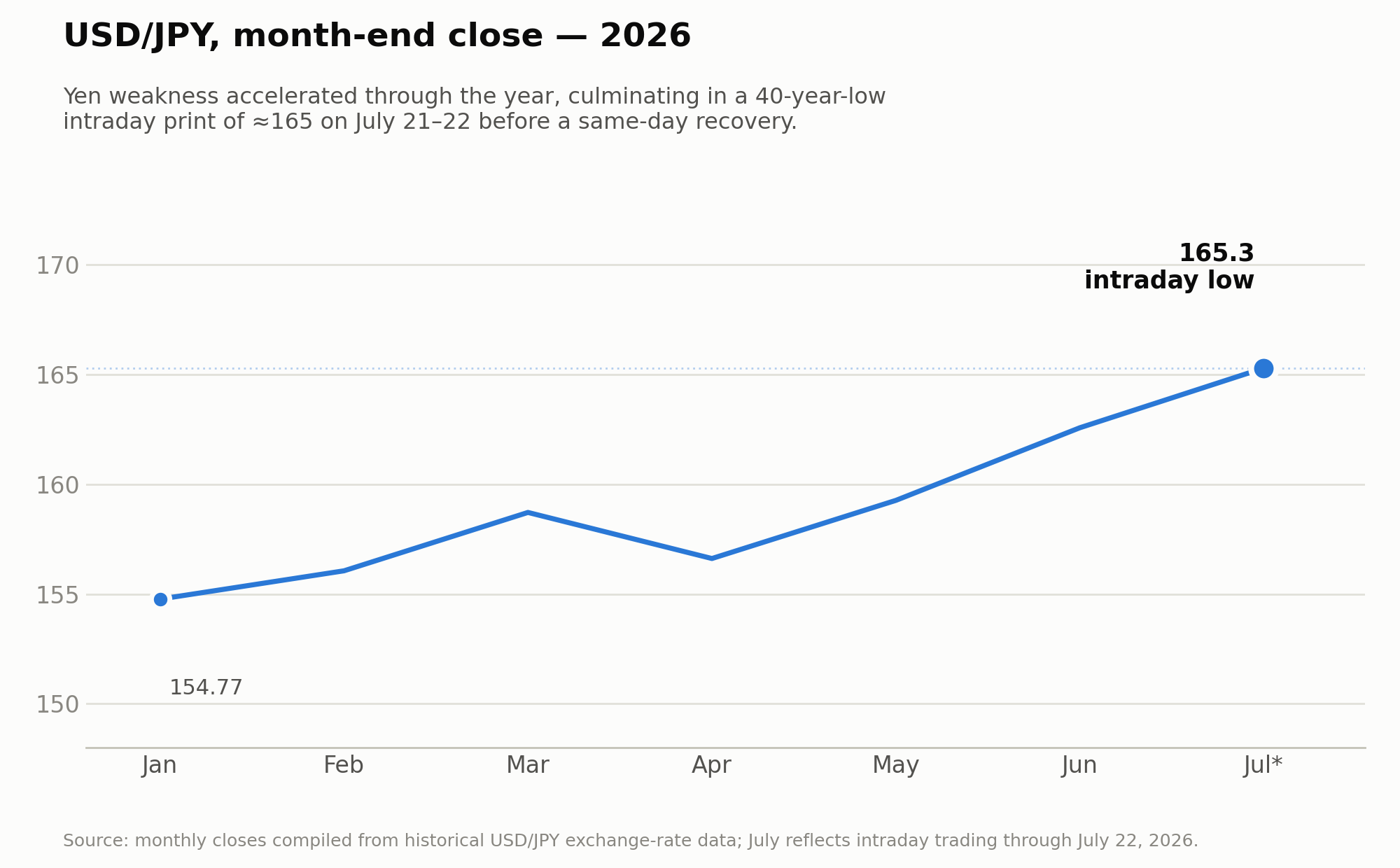
For a few hours around midday in Tokyo on July 21, the yen traded weaker than at any point in the past 40 years, then clawed back roughly a yen and a half by the close, one of the sharpest single-session reversals it has produced in weeks, as options desks that had been short the currency scrambled to cover.
The move through 165 wasn't the story. It was the price markets had to pay to finally notice one.
Japan has already spent an estimated $73 billion this year defending the currency directly. Inflation has run above the Bank of Japan's 2 percent target for months on food, energy, and logistics costs, and the policy rate sits at 1 percent, a 31-year high reached through two hikes since the BOJ exited negative rates in 2024. On July 22, Bloomberg reported something officials hadn't said out loud before: they're now willing to raise rates faster than the roughly six-month cadence they've kept since 2024. That's the part worth reading twice. The 165 print just made it front-page news.
Why the BOJ Is Suddenly Open to Moving Faster
Until this week, the BOJ ran on a metronome: hike, wait about six months, reassess, hike again if the data held up. Markets had priced the next move for December.
Sources told Bloomberg that officials increasingly view persistent yen weakness as an inflation risk in its own right, not just a symptom of inflation that's already arrived. Options and swaps markets repriced within hours. October is now a live meeting in a way it wasn't a week ago.
July 31 itself likely won't produce a surprise. Most desks still expect a hold. What's shifted is quieter than any single decision: the reaction function underneath it, the thing that determines how the next six months of data gets read, not just this one meeting.
How a Faster BOJ Could Ripple Through Global Markets
For more than a decade, Japan quietly subsidized risk-taking across the world. That subsidy is getting more expensive.
The mechanism is the yen carry trade: borrow in yen near zero, invest the proceeds in higher-yielding assets abroad, Treasuries, global equities, even the debt-financed AI infrastructure buildout, and pocket the spread. It has funded a meaningful share of global risk-taking for years, precisely because Japanese rates stayed near zero long after everyone else's didn't.
A faster BOJ changes the math on every one of those funded positions. Japanese institutional investors, among the largest foreign holders of US Treasuries, gain a stronger incentive to bring capital home as JGB yields climb and the hedging cost of holding dollar assets gets less forgiving. A much smaller version of this same mechanism briefly seized global markets in August 2024. Carry trades rarely end because they're unprofitable. They end because the funding stops being cheap enough to ignore.
Every extra yen Japan loses against the dollar quietly taxes every barrel of imported oil, and oil itself has been firmer this year on Middle East tensions. It's the same inflation-through-energy channel that's been moving gold and silver prices all year: a hawkish central bank, a firmer dollar, and higher real yields, squeezing anything priced against them. The BOJ story and the precious-metals story are two readings off the same pressure gauge.
What the July 31 BOJ Meeting Could Change
The decision itself probably won't move much. The language will. Watch for any shift away from the six-month cadence in the statement or in Governor Kazuo Ueda's press conference, and whether the board's inflation risk assessment moves from balanced to skewed to the upside. Either would all but confirm what October pricing already suggests markets expect.
Three other things worth tracking in parallel: the pace of JGB yields, since a faster climb is what actually pulls Japanese capital home; whether the Ministry of Finance steps back into the currency market directly, a sign officials think rate policy alone isn't working fast enough; and how the US 30-year Treasury yield, already back above 5 percent, behaves if Japanese buying support gets less dependable at the margin.
The Pulse24 Take
The number everyone quoted this week, 165, will be close to irrelevant twelve months from now. Currencies overshoot and snap back constantly, and this one already has.
What matters is that a central bank that spent a decade being the most patient, most predictable institution in global markets just told everyone, deliberately, that its patience has a limit. Central banks rarely tell markets exactly when they're about to change direction. The BOJ just came unusually close.
The BOJ isn't panicking. It's recalibrating in public, which is the more disciplined way to handle this kind of pressure. But recalibration from the world's largest source of ultra-cheap funding doesn't stay contained to Japan. It shows up in Treasury demand, in how carry-funded positions get sized globally, and in how every dollar-denominated asset behaves once that funding gets marginally more expensive.
Watch the words on July 31, not the decision. In a system this connected, the sentence a central banker chooses not to say out loud is usually the one that moves markets six weeks later.
How we read the data
Curious how we get from raw data to a take like this? Our Trader's Toolkit walks through the tools we lean on.
Explore the Toolkit