Pulse24 Original
The 10 Most Influential Directors of the 21st Century, Ranked by Cultural Impact
July 31, 2026
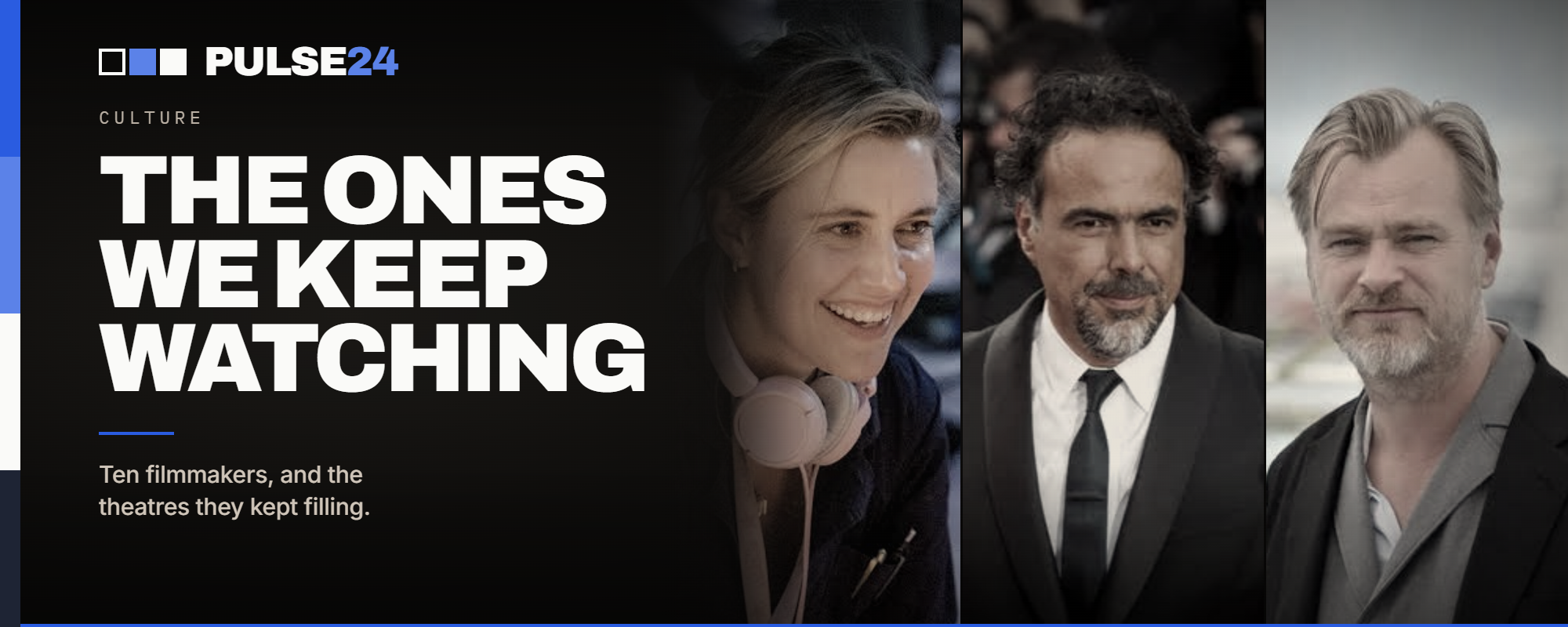
Twenty-three years of box office records, historic Oscar wins, and directors who bet everything on one uncompromising vision, ranked by how much they actually changed what cinema could be. From Parasite's language-barrier speech to Oppenheimer's improbable box office duel with a movie about a doll, these are the ten filmmakers who defined the century so far.
Twenty-three years ago, a fantasy trilogy every studio in Hollywood had once passed on as unfilmable swept all eleven Oscars it was nominated for in a single night, a clean sweep no film had ever managed before. A decade later, a horror film that cost less than a Manhattan apartment became the first movie not in English to win Best Picture, with a director standing at the podium telling the room that once you clear "the one-inch-tall barrier of subtitles," an entire world of filmmaking opens up. In the summer of 2023, a three-hour biopic about a physicist who built a weapon he spent the rest of his life regretting went head to head at the box office with a movie about a plastic doll, and both won, together, on the same weekend, proving that audiences hadn't actually given up on the theater. They'd just been waiting for someone to give them a reason to go back.
This is a list of the ten people most responsible for moments like those, the directors who didn't just make films between 2000 and today. They changed what a film was allowed to look like, who got to make one, and who got to see themselves inside one. The ranking below weighs three things in combination: box office numbers large enough to reshape what a studio would greenlight next, awards recognition from an industry that doesn't hand out its top prizes easily, and cultural influence that outlasted any single opening weekend. A few legendary names didn't make the cut, not because the work isn't extraordinary, but because this list is specifically about the 21st century. You'll find several of them, along with a handful of genuine close calls, in the notable mentions section below.
10. Greta Gerwig
A movie about a plastic doll crossed $1.448 billion worldwide in 2023, and in doing so, Greta Gerwig became the first solo female director in film history to clear a billion dollars at the box office. Barbie wasn't just commercially massive. It was Warner Bros.' highest-grossing release ever, unadjusted, and the highest-grossing live-action comedy of all time, built on a script Gerwig co-wrote with Noah Baumbach that smuggled a genuine argument about identity and expectation inside a candy-colored production design.
Gerwig had already made Academy history once before Barbie, becoming only the fifth woman ever nominated for Best Director for 2017's Lady Bird. Little Women followed in 2019 with six nominations and a director snub that critics called out at the time. Barbie earned eight nominations of its own in 2024, and Gerwig was left off the Best Director list again, an irony so precise that half of Hollywood's trade press wrote the same headline within hours of the announcement. The film had spent two hours arguing that women get written out of their own stories. The Academy proved the thesis for them.
9. Kathryn Bigelow
The Hurt Locker made just $17 million domestically, making it, to this day, the lowest-grossing Best Picture winner in Oscar history at the U.S. box office. It didn't matter. The film won six Oscars at the 2010 ceremony, including Best Director, and Kathryn Bigelow became the first woman in the Academy's history, across more than eighty years of ceremonies, to win it.
She beat her ex-husband to do it. James Cameron's Avatar was the other film in the room that night, a movie that would go on to become the highest-grossing release of all time, and Bigelow's small, tense, unglamorous war film took the directing prize anyway. She didn't just become the first woman to win Best Director. She quietly moved the argument from whether women could direct prestige, unglamorous, male-coded films, to why it had taken the Academy eighty-two years to say so out loud. It would take until 2021, and Chloé Zhao for Nomadland, for a second woman to win.
8. Hayao Miyazaki
Spirited Away opened in 2001 and became Japan's highest-grossing film of all time, a box office record it held for nineteen years. In 2003, it won Best Animated Feature at the Oscars, the first hand-drawn, non-English-language film ever to take the category, a feat that stood entirely alone for two decades until Miyazaki did it again.
He did it again in 2024. The Boy and the Heron, the most expensive film ever made in Japan, opened at number one in North America, the first Studio Ghibli film ever to do it, and won Miyazaki his second competitive Oscar in the category at the age of 83. John Lasseter has said publicly, more than once, that Miyazaki's work reshaped what Pixar believed animation could carry emotionally. An entire generation of American animators grew up being told to study his films frame by frame, and did.
7. James Cameron
Avatar surpassed Titanic to become the highest-grossing film ever made in January 2010, and with the exception of a brief eight months in 2019 when Avengers: Endgame overtook it, James Cameron has held that record continuously since. Avatar: The Way of Water added $2.334 billion of its own in 2022, currently the third-highest-grossing film ever made, and Avatar: Fire and Ash crossed a billion dollars of its own within weeks of its 2025 release. Cameron currently directs the number one and number three highest-grossing films in history, at the same time, a feat no other filmmaker has come close to matching.
The numbers alone undersell what he changed. Avatar's 2009 release drove the mass installation of digital 3D and RealD projection systems in theaters worldwide, a genuine infrastructure shift that reshaped how movies were built and exhibited for the following decade. Most directors make films that fit inside the industry as it exists. Cameron has spent twenty-five years building the industry around the film he wanted to make next.
None of that comes from range, the way it does for several other names on this list. It comes from one franchise, three installments, each one landing bigger than the last. That is a narrower case than Bong's or Coogler's. It is also large enough, and singular enough, in scale and in the industry shift it triggered, that nobody else on this list, or arguably in film history, has matched it.
6. Alejandro González Iñárritu
Birdman won Best Picture and Best Director in 2015. The following year, Iñárritu won Best Director again for The Revenant, a film shot almost entirely in natural light in brutal, freezing conditions that famously wore down its own crew. Back-to-back Best Director wins have happened only a handful of times in Academy history, a list that includes John Ford and Joseph L. Mankiewicz and almost nobody made in the last sixty years.
The Revenant went on to gross $533 million worldwide and finally won Leonardo DiCaprio the Oscar he'd been chasing for two decades, a moment so anticipated it briefly became bigger news than the film itself. Iñárritu's two-year stretch remains one of the tightest, most demanding runs of directing recognition this century has produced, back to back, no gap, no cooldown.
5. Ang Lee
Ang Lee has won Best Director twice in the 21st century, in 2006 for Brokeback Mountain and again in 2013 for Life of Pi, and in both cases the Academy declined to give his film Best Picture, a strange, specific distinction that belongs almost entirely to him. Brokeback Mountain's loss to Crash remains one of the most contested Oscar results in modern history, one that a 2015 members' revote of controversial Academy decisions ultimately overturned in Brokeback's favor, years too late to change the record books.
Life of Pi shouldn't have worked as a film at all, a boy and a tiger on a lifeboat for most of its runtime, and it grossed $609 million anyway, becoming Lee's biggest commercial success on the strength of visual effects work that felt, for the first time, genuinely photographic rather than animated. Two Best Director Oscars for two films that share almost nothing in common, a quiet drama about repression and a visual effects spectacle about faith, is a range very few directors in film history have matched.
4. Peter Jackson
The Lord of the Rings: The Return of the King was nominated for eleven Oscars in 2004 and won all eleven, a clean sweep that ties the record for most Oscars won by a single film and stands, on its own, as the largest sweep in Academy history relative to nominations received. It was the first fantasy film ever to win Best Picture, a genre the Academy had spent seventy-five years treating as beneath serious consideration.
The film crossed $1.1 billion worldwide, and the trilogy behind it did something that mattered more than any single box office number: it proved a fantasy epic could be prestige cinema, awards cinema, and a billion-dollar tentpole at the same time, all three at once, without compromising on any of them. Every fantasy franchise that came after, television included, is working in the space Jackson's trilogy opened up. Jackson himself never matched it again. The Hobbit trilogy that followed was commercially massive and critically the weaker cousin of everything that came before it, a reminder that what happened in 2004 was a peak, not a plateau, and that almost nobody else has come close to it either.
3. Ryan Coogler
Black Panther crossed $1.35 billion in 2018 and became the first superhero film ever nominated for Best Picture, the first Marvel movie to win an Oscar of any kind, and at the time, the highest-grossing film ever directed by a Black filmmaker. Wakanda Forever followed in 2022 and cleared $800 million of its own, a nearly impossible act of continuity given the loss the film was built around.
Few directors move this comfortably between the two hardest things to pull off in the industry: carrying a franchise everyone is already watching, and making something nobody asked for. Coogler did both. In 2025, Sinners, an original vampire horror film with no built-in audience and no existing intellectual property behind it, grossed $370.2 million on a budget under $100 million and earned an A CinemaScore, the highest a horror film had received in 35 years. At the 2026 ceremony it went on to earn sixteen Oscar nominations, more than any film in Academy history, surpassing the previous record of fourteen held by Titanic, All About Eve, and La La Land. Coogler picked up his first personal Best Director nomination in the process, losing to Paul Thomas Anderson, and won Best Original Screenplay instead, his first competitive Oscar. Cinematographer Autumn Durald Arkapaw won Best Cinematography for the film, becoming the first woman, and the first Black person, ever to win the category. Coogler had already proven he could carry the biggest franchise in the world. Sinners proved he didn't need one.
2. Bong Joon-ho
Parasite won the Palme d'Or at Cannes in 2019 on a unanimous jury vote, the first time that had happened since 2013, and became the first Korean film to ever win it. Eight months later it won four Oscars, including Best Picture, the first non-English-language film in the Academy's ninety-two-year history to take the top prize, on a budget of $11.4 million that turned into a worldwide gross of $258.1 million.
At the Golden Globes that January, accepting an award for Best Foreign Language Film before the Oscar sweep had even happened, Bong told the room something that outlived the ceremony itself: "Once you overcome the one-inch-tall barrier of subtitles, you will be introduced to so many more amazing films." It became one of the most quoted lines in modern film discourse, not because it was clever, but because it was true.
Parasite's win wasn't a one-time exception the Academy quietly closed the door on afterward. Drive My Car earned a Best Picture nomination two years later. All Quiet on the Western Front followed with a Best Picture nomination and four wins the year after that. The barrier Bong described didn't just get crossed once for a highlight reel. It stayed down.
1. Christopher Nolan
Oppenheimer grossed $976.8 million worldwide in 2023, at the time the largest total any biographical film had ever earned, on a three-hour runtime, an R rating, and a plot about nuclear physics and congressional hearings that had no business drawing a crowd that size. It won seven Oscars, including Best Picture and, at last, Best Director for Christopher Nolan, twenty-six years and eight nominations after he'd first started making films that critics and audiences treated as instant events without the Academy ever agreeing.
The Dark Knight crossed a billion dollars in 2008 and got a superhero movie taken seriously as filmmaking for the first time in the genre's history. Inception became cultural shorthand for questioning what's real, still referenced in arguments that have nothing to do with the movie itself. Dunkirk remains the highest-grossing World War II film ever made by nominal worldwide gross. Nolan's films have grossed more than $6 billion combined, each one built on the same bet, that audiences will still show up for original, difficult, uncompromising work if someone refuses to apologize for the difficulty. In 2023 he did something even his biggest fans hadn't quite managed. He made the theater feel essential again, on a summer weekend, against a movie about a doll, and somehow both of them won.
Notable Mentions
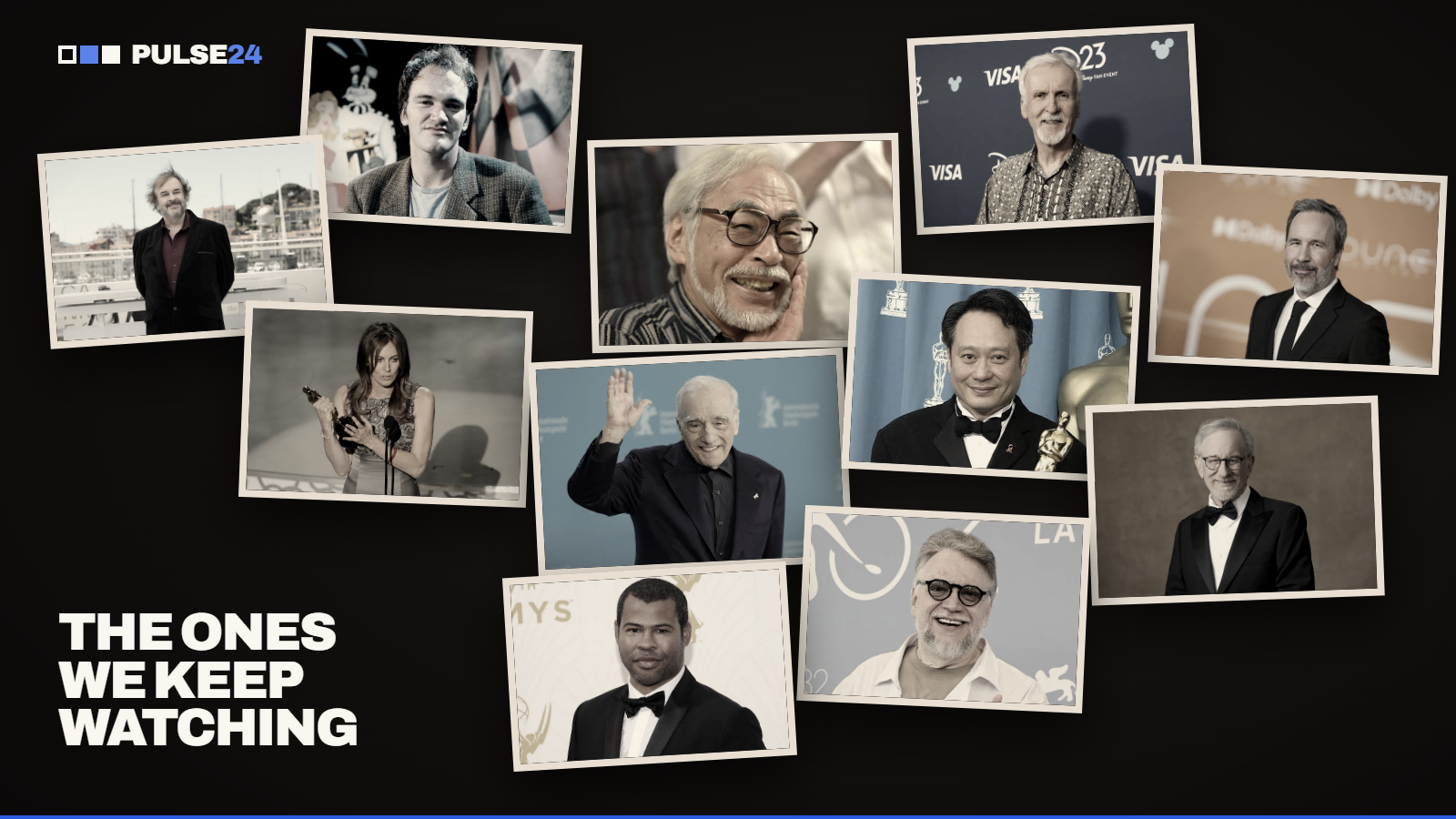
A handful of directors came agonizingly close to the top ten, and a few legends were left off entirely because their defining work belongs to the century before this one.
• Martin Scorsese remains one of the most influential filmmakers alive, but his 21st-century Oscar record is thinner than his reputation suggests: one Best Director win, for 2006's The Departed, against three separate films that earned ten or more nominations and walked away with nothing.
• Quentin Tarantino reshaped how a generation of filmmakers thinks about dialogue and structure, but has never won a Best Director Oscar, and his last Palme d'Or belongs to the 1990s.
• Denis Villeneuve proved Dune could work as a blockbuster after decades of failed attempts, and Dune: Part Two grossed $715 million in 2024, but he has never personally received a Best Director nomination.
• Guillermo del Toro holds one of the strangest, most complete awards résumés of anyone on this list, Best Picture and Best Director for The Shape of Water, Best Animated Feature for Pinocchio, but his box office numbers never approached blockbuster scale. His 2025 passion project Frankenstein, bigger and more personal than Shape of Water, earned nine Oscar nominations and won only in the craft categories, shut out of Picture, Director, and Screenplay, a sign his one big win may be a peak rather than a pattern.
• Jordan Peele turned Get Out into the highest-grossing original screenplay debut in Hollywood history and became the first Black writer ever to win the Best Original Screenplay Oscar, on a filmography that is still only three features deep.
• Damien Chazelle became the youngest Best Director winner in Oscar history at 32 for La La Land, a film also permanently attached to the most notorious envelope mix-up the ceremony has ever produced.
• David Fincher has three Best Director nominations and zero wins, including a widely litigated loss for The Social Network, a film that Mark Zuckerberg himself has said inspired people to start companies of their own.
• Steven Spielberg kept earning nominations across four straight decades, but his defining 21st-century work sits in the shadow of everything he built before 2000.
The Pulse24 Take
Look at what actually connects these ten names, and it isn't genre, or nationality, or even box office scale. None of them became influential by following where the industry was already going. They pulled the industry toward them. Bong Joon-ho could have made an English-language film to widen Parasite's audience. He didn't. Coogler could have followed Black Panther's success with another franchise entry instead of an original vampire film with no built-in audience. He made Sinners instead. Nolan could have made Oppenheimer a streaming release, or trimmed it to two hours, or shot it in a format that didn't demand the biggest screen in the building. He refused every time.
That refusal is worth naming plainly, because it's increasingly rare, and it's exactly what an era of infinite content and algorithmic recommendation can't manufacture on its own. Influence isn't measured by opening weekends. It's measured by how many filmmakers spend the next twenty years trying to imitate you.
How we read the data
Curious how we get from raw data to a take like this? Our Trader's Toolkit walks through the tools we lean on.
Explore the Toolkit