Pulse24 Original
Tesla Delivered 486,532 Vehicles Last Quarter, 5% Above Estimates. Almost All the Upside Came From Europe.
October 3, 2026
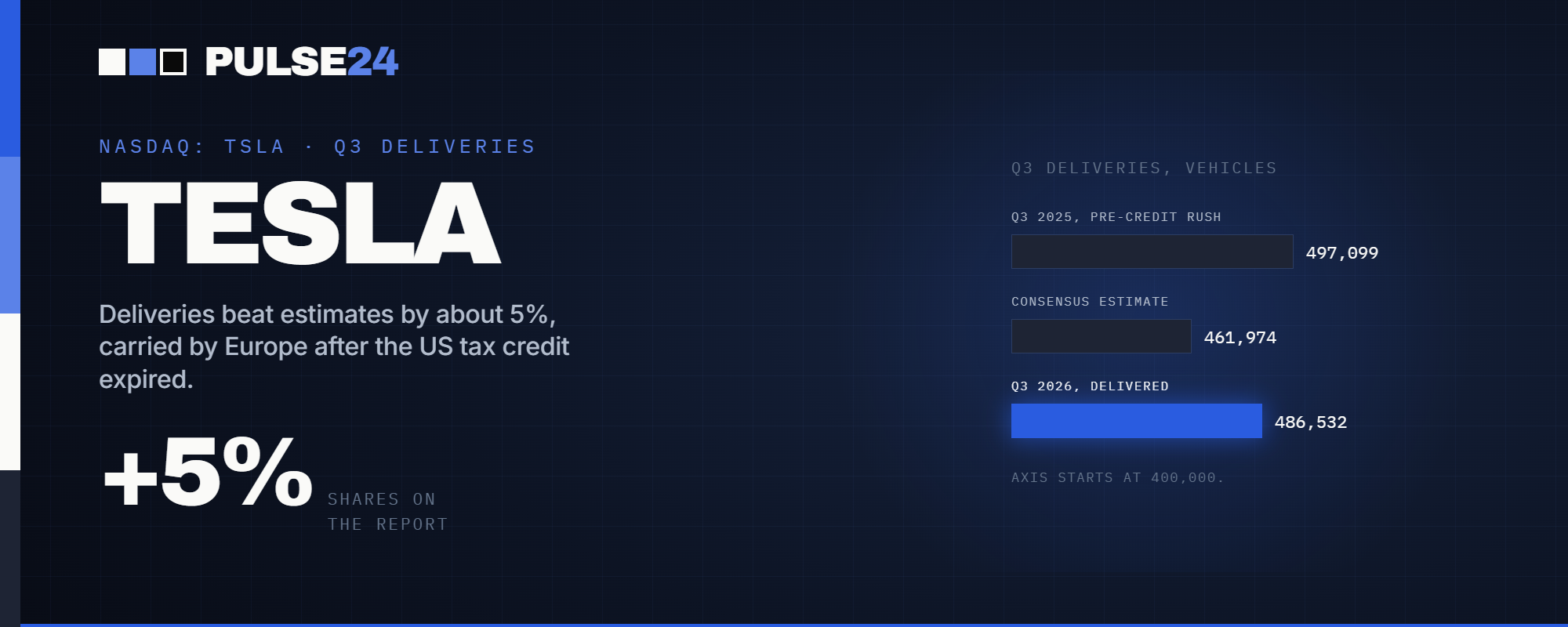
Tesla delivered 486,532 vehicles last quarter, about 5% above Wall Street's estimate, and the stock added roughly 5% on the news. Most of that strength came from Europe, where registrations in Portugal and France both surged, while US demand cooled now that the federal EV tax credit has expired.
Tesla sold 486,532 vehicles between July and September, a figure that beat Wall Street's consensus estimate by nearly 24,600 units, or about 5%. The same number also came in 2.1% below the 497,099 vehicles the company delivered a year earlier. Both numbers are correct, and the distance between them is the story.
What Changed
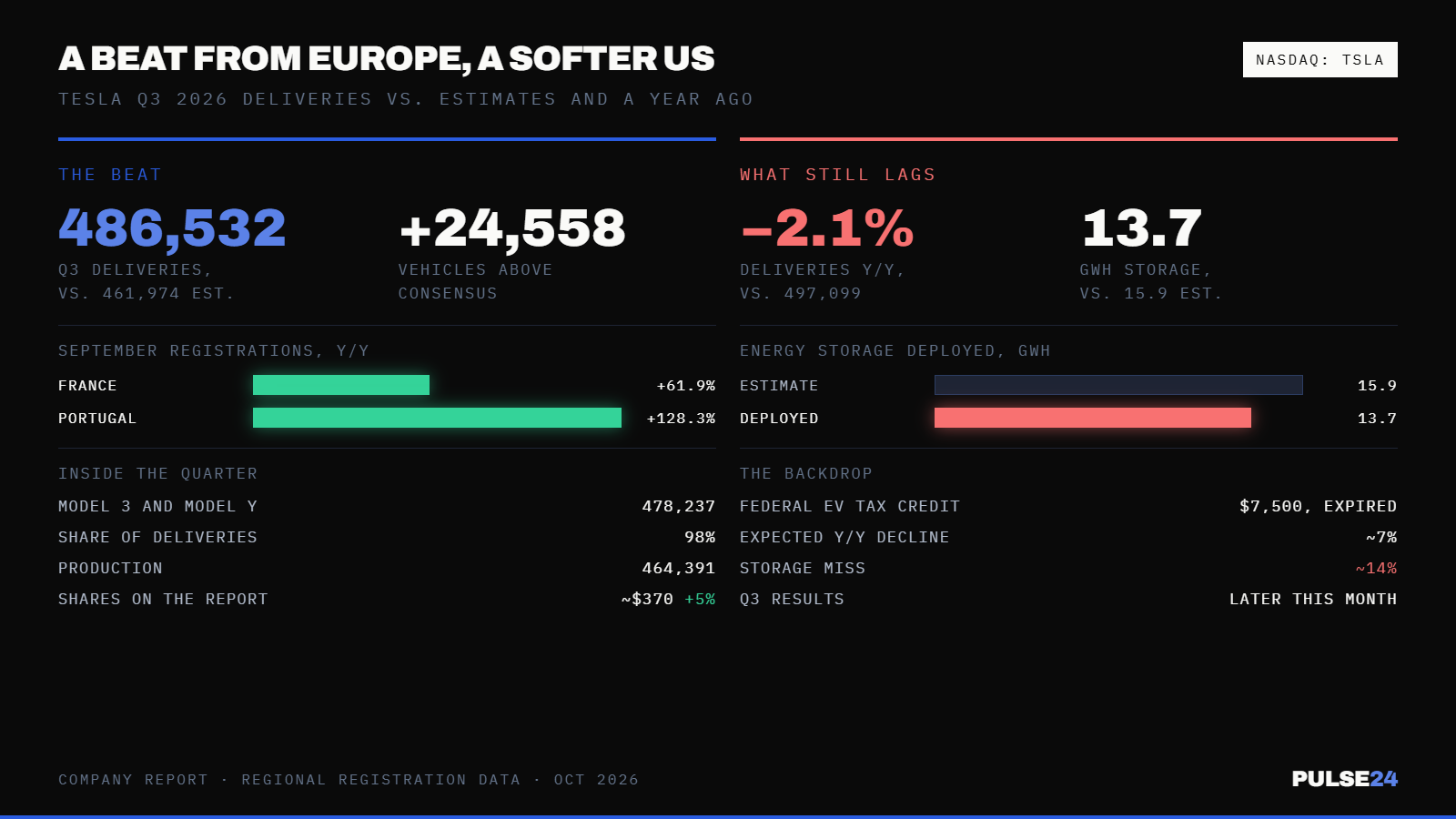
Tesla's own compiled consensus ahead of Friday's report sat at 461,974 vehicles. The company beat it by a wide enough margin that shares added about 5% on the day, trading near $370. Production for the quarter came in at 464,391 vehicles, meaning Tesla delivered more cars than it built, pulling from existing inventory to close the gap.
Model 3 and Model Y accounted for 478,237 of the deliveries, or 98% of the total. The energy storage business told a different story: Tesla deployed 13.7 gigawatt-hours of batteries, short of the roughly 15.9 GWh analysts had projected, a miss of nearly 14%.
Where the upside came from matters as much as the beat itself. The $7,500 federal EV tax credit expired at the end of September, removing a purchase incentive that had pulled a wave of buyers into dealerships a year earlier and inflated the Q3 2025 comparison. US demand this quarter reflected that hangover. Europe did not follow the same pattern. Registrations in Portugal jumped 128.3% in September from a year earlier, and France rose 61.9%, according to regional registration data tied to the delivery report. That strength, not a US rebound, is what carried the headline number past expectations.
Why It Matters
Deepwater Asset Management's Gene Munster framed it as a sign the "EV winter" may be thawing: deliveries fell only 2% year over year against a comparison Wall Street had expected to produce something closer to a 7% decline. A smaller-than-feared drop is not the same as growth, but for a stock priced on a return to expansion, the difference matters to investors trying to time the bottom.
The geographic split also says something about where EV demand is durable versus where it was propped up by a subsidy. European sales are running on falling interest rates and tightening emissions rules, incentives that do not disappear the moment a tax bill changes. The US market, for the first time in years, now has to generate demand without that cushion, and this quarter's numbers are the first real read on what that looks like.
None of this happened in a vacuum. The report landed on a day when the broader market was already rallying on a much weaker than expected September jobs number, which pulled Fed rate hike odds down sharply and lifted risk appetite across the board. Tesla's move was real, but it also benefited from a market already in a buying mood.
What to Watch Next
Tesla's full third quarter financial results, including revenue, automotive gross margin, and the energy storage segment's profitability, are due later this month and will show whether the delivery beat translates into pricing power or came at the cost of discounts and incentives. The energy storage miss is worth tracking too, since that business has been one of the stronger margin stories in recent quarters.
Europe's registration data into the fourth quarter will show whether September's surge holds or fades. US order rates matter equally now that the tax credit is gone for good; if American demand stays soft into year end, the EV winter thaw thesis gets a lot harder to defend.
The Pulse24 Take
A delivery beat against a lowered bar and a revenue beat against a raised one are different kinds of good news, and this quarter was closer to the first. Tesla cleared estimates that had already priced in a rough comparison, and it did so because of Europe, not because American buyers came back. That is a real result, but it is a narrower one than the headline number suggests. The next test is whether Tesla can grow demand without a subsidy doing the work, and this quarter didn't fully answer that yet.
How we read the data
Curious how we get from raw data to a take like this? Our Trader's Toolkit walks through the tools we lean on.
Explore the Toolkit