Pulse24 Original
Gold Is Trading Near $4,098 an Ounce. JPMorgan Just Cut Its Target 25%, to $4,500.
July 28, 2026
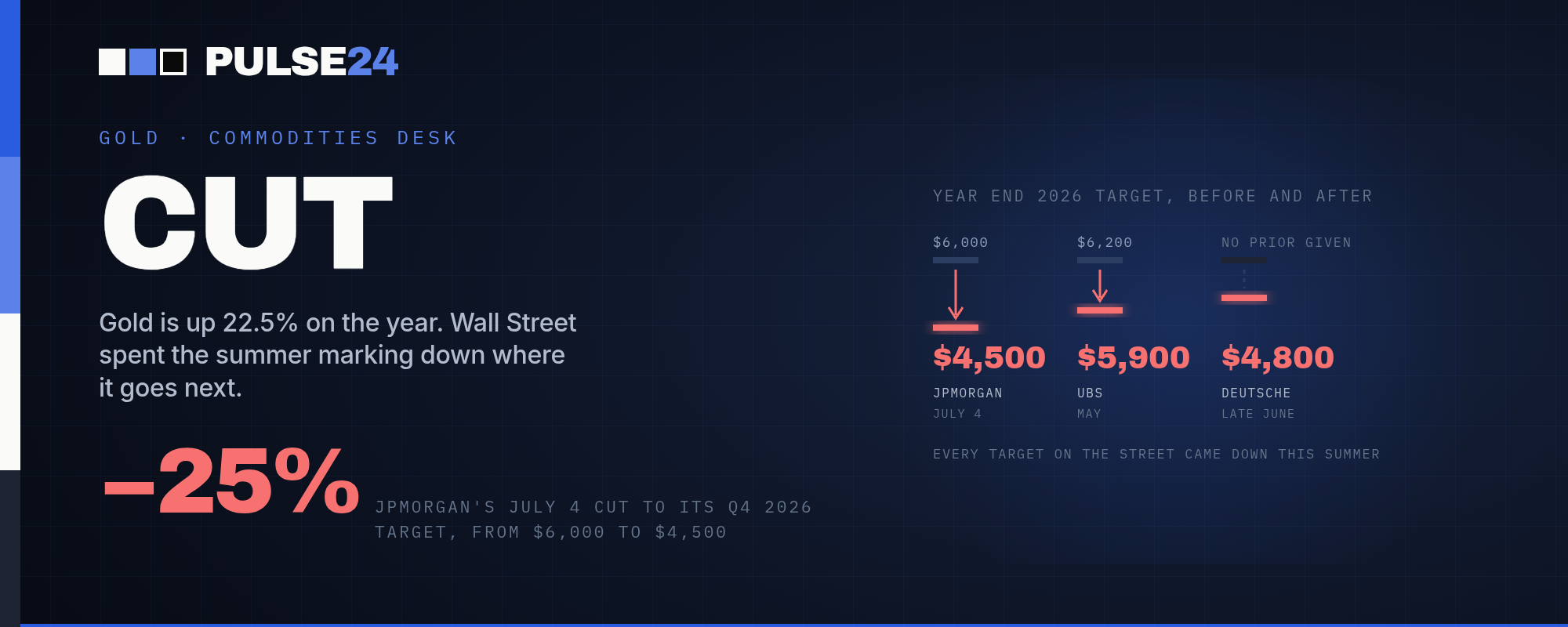
Gold is trading near $4,098 an ounce, up 22.5% over the past year, but Wall Street's price targets have been sliding all summer. JPMorgan cut its Q4 2026 forecast 25% to $4,500 on July 4, and Deutsche Bank and UBS have trimmed their own numbers too, even as central banks keep buying at a record pace.
Gold opened at $4,097.50 an ounce on Monday and touched $4,098.30 within the first hour of trading, a level that would have set a fresh record through most of 2025. A year earlier, the metal traded near $3,350. Gold is up roughly 22.5% since, even after a sharp correction earlier this month knocked it well off its highs.
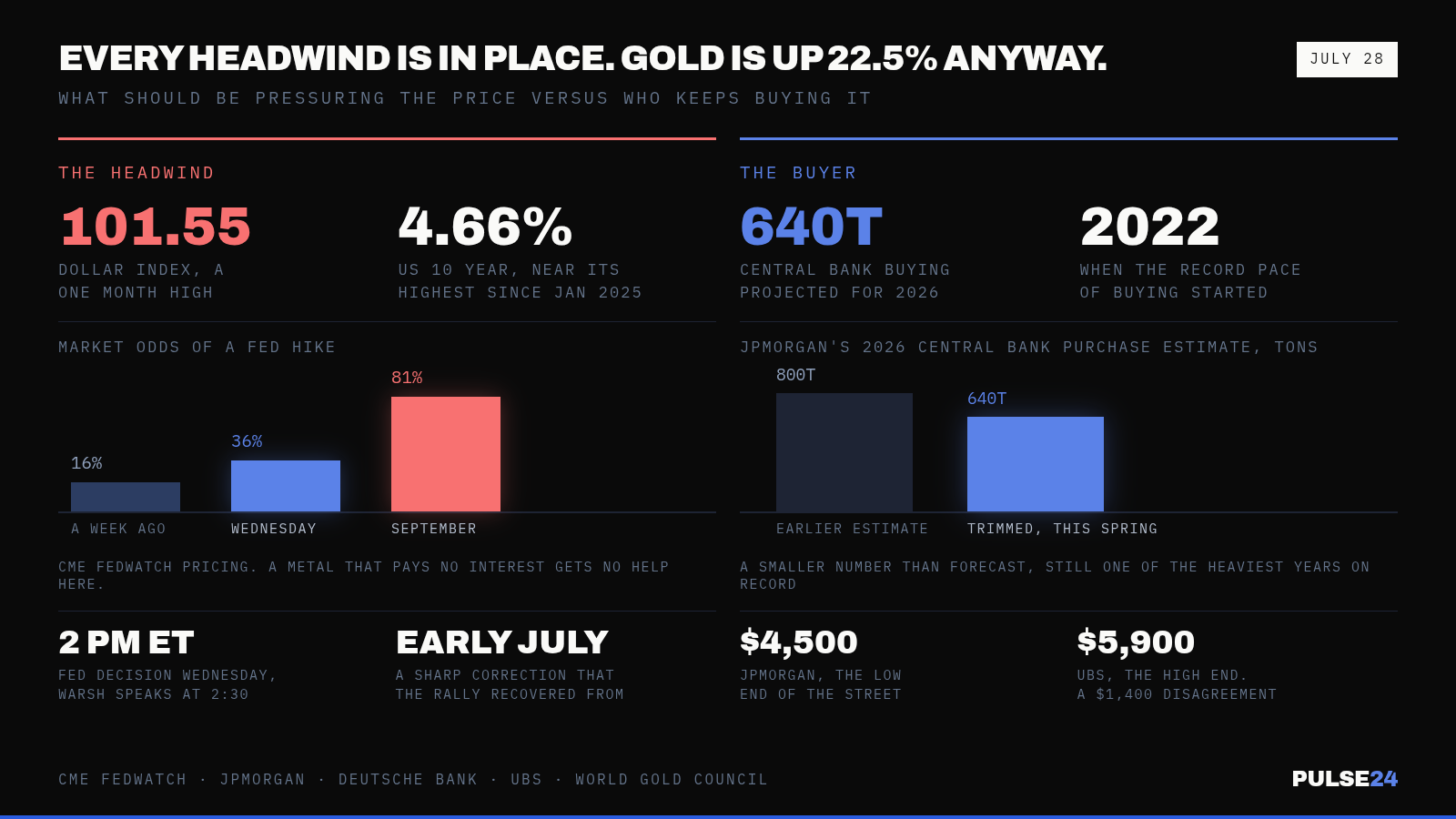
The dollar index climbed to 101.55 on Monday, its highest level in a month, as traders priced in better odds of a Federal Reserve rate hike at Wednesday's meeting. The 10-year Treasury yield sits near 4.66%, not far from its highest level since January 2025. A stronger dollar and higher yields are supposed to be gold's two biggest enemies, since the metal pays no interest and gets more expensive for holders of other currencies. That squeeze is a big part of why Wall Street's price targets have been coming down all summer.
What Changed
Gold's price targets have moved almost as much as gold itself this year. JPMorgan cut its Q4 2026 forecast by 25% on July 4, from roughly $6,000 to $4,500, and didn't replace it with a new longer-term number. Deutsche Bank followed in late June, lowering its own call to $4,300 for the third quarter and $4,800 for the fourth. UBS has moved twice, raising its target to $6,200 back in January, then resetting to $5,900 for year-end in May as the dollar and real yields firmed. None of the three now points to anything close to the $6,000-plus consensus that circulated earlier this year.
What hasn't moved as much is who's actually buying. Central banks have purchased gold at a pace unmatched in modern records since 2022, and even after JPMorgan trimmed its 2026 purchase estimate to about 640 tons this spring, down from an earlier 800-ton forecast, that would still mark one of the heavier years on record. Every bank citing softer near-term price targets, JPMorgan included, still points to that same central bank demand as the reason none of them has turned outright bearish.
Why It Matters
Gold's textbook relationship with the dollar and real yields hasn't disappeared, and this summer proved it. When the dollar firms and Treasury yields climb, the way they have since spring, a zero-yield asset like gold typically gets squeezed, and that squeeze is largely what forced JPMorgan, Deutsche Bank and UBS to lower their near-term targets. What's kept the longer-term case intact despite that pressure is the buyer sitting underneath the market. Central bank reserve managers aren't chasing quarterly returns. Many are responding to a slower, multi-year shift in how much of their reserves they want parked in dollar assets versus a metal no government can freeze, print or default on.
That kind of demand behaves differently than the retail flows or momentum trading that usually drive a rally, and it's a big part of why every bank cutting its price target this summer has stopped short of calling the structural bull case over. A 22.5% gain over the past year already looks generous next to JPMorgan's new $4,500 target for December. The more relevant number for the next year might be the roughly 640 tons JPMorgan still expects central banks to buy in 2026, because that kind of buyer tends not to reprice based on the previous week's dollar move.
What to Watch Next
The most immediate test arrives Wednesday. The Fed's policy decision lands at 2 p.m. Eastern, with Chair Kevin Warsh's press conference following at 2:30. A hike, still a minority outcome at roughly 36% probability by CME FedWatch pricing, would likely push the dollar and yields higher still and could add to the pressure that's already driven this summer's target cuts. A hold, the more likely path, keeps September in focus, where markets currently price an 81% chance of a hike instead.
Beyond Wednesday, the figures worth tracking are the ones that don't move day to day: quarterly central bank purchase data from the World Gold Council, and whether JPMorgan, Deutsche Bank and UBS keep cutting their targets or start raising them again as the year plays out. The spread between the banks is wide right now, from JPMorgan's $4,500 to UBS's $5,900, and that disagreement is itself useful information. It means the near-term path depends heavily on what the Fed does next, not on some settled Wall Street consensus.
The Pulse24 Take
The price is the easy part of this story to notice. The buyer underneath it is the part worth understanding. Retail investors tend to chase gold during crises and rotate out once the headlines fade, which is roughly what happened in mid-July, when gold failed to rally even as a geopolitical crisis intensified. Central banks have been buying continuously since 2022, through calm months and volatile ones alike, and that buying doesn't especially care what the Fed decides on Wednesday.
None of this makes gold immune to further near-term weakness. JPMorgan didn't cut its target by 25% for no reason, and a hawkish surprise from Warsh on Wednesday could easily extend that pressure. But the wide range separating JPMorgan's $4,500 from UBS's $5,900, both published within the last three months, says as much about how unsettled Wall Street's near-term view has become as it does about gold itself. The steadier story is the one underneath: central banks buying at a record pace since 2022, largely irrespective of any single week's rate decision.
How we read the data
Curious how we get from raw data to a take like this? Our Trader's Toolkit walks through the tools we lean on.
Explore the Toolkit