Pulse24 Original
Donnie Darko Made Just $517,375 in Its Original U.S. Run. Twenty-Five Years Later, It's Getting Its Widest Release Yet.
October 4, 2026
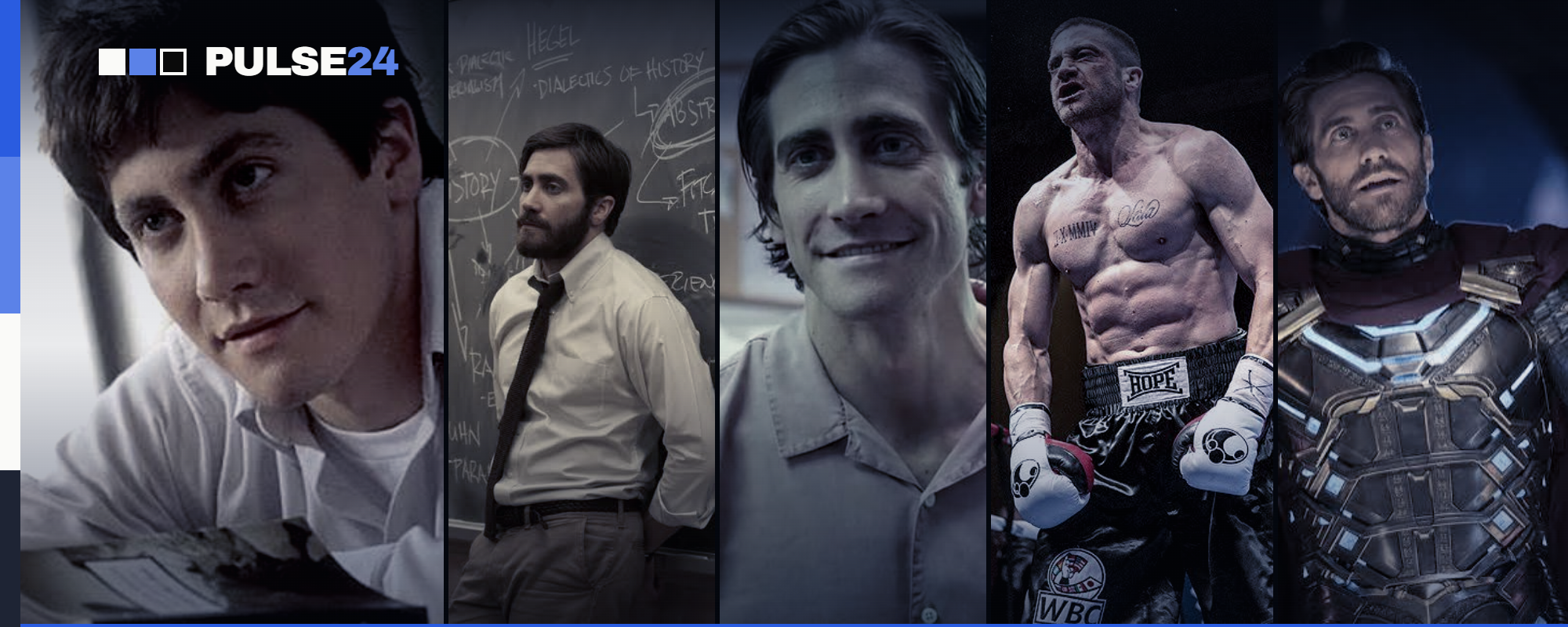
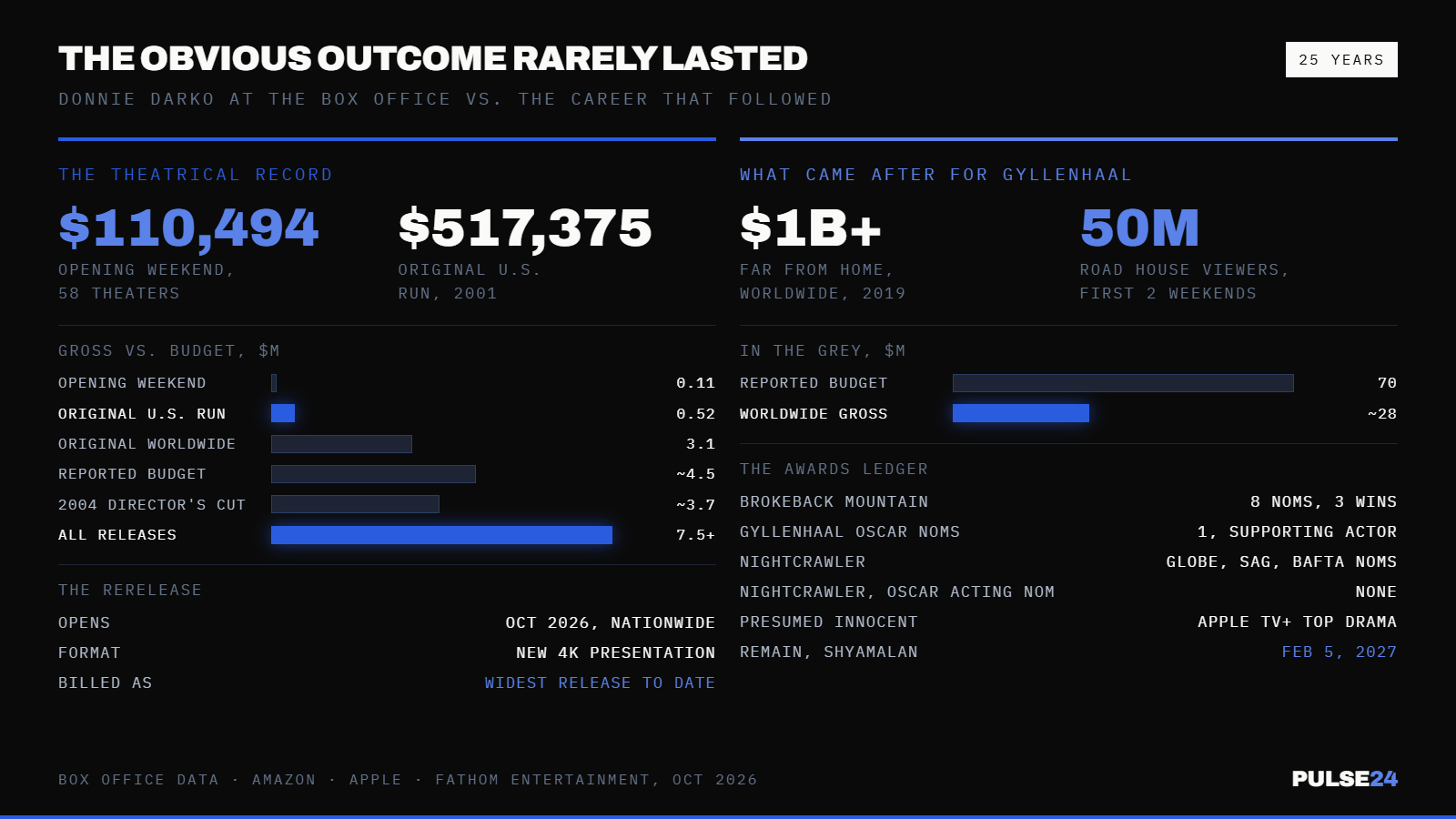
Donnie Darko opened to just $110,494 in October 2001 and finished its original U.S. theatrical run with only $517,375. Twenty-five years later, it's returning for its widest release yet, a fitting anniversary for a film that became a cult classic only after theaters had already given up on it.
Donnie Darko opened in U.S. theaters on October 26, 2001, barely six weeks after September 11 made a movie built around a falling jet engine extraordinarily difficult to market. It took in just $110,494 from 58 theaters that first weekend and finished its original domestic run with only $517,375 total. This weekend, twenty-five years later, Fathom Entertainment and Saga Arts are bringing it back nationwide in a new 4K presentation, in what's being billed as the widest theatrical release the film has ever had, with an introduction from writer-director Richard Kelly at every screening.
The original theatrical release ultimately generated only about $3.1 million worldwide against a reported production budget of roughly $4.5 million, a clear theatrical disappointment. Later rereleases, most significantly a 2004 director's cut that itself grossed about $3.7 million worldwide, eventually pushed the film's cumulative theatrical gross above $7.5 million. Still modest, but proof that the audience that skipped it in 2001 kept showing up for years afterward. The film that couldn't find an audience in theaters found one anyway. DVD, home viewing, and midnight screenings gradually turned the commercial disappointment into one of the defining cult films of its generation, while Donnie Darko became the first defining lead performance of Jake Gyllenhaal's career. Twenty-five years on, his career has followed versions of that same pattern again and again: the obvious outcome has rarely been the lasting one.
The Oscar Nomination That Followed
Four years after Donnie Darko, Brokeback Mountain gave Gyllenhaal his first Oscar nomination, for Best Supporting Actor, alongside Heath Ledger's nomination for Best Actor. The film collected eight nominations in total, more than any other film that year, and won three: Best Director, Best Adapted Screenplay, and Best Original Score. Crash won Best Picture instead, a result that remains one of the most debated choices in modern Oscar history.
The Performance the Oscars Left Out
Nine years later, Gyllenhaal lost 30 pounds for Nightcrawler, playing a sociopathic freelance cameraman chasing increasingly gruesome footage for local news. The performance earned him nominations from the Golden Globes, the Screen Actors Guild, BAFTA, and the Critics' Choice Awards. The Academy left him off its list entirely, while the film itself picked up a single nomination, for Dan Gilroy's screenplay. The following year, for Southpaw, Gyllenhaal went the opposite direction physically, adding muscle instead of shedding weight, reportedly climbing from around 147 pounds to roughly 175 over six months of training to play a boxer. Two films, two opposite physical transformations. Neither produced another Oscar nomination.
Blockbusters and Streaming Records
Gyllenhaal has also done the kind of box office math that doesn't need awards validation. Spider-Man: Far From Home, where he played the illusion-conjuring villain Mysterio, crossed $1 billion worldwide in 2019, the first Spider-Man film to do it. Streaming gave him two more hits on two different platforms five years later. Amazon said Road House, its 2024 remake with Gyllenhaal as a washed-up UFC fighter turned bouncer, drew 50 million viewers worldwide over its first two weekends, making it Amazon MGM Studios' biggest produced-film debut on Prime Video at the time. The same year, Presumed Innocent became Apple TV+'s most-watched drama, a legal thriller good enough to get renewed for a second season built around an entirely different case.
What's Next
This year pushed Gyllenhaal in three very different directions. The Bride!, directed by his sister Maggie Gyllenhaal and starring Christian Bale and Jessie Buckley, put him in a supporting role inside a divisive Frankenstein reimagining. In the Grey, Guy Ritchie's action thriller co-starring Henry Cavill and Eiza González, went the other way: a reported $70 million production that grossed only around $28 million worldwide, with reviews settling at 52% on Rotten Tomatoes. It later found renewed attention on streaming, another reminder that theatrical performance no longer gets the final word on a film's reach. Netflix has also acquired Kill Switch, an action thriller spec script by Harrison Query described by sources as somewhere between Collateral and Sicario, with Gyllenhaal attached to star. The more intriguing next step may be Remain, Shyamalan's collaboration with Gyllenhaal that was originally dated for this year and has since moved to February 5, 2027. It got a surprise screening at Beyond Fest this week, and early reactions have been strong, though how it holds up on wide release in four months is still an open question.
The Pulse24 Take
Twenty-five years later, Donnie Darko feels less like an anomaly in Jake Gyllenhaal's career than the beginning of its defining habit: the obvious outcome has rarely been the lasting one. The movie that barely survived its original theatrical run became a cult classic. Brokeback Mountain brought his only Oscar nomination to date. Nightcrawler, now one of his most celebrated performances, didn't bring another. Spider-Man: Far From Home put him inside a billion-dollar blockbuster, while Road House gave Amazon one of its biggest streaming launches. Two years later, In the Grey bombed in theaters before finding a larger audience on streaming. That's what makes this weekend's rerelease more than anniversary programming. In 2001, Donnie Darko opened in just 58 theaters and barely made $110,000 that weekend. Twenty-five years later, it's returning for the widest release of its life. The audience didn't reject the film forever. It just arrived much later than the box office did.
How we read the data
Curious how we get from raw data to a take like this? Our Trader's Toolkit walks through the tools we lean on.
Explore the Toolkit