Pulse24 Original
CinemaScore vs. Rotten Tomatoes: Why a Movie Can Get a D+ and Still Win the Box Office
October 16, 2026
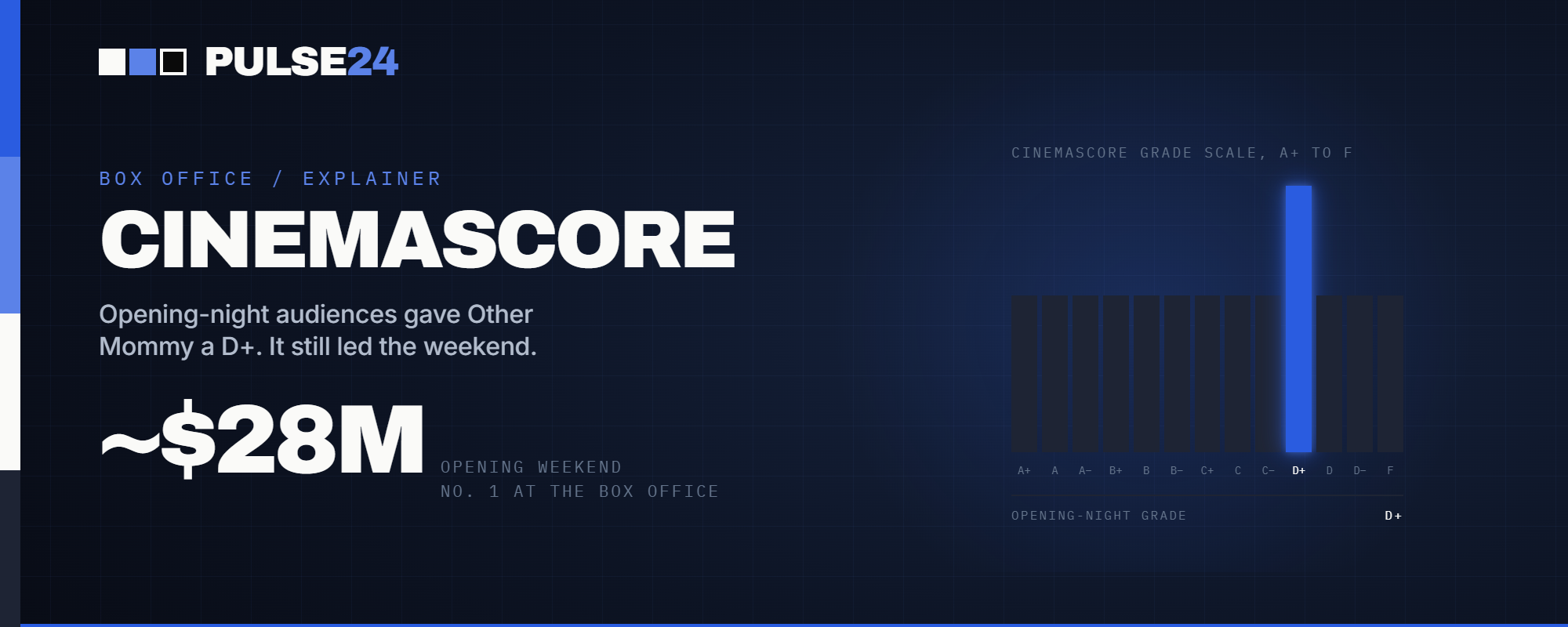
CinemaScore and Rotten Tomatoes measure different reactions, not the same quality. That's why a film like Other Mommy can open at No. 1 despite a D+ grade and a rough critical reception.
A D+ CinemaScore and a Tomatometer score in the high teens sound like a movie nobody wanted to see. Other Mommy's opening weekend ran roughly $27.5 to $28 million anyway, enough to lead the box office. Those scores moved a few points in either direction as more reviews came in, the way Tomatometer scores always do, but the underlying pattern held: a rough critical reception didn't stop people from buying tickets. CinemaScore and the Tomatometer measure different things, and that difference explains why this keeps happening, especially with horror.
CinemaScore surveys a regionally balanced sample of opening-night moviegoers at theatres across the US and Canada. After the film, they grade it from A+ to F and answer a few other questions about their reaction and interest in seeing it. The result captures how the audience that chose to show up on opening night reacted, not the verdict of professional critics, and the grade is locked in once that weekend's tally is done.
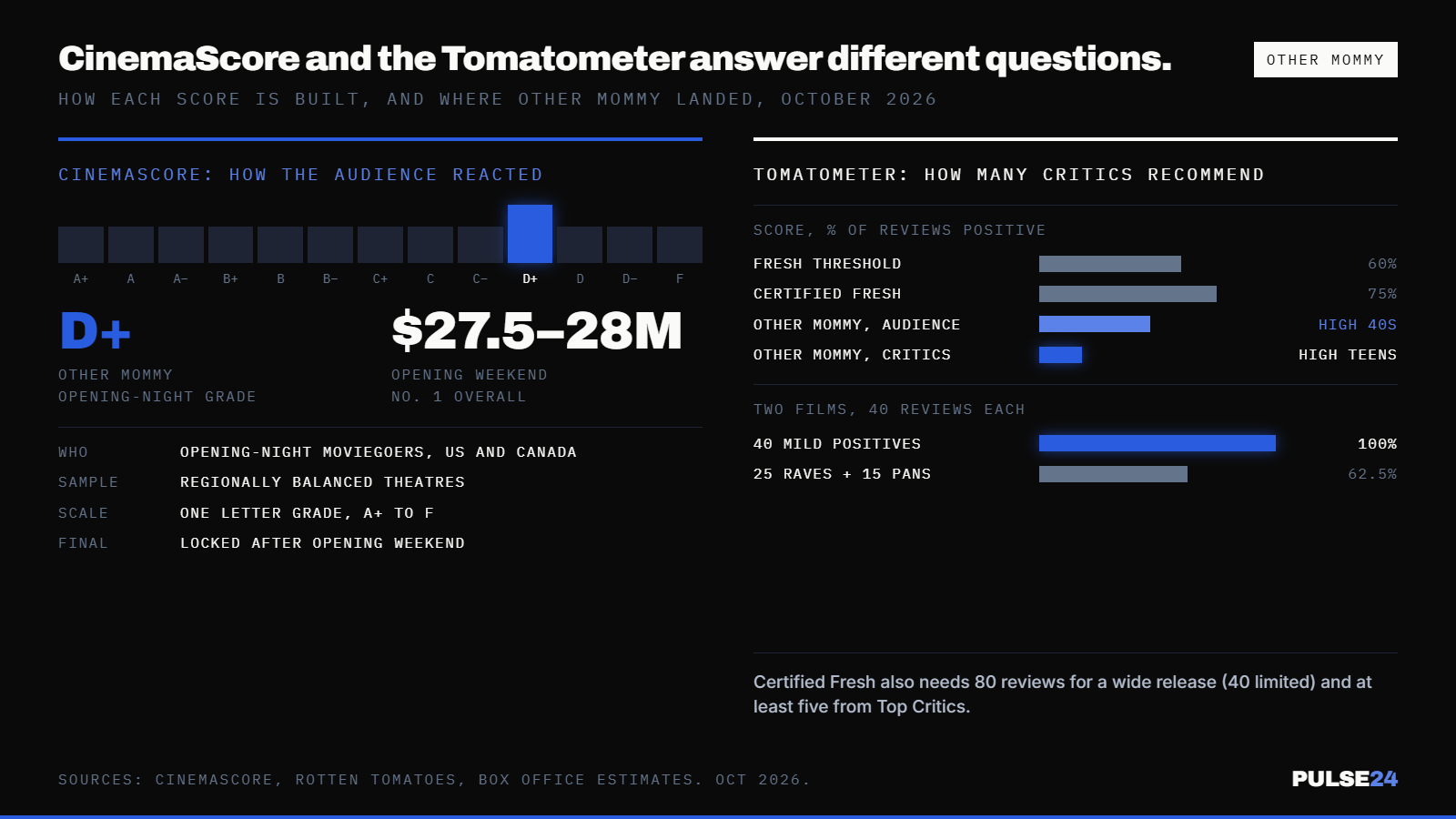
The Tomatometer measures something else entirely: the share of a film's professional critic reviews that are counted as positive. Rotten Tomatoes calls a film Fresh at 60% positive or higher and Rotten below that. Certified Fresh is a separate, harder bar: a score of at least 75%, a minimum review count (80 for a wide release, 40 for a limited one), and at least five reviews from Top Critics. None of that measures craft, pacing, or how much critics loved the film. A film with forty mildly positive reviews scores higher than one with twenty-five rapturous reviews and fifteen pans. The Tomatometer shows how widely critics recommended a film, not how strongly.
Other Mommy shows how differently those measurements can land on the same film. Critics were overwhelmingly negative. Opening-night moviegoers handed it a D+, a poor grade by any reading, not a merely mixed one. Its Rotten Tomatoes audience score ran meaningfully higher than its critics' score, a separate measurement built from accumulated user ratings rather than exit-poll cards. And despite all of that, enough people bought tickets to put it in first place for the weekend. The opening establishes that demand existed. It doesn't settle what created that demand or how long it will hold up.
Why This Pattern Repeats
Marketing, a recognizable premise, genre appeal, and a release date with little competition can generate real opening-weekend demand before most people have seen a review or heard word of mouth. Reviews and opening-night scores can still shape the back half of a weekend, but they rarely arrive in time to undo a Friday built on trailers and anticipation alone. Horror tends to be especially good at generating that kind of curiosity: a strong premise or a well-cut trailer can sell a ticket on its own. That doesn't mean reviews are irrelevant to horror, or that horror audiences and critics are naturally looking for different things. It means the genre is unusually good at building pre-release demand that doesn't depend on reviews at all.
What Each Score Is Actually Good For
Used correctly, the two scores answer different questions, and neither settles whether a film is good. The Tomatometer is a reasonable signal for how widely critics recommended a film, which is a different thing from how much they loved it. CinemaScore is a better early signal for whether word of mouth will hold up in the weeks that follow: a poor grade from the audience most motivated to see the film tends to show up later as a steeper-than-usual drop, though competition, screen count, and the film's starting gross all shape that number too. For a film built heavily on opening-weekend curiosity, the second weekend is usually the first real test of whether interest survives contact with reviews.
The Pulse24 Take
A D+ CinemaScore next to a No. 1 opening isn't proof that audiences got fooled, or that reviews don't matter. It shows that opening-weekend demand, critical recommendation, and audience satisfaction are three separate measurements that don't have to agree. Other Mommy pulled enough people into theatres to win its weekend despite a rough critical reception; whether that turns into a durable run, or a steep drop once the opening crowd has already gone, is a separate question worth watching in the weekends that follow. A $27.5 to $28 million opening is a promising start, not a finished story, since marketing costs and distribution terms decide profitability as much as the first Friday does. The useful habit isn't picking CinemaScore over the Tomatometer, or the other way around. It's knowing what each one can actually tell you, and what it can't.
How we read the data
Curious how we get from raw data to a take like this? Our Trader's Toolkit walks through the tools we lean on.
Explore the Toolkit