Pulse24 Original
Apple Cut iPhone 18 Pro Orders by Up to 20%. The Same Memory Shortage Built SK Hynix's $1 Trillion Valuation.
October 10, 2026
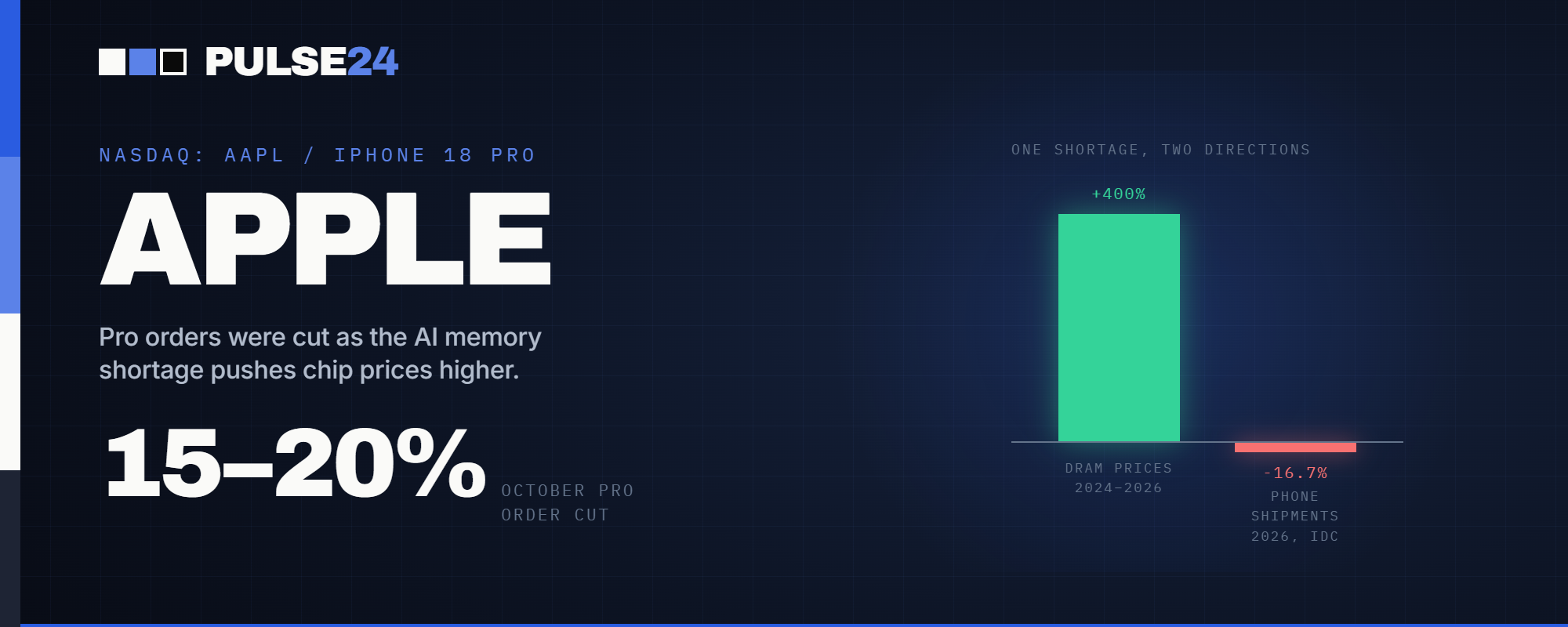
Apple quietly cut October component orders for the iPhone 18 Pro and Pro Max by 15% to 20%, Nikkei Asia reports, even after a $100 price increase. The same memory chip shortage squeezing Apple's margins turned Samsung, SK Hynix, and Micron into trillion-dollar companies this year.
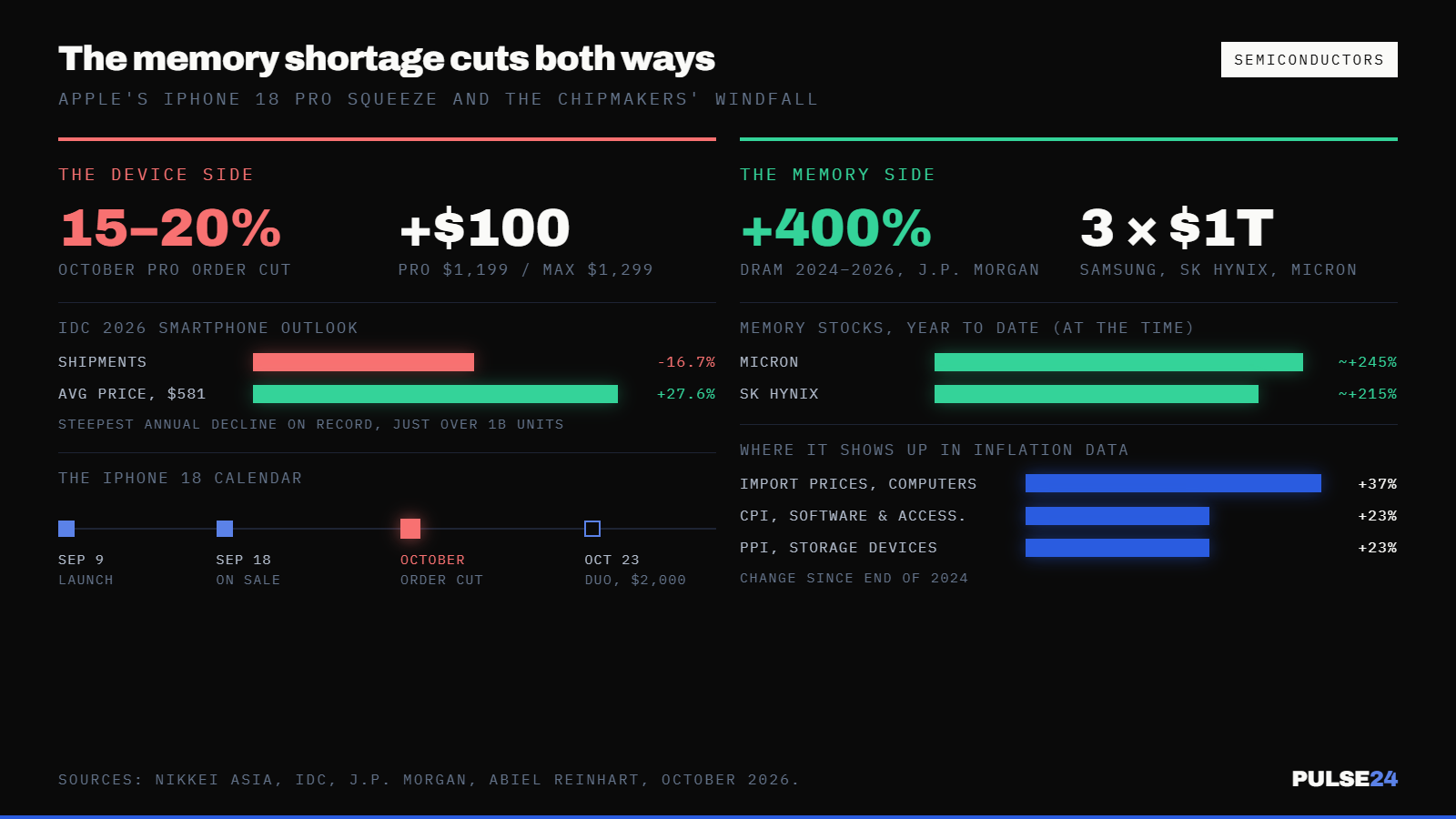
Apple just told some of its component suppliers to make less. Nikkei Asia reported Friday that the company's October orders for the iPhone 18 Pro and iPhone 18 Pro Max are running 15% to 20% below the volumes it originally requested, with one supplier executive describing the reduction in almost identical terms. The cuts began after demand softened from late August into October, and Apple has grown more cautious about shipments since early September.
That's a sharp reversal for a product line that just got more expensive. The iPhone 18 Pro starts at $1,199 and the Pro Max at $1,299, both $100 above the iPhone 17 Pro models they replaced when the lineup launched September 9. Apple hasn't confirmed the order cuts and didn't respond to a request for comment, and it's unclear whether the reductions carry into November.
What Changed
Component makers don't usually learn about a 20% order cut this early in a product cycle. The iPhone 18 Pro went on sale September 18, barely three weeks before the Nikkei report. IDC already sees the strain showing up in the aggregate numbers: global smartphone shipments are projected to fall 16.7% in 2026, to just over 1 billion units, the steepest drop the firm has recorded. Average selling prices are expected to rise 27.6% to $581, which is why total market value still grows to roughly $613 billion even as fewer phones ship. Apple isn't alone. Nikkei reported in June that Xiaomi, Oppo, and Vivo had already trimmed their 2026 shipment targets by as much as 30%.
Why It Matters
None of this traces back to weak consumer appetite for phones. It traces back to a component. Tim Cook, on what turned out to be his final earnings call as Apple's chief executive before John Ternus took over on September 1, called memory pricing a "100-year flood." J.P. Morgan's research desk puts a number on that flood: DRAM prices are on pace to rise more than 400% from the start of 2024 through the end of 2026. Economist Abiel Reinhart notes the CPI for software and accessories and the PPI for storage devices are each up 23% since the end of 2024, and the import price index for computers, peripherals, and parts is up 37%. That's inflation data surfacing from a supply chain story most consumers have never heard of.
The root cause is AI infrastructure, not iPhones. Data centers need the same DRAM, NAND, and high-bandwidth memory that goes into a smartphone, and hyperscalers are paying whatever it takes to secure it. Samsung's own memory division posted a record quarterly profit this year while its mobile business lost money to the identical shortage, proof that the squeeze runs through the entire industry, not just Apple's balance sheet. Samsung, SK Hynix, and Micron each crossed $1 trillion in market value earlier this year, with SK Hynix's stock up roughly 215% and Micron's up roughly 245% year to date at the time, as the same chips squeezing phone margins turned into the most profitable products those companies have ever sold.
What to Watch Next
Apple's $2,000 foldable iPhone Duo goes on sale October 23, and at least one supplier already expects it could face cuts similar to the Pro line's. The standard iPhone 18 isn't due until spring 2027, giving Apple time to see whether this round of memory inflation eases or compounds. Mirae Asset analyst Kim Young-gun has said he expects memory demand to keep outrunning supply through 2028, which would make October's order cut an early data point rather than a one-off. Watch Apple's holiday-quarter guidance and the next earnings from Samsung and SK Hynix for whether the price increases that saved memory makers' margins start eating into device makers' unit volumes.
The Pulse24 Take
The AI buildout has a cost side that rarely makes the headline, and this is it. Every dollar of DRAM a hyperscaler locks in for a GPU server is a dollar of supply that doesn't go into a phone, a laptop, or a car, and that scarcity is now visible in retail prices, in CPI subcomponents, and in a 15% to 20% order cut at the world's most valuable consumer electronics company. Apple can pass some of the cost to buyers willing to pay $1,199 for a phone. It can't pass all of it, and the shipment math says plenty of buyers are choosing not to pay. For investors, the read isn't that Apple is in trouble. It's that the memory shortage is a genuine cross-market signal: bullish for chipmakers' near-term earnings, a margin headwind for nearly everyone who buys their output, and a reminder that the AI trade doesn't stay contained to companies with "AI" in their earnings call transcripts.
How we read the data
Curious how we get from raw data to a take like this? Our Trader's Toolkit walks through the tools we lean on.
Explore the Toolkit